About Phacochoerus aethiopicus (Pallas, 1766)
Size and Build
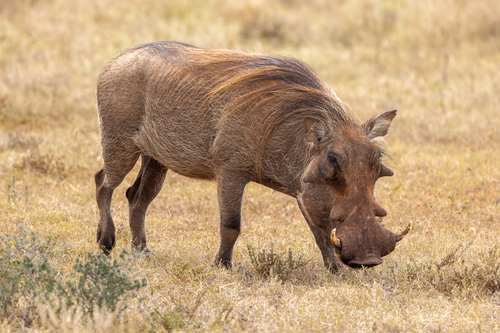
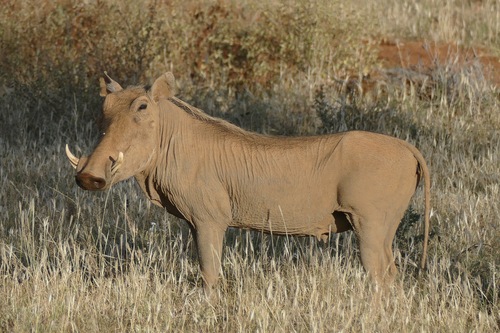
Description: The desert warthog is a stockily built animal. It reaches an average length of 125 centimetres (49 in) and an average weight of 75 kilograms (165 lb), and males grow larger than females.
Facial Warts and Tusks
It has a rather flattened head, with distinctive paired protuberances on its face called "warts", and large curving canine teeth that protrude outward as tusks. Neither warts nor tusks are present in juveniles; these structures grow over the course of a few years, and both are larger in males than in females.
Hair and Tail Structure
Its body is sparsely covered with bristly hairs, while a denser band of hair runs along the spine and forms a crest. The tail is long and thin, tipped with a small brush of coarse hair.
Coloration
The animal's general body color is mid- to dark brown, but the crest is sometimes whitish.
Differences from Related Pig Species
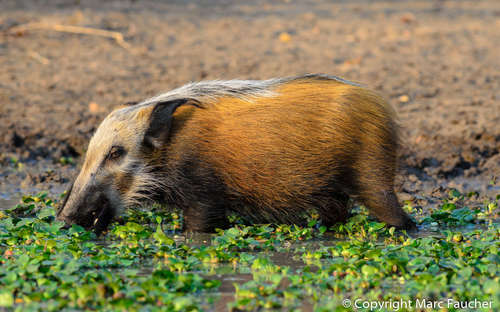
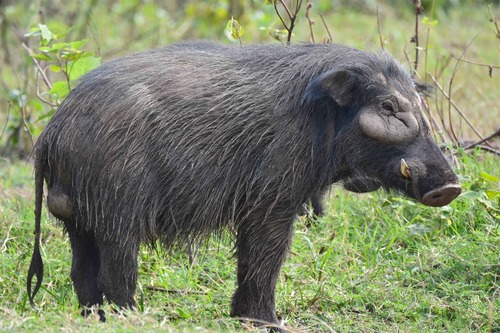
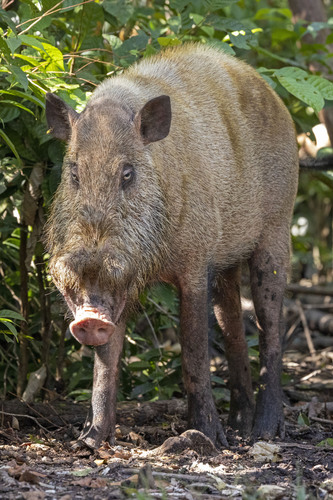
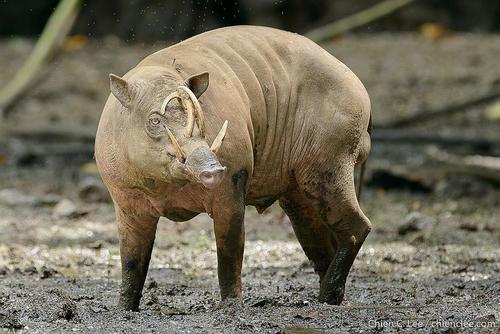
The desert warthog differs from the bushpig (Potamochoerus porcus) and the giant forest hog (Hylochoerus meinertzhageni) by the presence of facial warts and proportionately larger tusks.
Distinction from Common Warthog
It can be differentiated from the common warthog through a set of distinctive facial features: curled-back tips at the end of the ears, lack of incisors, and a generally larger snout. The suborbital areas of the desert warthog are swollen into pouches that often extend to the base of the genal warts; common warthogs do not have this same pronounced swelling in their suborbital areas. This species also has more strongly hook-shaped "warts", a more egg-shaped head, thickened zygomatic arches, and enlarged sphenoidal pits.
Current Geographic Range
Distribution and habitat: The desert warthog is native to the Horn of Africa. Its current range extends from southeastern Ethiopia through western Somalia to eastern and central Kenya.
Extinct Subspecies Range
The subspecies P. a. aethiopicus, commonly known as the Cape warthog, once lived in the southeastern parts of Cape Province and the adjacent parts of Natal Province, but became extinct around 1871.
Habitat Preferences
The desert warthog inhabits open, arid countryside, including thin woodland with scattered trees, xerophytic scrubland, and sandy plains, and does not live in upland areas. It requires regular access to waterholes, so it may occur near villages and locations where water seeps to the surface in otherwise dry areas.