About Peromyscus eremicus (Baird, 1857)
Taxonomic Classification
Cactus mice (Peromyscus eremicus) are small cricetid rodents.
External Morphology
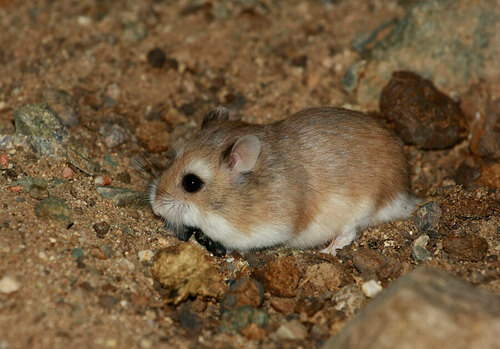
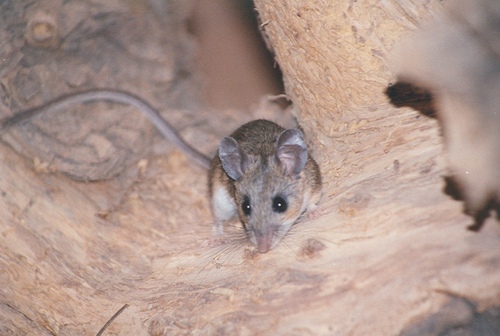
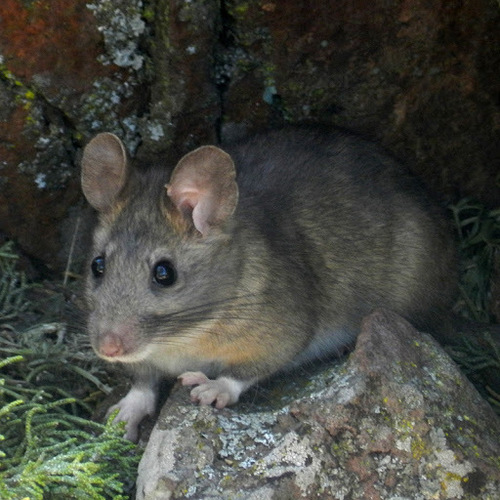
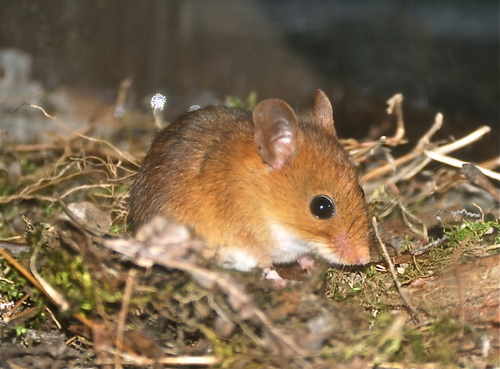
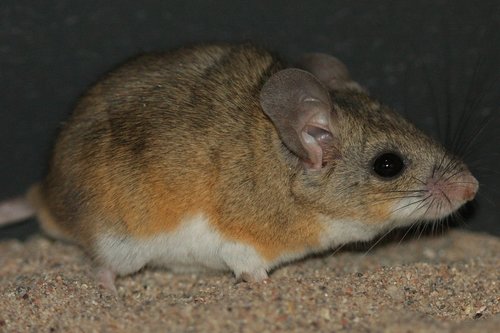
They have large eyes and ears, a pointed snout, and a long, single-colored tail.
Morphometric Measurements
Average measurements for the species are: total body length 160 to 211 mm (6.3 to 8.3 in), body length 72 to 100 mm (2.8 to 3.9 in), tail length 84 to 120 mm (3.3 to 4.7 in), hind foot length 18 to 22 mm (0.71 to 0.87 in), ear length 13.4 to 20 mm (0.53 to 0.79 in), greatest skull length 22.7 to 25.9 mm (0.89 to 1.02 in), and zygomatic breadth 11.2 to 13.5 mm (0.44 to 0.53 in).
Weight
Adult cactus mice weigh between 18 and 40 grams (0.63 and 1.41 oz).
Sexual Size Dimorphism
Females weigh slightly more than males, and are significantly larger in body length, ear length, mandible length, and skull bullar width.
Distinguishing Traits
Cactus mice can be distinguished from most other Peromyscus species by their naked hind foot soles, nearly hairless flesh-colored tails (compared to the common furry bicolored tails of other species in the genus), and tails that are usually the same length as or longer than the body.
Ear Characteristics
Their ears are nearly hairless, large, and membranous.
Fur Coloration
Their fur is long and soft; its coloration varies between subspecies and populations, ranging from ochre to cinnamon, with white ventral areas, and slightly grayish coloring on the sides and top of the head.
Color Variation by Age and Sex
Females tend to be slightly paler than males, while juveniles are grayer than adult parents.
Lifespan
Cactus mice live around one year on average in the wild, and can live up to 7.4 years in captivity.
Habitat and Distribution Range
This species is found in dry desert, steppe, and mountain foothill habitats across arid regions of the southwestern United States and northern Mexico.
Island Distribution
It also occurs on islands off the coast of the Baja California peninsula and within the Sea of Cortés.
Northern Range Limitations
Low average temperatures and the absence of the mesquite species Prosopis juliflora may limit the species’ northern expansion.
Sympatric Species
Cactus mice live sympatrically with five other deermouse species: the California mouse, canyon mouse, Eva's desert mouse, mesquite mouse, and the western deermouse.
Mating System Inference
The mating habits of cactus mice are not well-studied as of yet, but are inferred from other Peromyscus species to be promiscuous.
Mating Period
They mate year-round, with increased mating activity during warmer months.
Reproductive Morphology
Unlike other muroids, male cactus mice have a simple rather than complex penis, and females have two pairs of teats rather than three.
Teat Number Function
A female cactus mouse’s number of teats correlates with the number of offspring she can raise in her arid environment.
Sexual Maturity Age
Females reach sexual maturity at around two months old, while the age of male sexual maturity remains unknown.