About Ochrotomys nuttalli (Harlan, 1832)
Taxonomic Naming
The golden mouse has the scientific name Ochrotomys nuttalli (Harlan, 1832).
Body Size Measurements
Its total body length ranges from 50 to 115 mm, and it has a prehensile tail that measures 50 to 97 mm long, generally matching the length of its body.
Sexual Morphology
Male golden mice have a baculum tipped with cartilage, while females have six mammae.
Facial Whisker Coloration
Their facial whiskers are either black or gray.
General Fur Coloration
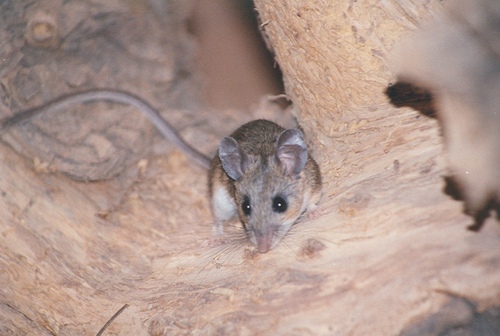
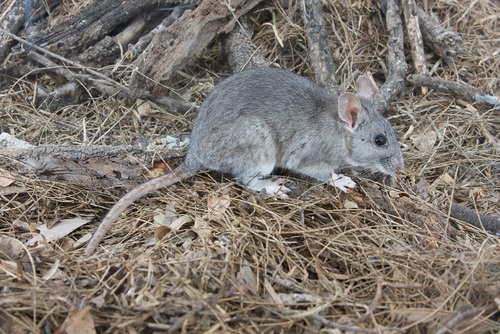
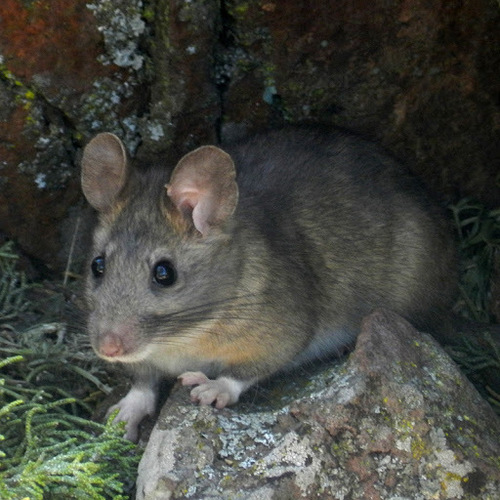
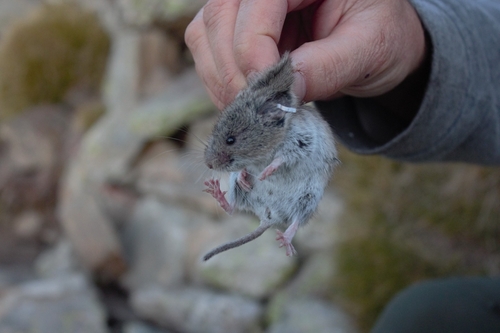
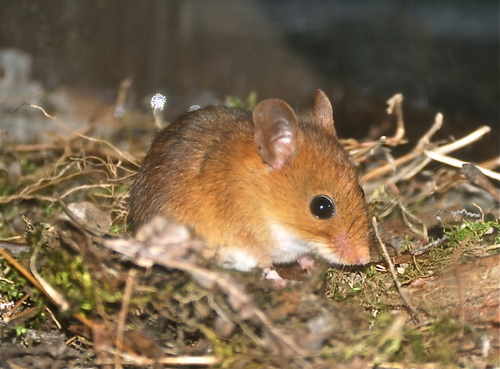
The species gets its common name from the thick, soft golden fur that covers its upper body; its feet and undersides are white, and its tail is cream-colored.
Cheek Tooth Structure
Golden mouse cheek teeth have thick enamel folds.
Cranial Morphology
Like other muroids, this species has a distinct keyhole-shaped infraorbital foramen.
Dentition Arrangement
It has no canines or premolars; its incisors are sharp and long, separated from the cheek teeth by a diastema.
Dorsal Fur Regional Variation
There are regional differences in the yellowish, reddish, and brownish tones of the dorsal fur.
Subspecies Classification Status
Around five subspecies have been described, but all are thought to represent a regional cline rather than distinct separate populations.
Atlantic Coastal Plain Subspecies Traits
Populations from the Atlantic coastal plains of Virginia, the Carolinas, and Georgia (the nominal subspecies O. n. nuttalli) are generally brighter, with more reddish-yellow coloring.
Piedmont and Mountain Subspecies Traits
Populations from the Piedmont and mountainous areas further west (O. n. aureolis) are more brownish.
Central US Subspecies Traits
Populations from Texas, northern Louisiana, Arkansas, Missouri, and Illinois (O. n. lisae and O. n. flammeus) have stronger yellowish overtones.
Florida Subspecies Traits
Populations from the Florida peninsula (O. n. floridanus) are a rich yellowish-brown.
Cultural Appearances
Due to their attractive coloration, golden mice have often been featured in books, such as Poppy.
Geographic Range
The golden mouse lives and breeds in the southeastern United States, ranging from southeastern Missouri to West Virginia and southern Virginia, south to eastern Texas, the Gulf Coast, and central Florida.
Conservation Status
It is currently considered a species with a secure population that is not severely fragmented across its range.
General Habitat
Golden mice occupy thick woodlands, swampy areas, vine tangles, and the vegetation of small trees and shrubs.
Associated Plant Species
They are especially associated with areas where honeysuckle, greenbrier, and red cedar grow.
South-Central US Climate Habitat
In the south-central United States, golden mice live in climates that are hot and wet in summer, and dry in winter.
Nest Placement Options
Their nests can be built either in trees or on the ground.
Ground Nest Characteristics
Ground nests are often found near leaf litter, and are typically built in sunken soil depressions or beneath logs.
Ground Nest Trade-offs
Ground nests have both benefits and drawbacks: floods or overly wet soil can force golden mice to abandon these nests and relocate to trees, but an undisturbed ground nest lowers predation risk, because the nest is well hidden, a mouse on the ground is more likely to escape a predator, and building a ground nest requires less energy, as the mouse does not need to carry nesting materials up and down trees.
Nest Remodeling Behavior
Golden mice are known to remodel old bird nests for use as their own homes.
New Nest Construction Basics
When building a new nest from scratch, they create a structure 100 to 200 mm in size, using whatever local materials are available.
Nest Inner Lining
The inner lining of the nest is made from soft materials including milkweed, cotton, feathers, or fur.
Nest Middle Layer
This soft inner layer is surrounded by a thick layer of woven fibers.
Nest Outer Layer
The outer protective layer of the nest is constructed from leaves, grass, and bark.
Nest Entrance Count
Most nests have just one entrance, though nests with as many as 57 entrances have been recorded.
General Reproductive Timing
Golden mice can reproduce year-round, but their reproductive season varies by geographic location.
Texas Reproductive Season
In Texas, most reproduction occurs from September through spring, while in Kentucky and Tennessee it occurs from March to October.
Missouri Reproductive Season
In Missouri, the breeding season also runs from spring to fall, from April through October.
Captive Reproductive Timing
Captive golden mice reproduce most often during early spring and late summer.
Gestation Period
The gestation period lasts 25 to 30 days, so females can produce many litters in a single year.
Litter Size Seasonal Variation
Litters are typically larger in fall than in spring.
Captive Litter Frequency
Captive females have been recorded producing up to 17 litters in an 18-month period.
Typical Litter Size
A typical golden mouse litter has 2 or 3 young, and litters can range in size from 1 to 4.
Post-Birth Adult Behavior
When a litter is born, all adult golden mice except the mother leave the nest.
Juvenile Development Rate
Newborn golden mice grow and develop very quickly; they reach independence by three weeks of age, and become sexually mature just a few weeks later.