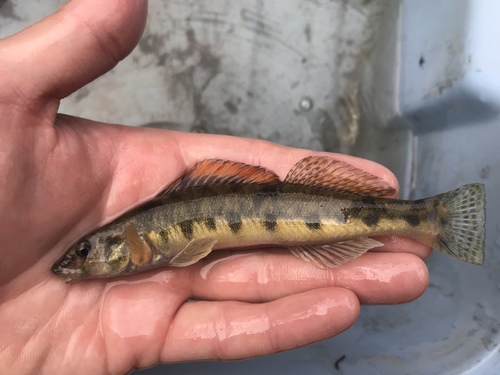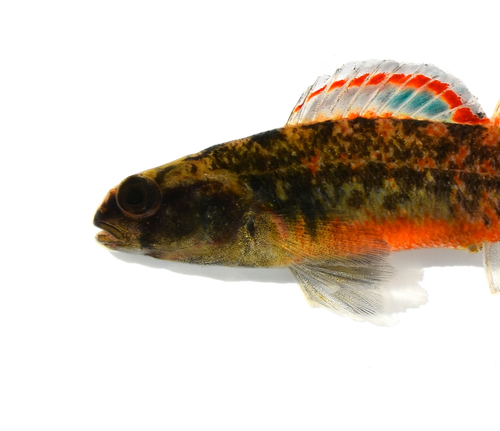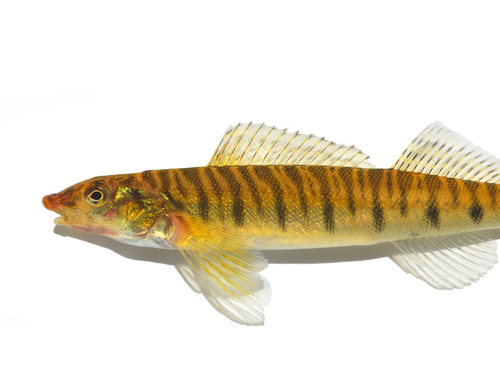
About Percina caprodes (Rafinesque, 1818)
Taxonomic Classification
The common logperch (Percina caprodes), sometimes called simply logperch, is a species of freshwater ray-finned fish. It is a darter belonging to the subfamily Etheostomatinae, part of the family Percidae which also includes perches, ruffes, and pikeperches.
Physical Appearance
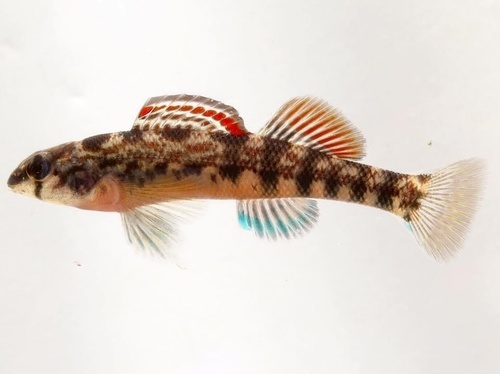
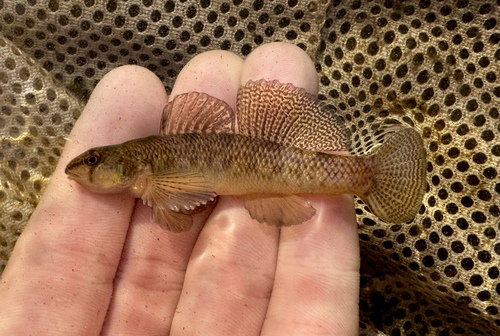
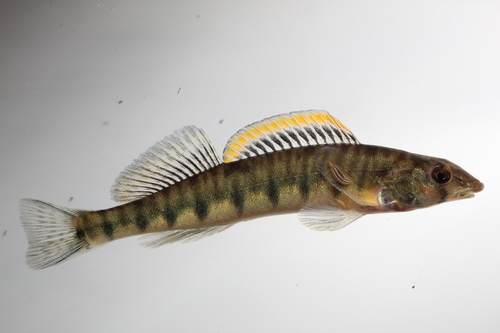
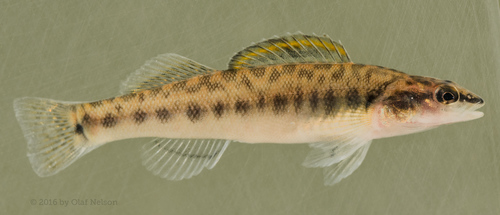
Like other logperches, it has characteristic vertical barring along its flank and a subterminal mouth.
Distribution Overview
This is the most geographically widespread logperch species, commonly found across large areas of eastern United States and Canada.
Habitat and Size
It lives in clear, gravelly streams and lakes, reaching a maximum total size of around 18 centimeters (7.1 inches) and a maximum lifespan of around 3 years.
Ecological Role
It plays a key role in the reproduction of the snuffbox mussel (Epioblasma triquetra).
Natural Range Extent
The common logperch has a very large natural geographic range. Its natural distribution extends north to the St. Lawrence River system in Quebec, and south to the Rio Grande system in southern Texas and northern Mexico.
Range Boundaries
To the west, it is most heavily distributed within the Mississippi River drainage system, and its range extends east through freshwater habitats all the way to the Atlantic Ocean.
Introduced Range
Its range has been artificially extended to California, where it was first released into the wild in 1953.
Distribution Threats
Despite its large range, the common logperch's distribution has been reduced by the construction of dams, introduction of stocked predatory species including walleye and sauger, introduction of the invasive competitor Neogobius melanostomus, and possibly erosion around drainage systems.
Habitat Preference
Like most darter species, the common logperch lives in benthic habitats, where it forages for food. It prefers clear, swift water with rocky or sandy substrate, though it can be found in any temperate water within its geographic distribution.
Feeding Behavior
Its diet consists mainly of benthic invertebrates, which it hunts by flipping over stones with its snout. It is an opportunistic, non-fastidious forager.
Diet Composition
Chironomids make up the largest portion of its diet, at approximately 54% by volume, while trichopterans make up roughly 15% and simuliids roughly 22% by volume. Prey consumption varies widely depending on location and season.
Interspecific Competition
Competition occurs between the common logperch and other benthic species that share its native distribution and diet. The invasive round goby (Neogobius melanostomus) poses the largest competitive threat to the common logperch.
Competition Mechanisms
Studies indicate this is likely because N. melanostomus makes better use of environmental space for shelter, reducing the common logperch's range; N. melanostomus is more aggressive than the relatively passive common logperch; and N. melanostomus reproduces at a faster rate than the common logperch.
Natural Predators
The main natural predators of the common logperch are carnivorous piscivorous fish from the genera Sander, Micropterus, and Esox.
Anthropogenic Threats
Human-caused changes that can reduce common logperch abundance include excessive stocking of piscivorous fish species, river damming, introduction of chemicals into watersheds, and human-caused erosion.
Research Gaps
While the top-down effects of adding excess predators on prey species are relatively well studied, the effects and mechanisms of the other listed human activities are less understood.