About Etheostoma olmstedi Storer, 1842
Shared Traits with Johnny Darter
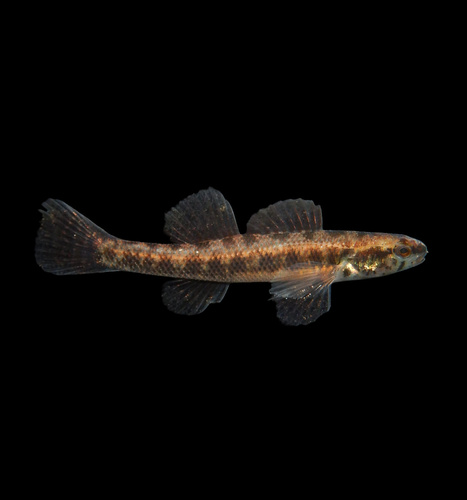
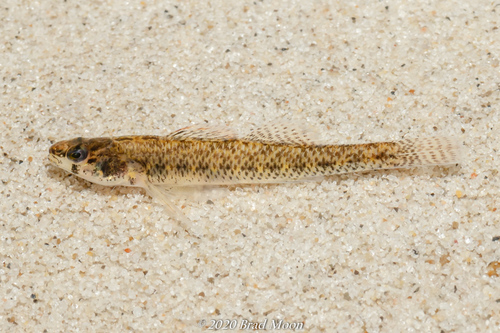
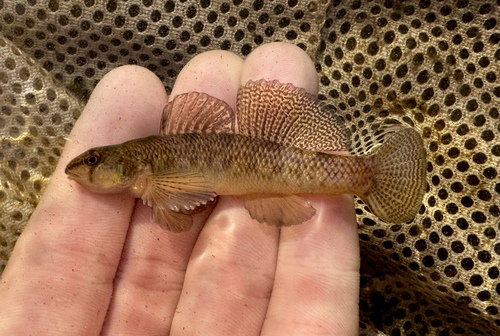
The tessellated darter (Etheostoma olmstedi) shares several physical traits with the closely related johnny darter: both species are rather pale, have small X- or W-shaped markings on the back and upper sides, and only have a single anal fin spine, while all other darter species in their shared range have two anal fin spines.
Distinguishing Features from Johnny Darter
The tessellated darter can be distinguished from the johnny darter by its somewhat sharper snout, higher count of dorsal soft rays, higher count of pectoral fin rays, and a typically complete suborbital sensory canal (the canal is usually split into two separate sections in johnny darters).
Scale Distribution
For the tessellated darter specifically, the nape is usually scaleless (naked), the cheeks range from partly to fully scaled, the breast is usually scaleless, and the belly is partly scaled.
Body Shape
Its body is elongate and slightly laterally compressed.
Breeding Male Fin Traits
Breeding males develop fleshy knobs on their fin spines, though these knobs are less well developed than those seen in fantail darters.
Base Body Color
The base body color is pale sandy, fading to whitish on the ventral side of the body.
Scale Markings
Some scales on the upper sides have dark edges that form wavy bars of varying length and angle.
Body Side Marks
Nine to eleven prominent X- and W-shaped marks run along the midside of the body.
Dorsal Fin Markings
The dorsal fins have a dark pigment spot on the first interradial membrane, and the rest of the fin is clear or slightly dusky.
Facial Markings
A dark line runs from each eye to the nostril on the snout.
Juvenile and Breeding Adult Coloration
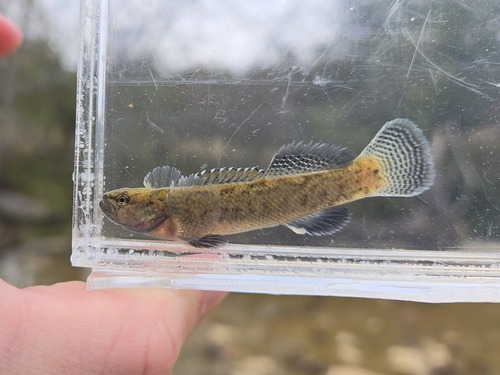
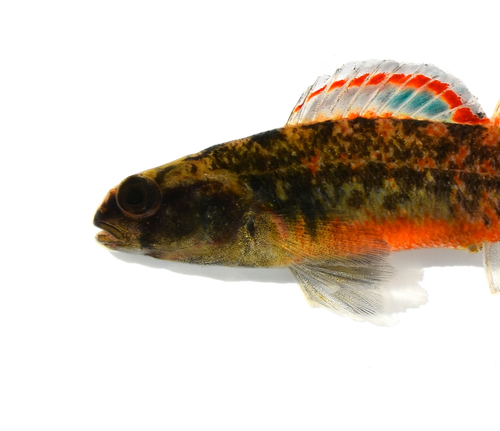
Juveniles and breeding adults develop 12 to 13 fairly even vertical bands along their sides, and lose the original wavy lines and X-shaped markings; the upper side scales become quite dark, and the pectoral and pelvic fins have pale tips.
Breeding Fin Pattern
The unpigmented areas of the second dorsal, anal, and caudal fins stand out, giving these fins the look of having white bands on a dark background — the reverse of the pattern seen in non-breeding adults.
Identification Misconception
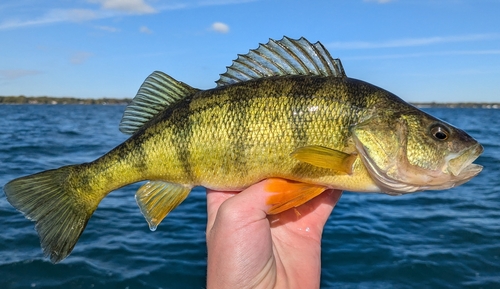
Individuals in this breeding color phase are sometimes mistaken for species in the genus Percina.
Diet
In terms of ecology, young small tessellated darters feed on crustaceans and small insects, and gradually shift to eating larger insects as they grow larger.
Nest Guarding Behavior
Male tessellated darters guard nests of fertilized eggs until the young fry become free-swimming, and have been observed to provide alloparental (adoptive) care for eggs left from previous nest inhabitants.
Alloparental Care Benefit
In this species, alloparental care is linked to increased male reproductive success.
Filial Cannibalism
Males frequently practice filial cannibalism, meaning they consume their own offspring.