About Parastromateus niger (Bloch, 1795)
Taxonomy and Naming
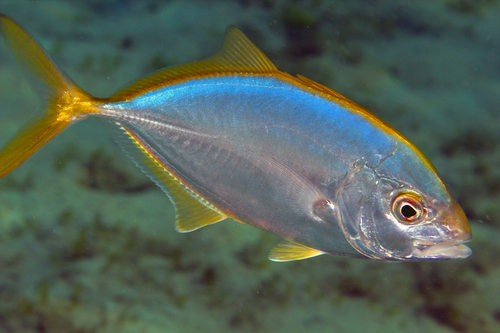
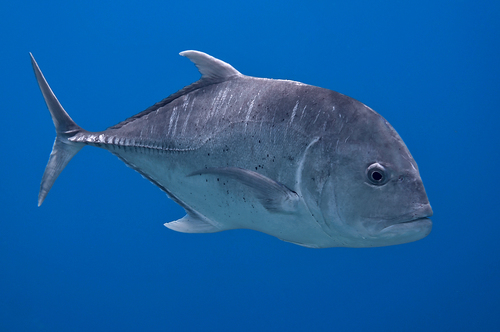
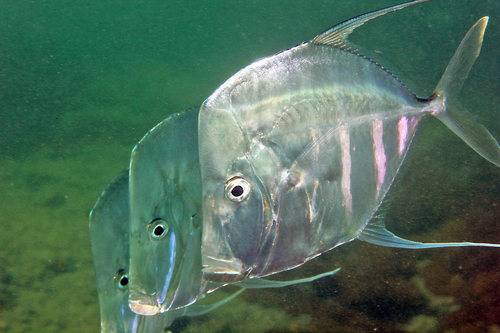
The black pomfret, with the scientific name Parastromateus niger, is a carangid species native to reef habitats of the Indian Ocean and western Pacific Ocean. It is the only confirmed member of its genus Parastromateus. Despite its common name, it is not a true pomfret, and is more closely related to jacks in the Carangidae family.
Commercial Importance
This species is very important to local commercial fisheries.
Geographical Distribution
Black pomfret has been recorded off the coasts of South Africa, Mozambique, Kenya, the Arabian Sea, Bay of Bengal, Persian Gulf, Indonesia, the Philippines, China, southern Japan, and Australia.
Depth Range
It is a pelagic species that typically occurs at depths between 15 and 40 metres, though it can be found as deep as 105 metres.
Diel Vertical Movement
During the daytime, it is generally found near the seafloor, while it moves to the surface at night.
Parasite Susceptibility
Black pomfret is susceptible to parasites that damage its growth, diet, and overall survival.
Cymothea eremita Parasite Study
One study by researchers from the Centre of Advanced Study in Marine Biology at Annamalai University, India examined the impact of the parasitic isopod Cymothea eremita on this fish. The study concluded that this parasite is linked to the black pomfret's health status, reducing its growth and feeding efficiency, and heavily affecting its survival.
Saddleback Syndrome
Another recorded developmental defect in black pomfret is Saddleback Syndrome, which causes a deformity of the dorsal fin.
Saddleback Syndrome Research Status
The exact cause of this syndrome is not known; existing studies hypothesize it may stem from pollution, nutritional deficiency, or genetic mutation, but additional research is required to confirm the true cause.
Reproduction and Lifespan Knowledge Gaps
Very little is currently known about the reproduction of black pomfret, and its maximum lifespan is also undetermined.
Lifespan Research Progress
Current research indicates it can live up to 7 years, but more work is needed to confirm its maximum age and understand its reproductive processes.
Culinary Properties
For human consumption, black pomfret has a mild fishy flavor, is slightly oily, and has very few bones.
Cooking Methods
It can be prepared in a wide range of cooking methods: steaming, poaching, deep frying, pan frying, grilling, smoking, barbecuing, pickling, or eating raw.
Commercial Catch Data
It is a highly sought-after fish in Asia, with a total reported catch of 74,607 tonnes in 2016.