About Decapterus macarellus (Cuvier, 1833)
Common Name and Maximum Length
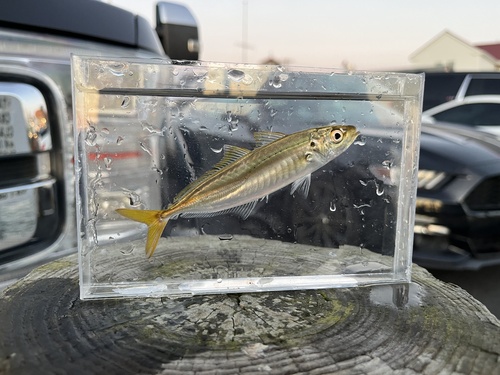
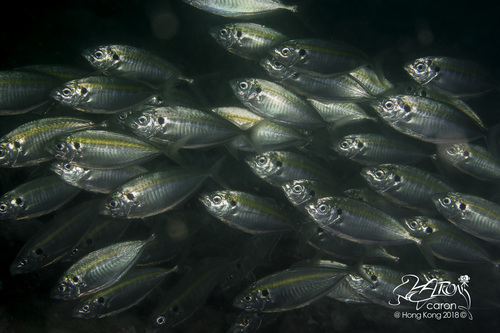
Decapterus macarellus, commonly called mackerel scad, has a maximum recorded length of 46 cm.
Body Shape
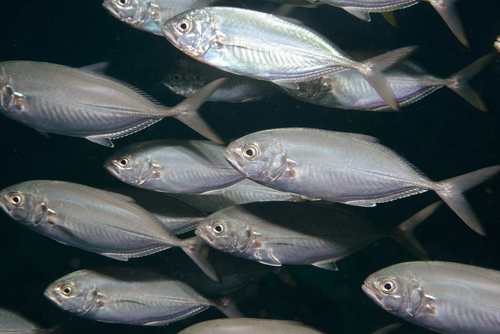
Its body is elongated, and appears somewhat circular when viewed head-on.
Distinctive Fin Identification
The species can be identified by a small, detached fin located between its dorsal and caudal fins.
Fin Ray and Spine Count
Mackerel scad have 9 spines and 31–36 rays on their dorsal fins, and 7 spines and 27–30 rays on their anal fins.
General Body Coloration
Their fins are colored black metallic to blue-green, and their belly is white.
Operculum and Lateral Line Markings
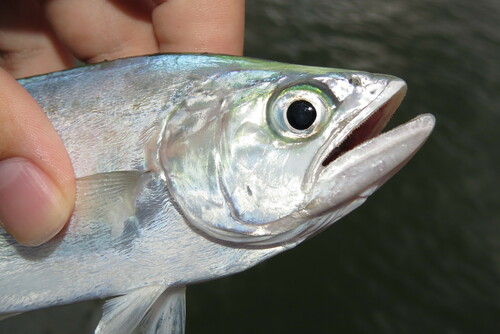
The edge of the operculum has a small black spot, and there are no spots on the lateral line.
Caudal Fin Color
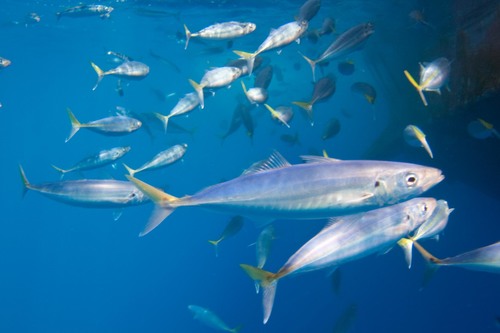
The caudal fins range in color from reddish to yellow-green.
Global Distribution Overview
This species is found across most of the world's oceans.
Western Atlantic Distribution
In the western Atlantic, it occurs from off Nova Scotia and Bermuda south to Rio de Janeiro, and is not considered common in the Gulf of Mexico.
Eastern Atlantic Distribution
In the eastern Atlantic, it has been recorded off St. Helena, Ascension Island, Cape Verde, the Gulf of Guinea, the Azores, and Madeira.
Indian Ocean Distribution
In the Indian Ocean, it is found in the Red Sea and the Gulf of Aden, and is also known from South Africa, the Mascarenes, the Seychelles, and Sri Lanka.
Eastern Pacific Distribution
In the eastern Pacific, it is recorded from the Revillagigedo Islands, the Gulf of California, and the coast of Ecuador.
FAO Native Areas
FAO areas where the mackerel scad is native include the northeast and northwest Atlantic, the central east and west Atlantic, the Mediterranean and the Black Sea, the southeast and southwest Atlantic, the eastern and western Indian Ocean, and the northwest, central west, central east and southwest Pacific.
Habitat Climate and Maximum Depth
Mackerel scad typically inhabit subtropical seas, at depths up to 400 m.
Habitat Preference
They prefer clear water, and are frequently found around islands.
Common Capture Depth Range
While individuals can be found at the surface, they are most often caught at depths between 40 and 200 meters.
Diet
They feed mainly on zooplankton.
General Food Use
This species is commonly used as food in many communities across island nations of the western Pacific.
Japanese Culinary Use
It is a key ingredient for preparing Kusaya, a traditional Japanese snack from the Izu Islands.
Filipino Lumpiang Shanghai Variation
Filipino students near Calasiao have created a variation of Lumpiang Shanghai that mixes shredded mackerel scad with ginisang munggo, combined with minced onions, garlic, julienned carrots and papaya, wrapped in spring roll wrappers and deep fried.
Davao City Culinary Use
The Davao City dish paksiw na takway is sometimes made with ground mackerel scad.
Sabah Dusun Culinary Use
Pinaasakan sada (also called Sada pinarasakan), a boiled and stir-fried dish made with mackerel scad, is popular among the Dusun people of Sabah, northern Malaysia.