About Chionomys nivalis (Martins, 1842)
Fur Characteristics
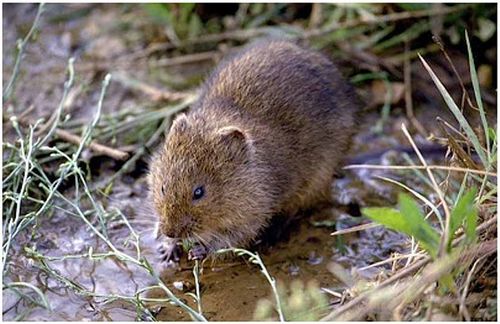
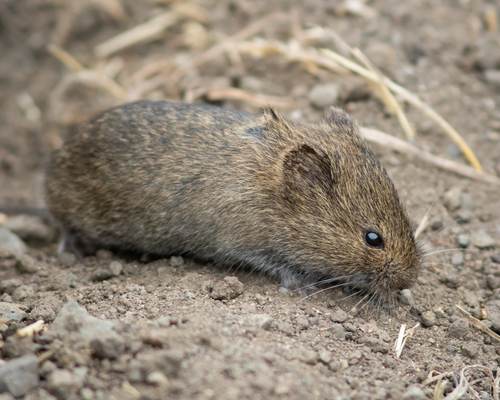
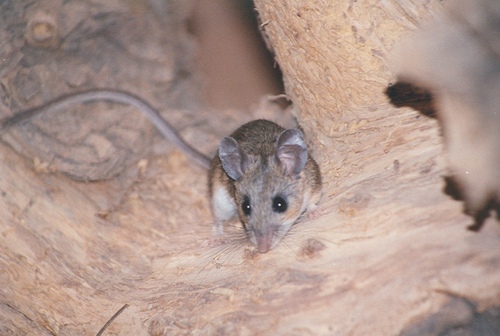
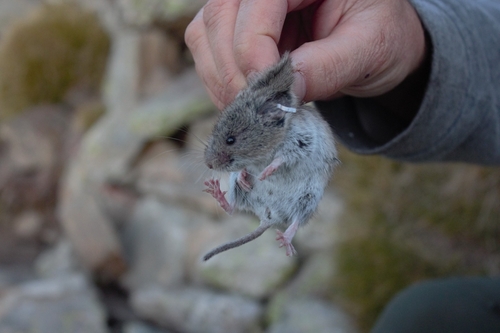
The European snow vole, Chionomys nivalis, has soft, long, dense fur that is pale grey with a brown tinge.
Facial Features
It has a rounded nose, black beady eyes, long whitish whiskers, and moderately large ears.
Tail Characteristics
Its comparatively long, whitish tail is covered in short, sparse hairs.
Size and Weight
Adult head and body length ranges from 4.25 to 5.5 inches (108 to 140 mm), tail length ranges from 2 to 3 inches (51 to 76 mm), and adult weight ranges from 1 to 2 ounces (28 to 57 g).
Vocalization
This species vocalizes with squeaks, and its teeth can sometimes be heard chattering.
European Distribution
The European snow vole is native to mountain ranges in southern Europe, including the Pyrenees, Apennines, Alps, Carpathians, Balkan Mountains, Mount Olympus, Pindus Range, and Montesinho mountains.
Asian Distribution
In Asia, it is native to mountainous parts of the Caucasus, Lebanon, Syria, western and northern Iran, and southern Turkmenistan.
Island Distribution
It is only found on one Mediterranean island: Euboea, off the coast of Greece.
Alpine Habitat
It mostly lives above the tree line among rocks and scree, in alpine meadows, on boulder-covered slopes, in rock crevices, and in areas with dwarf mountain pines (Pinus mugo), alpine rose (Rhododendron ferrugineum), and scrubby vegetation.
Low Elevation French Habitat
In France, it occurs at lower elevations in some karst regions, including near Glun in the Ardèche department and near Nîmes.
Glacial Relict Status
This vole is a recognized glacial relict species; after the most recent glaciation retreated, its suitable habitat became fragmented.
Soil Association
It is restricted to petricolic soils, and occurs at lower altitudes wherever these soils are present.
Microhabitat Dependence
Its occurrence at a given site depends on the suitability of the microhabitat, rather than suitable temperature conditions.
Altitudinal Competition Drivers
It is most often found at medium to high altitudes because there is less competition from other animals like grasshoppers, alpine marmots (Marmota marmota), ibex (Capra spp.), and chamois (Rupicapra spp.).
Forest Habitat Competition
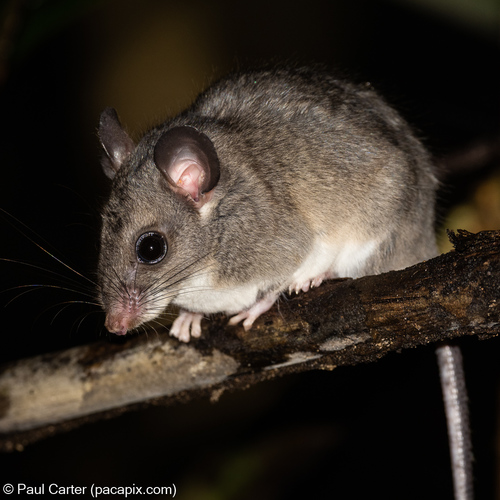
When suitable petricolic soils are found in forests, the species is rarely abundant, because it faces competition from other mammals including the edible dormouse (Glis glis) and the garden dormouse (Eliomys quercinus).
Habitat Specialization Status
Research has confirmed that the European snow vole is a rock-dwelling specialist.
Reproductive Group Habitat Preference
The study found that reproductive females and juveniles preferentially use the central parts of scree areas, especially locations near scree junipers (Juniperus communis).
Non-Reproductive Group Habitat Use
By contrast, males and non-reproductive females are less selective, and occupy rocky habitat in proportion to how much of this habitat is available.