About Notolabrus fucicola (Richardson, 1840)
Scientific Naming and Classification
Notolabrus fucicola, the scientific name for this species first described by Richardson in 1840, is the largest wrasse species found in New Zealand's waters.
Size Characteristics
It grows to 45 centimetres (18 in) long in Australian waters, but reaches slightly larger sizes around New Zealand, where individuals can grow up to 60 centimetres (24 in) in length and up to 5 kilograms (11 lb) in weight.
General Body Features
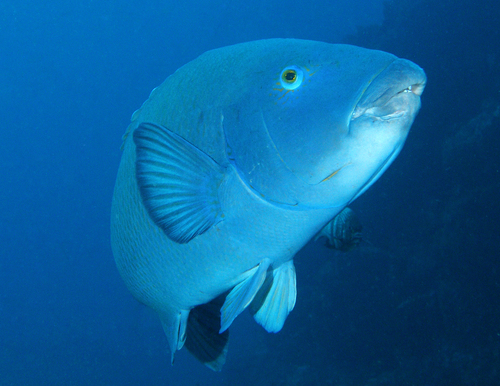
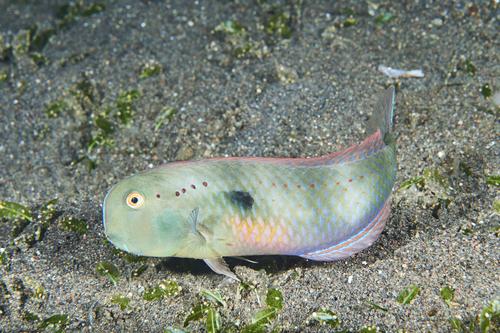
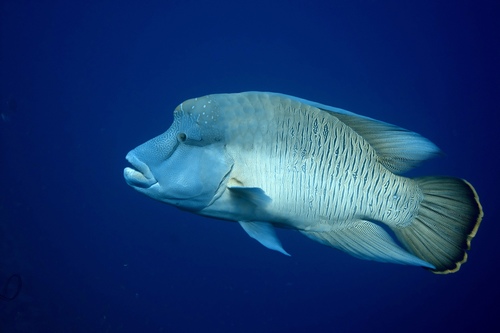
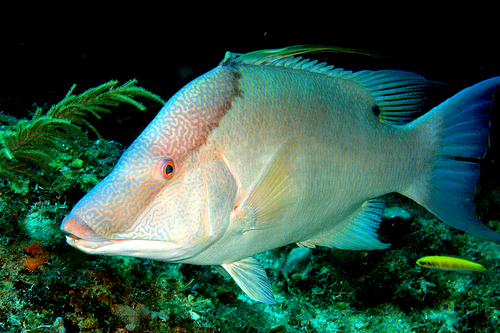
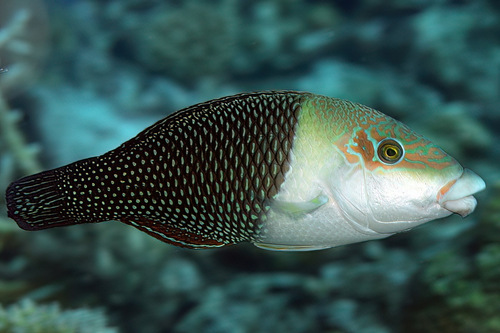
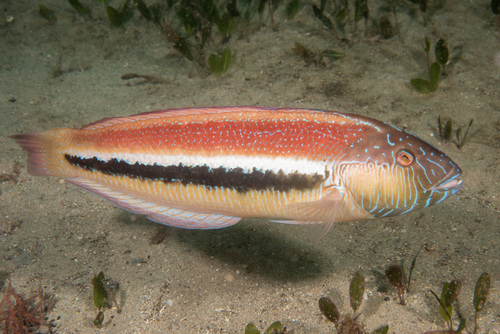
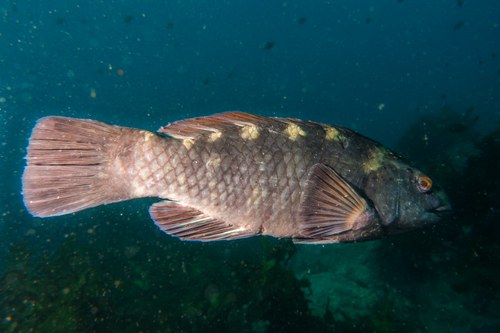
This species has a relatively deep body and variable colouring.
Young Adult Coloration
Young adult fish are reddish-brown, mottled with green and orange.
Adult Coloration
Full adults are green-brown with purple shades and fuzzy yellowish vertical bars on their body and fins.
Juvenile Coloration
Juveniles have a similar colour to young adults, but also have yellow markings.
Broad Distribution Range
Notolabrus fucicola is distributed in the south eastern Indian Ocean and south western Pacific Ocean, occurring in both Australia and New Zealand.
New Zealand Distribution
It is found across all of New Zealand, including the Three Kings Islands, Stewart Island and Snares Island.
Australian Distribution
In Australia, it occurs off the south east coast from southern New South Wales, Victoria to eastern South Australia, and also around Tasmania.
Habitat and Depth Range
This species is found in kelp beds and on rocky reefs with some exposure to tides and currents, at depths between 1 and 90 metres (3.3–295.3 ft).
Lifespan and Territoriality
It is a territorial, long-lived fish, often living over 20 years, and defends its territory aggressively.
General Diet Composition
It is a selective forager, feeding on crustaceans including chitons, limpets, barnacles, mollusks, crabs, and sea urchins.
Ontogenetic Diet Shifts
Its diet changes as it grows: smaller fish between 10 and 18 centimetres (3.9 and 7.1 in) long feed mostly on amphipods and isopods, while larger fish prey mainly on bivalves, crabs, and gastropods.
Spawning Period
Notolabrus fucicola spawns during the southern Spring and Summer, from July through to December, and does not spawn synchronously.
Sexual Development Type
While many other wrasses are protogynous hermaphrodites, this species is a secondary gonochorist, where individual fish change sex before reaching sexual maturity.
Sexual Dimorphism and Male Morphology
It has two colour forms, but is not sexually dimorphic, and any population will only have one morphological type of male.
Sex Change Research Findings
Researchers have not yet found any individuals with gonads that are transitioning from female to male, but specific environmental or social conditions may still be involved in triggering sex change for at least some fish in a population.
Population Size Structure
Unlike protogynous hermaphrodite wrasses, populations of Notolabrus fucicola can have large individuals of both sexes.