About Nothoprocta perdicaria (Kittlitz, 1830)
Size and Body Build
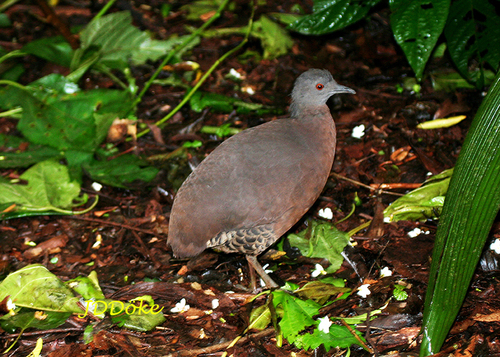
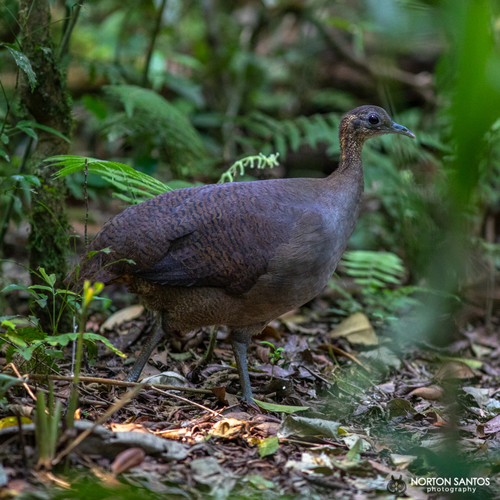
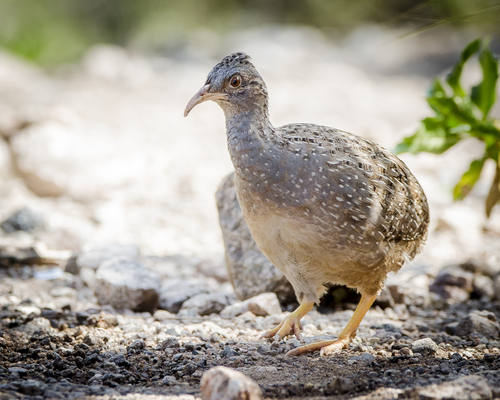
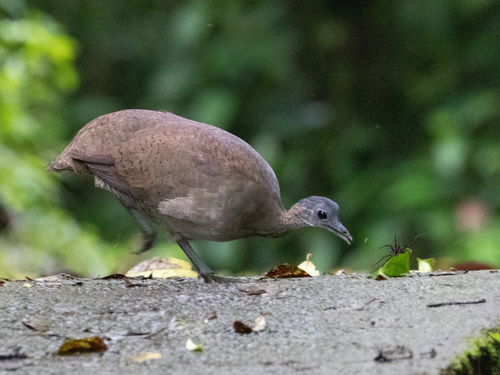
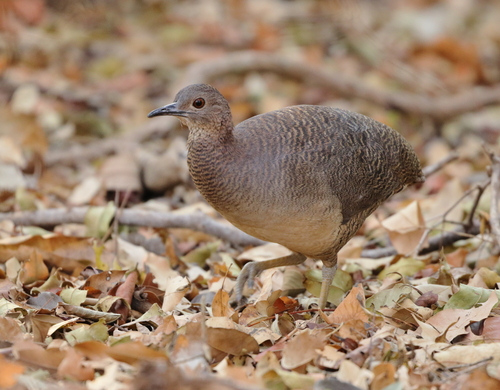
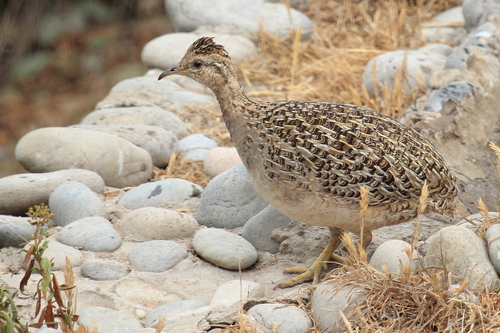
The Chilean tinamou (Nothoprocta perdicaria) is approximately 29 cm (11 in) long, with a stocky build and nearly no tail. Its bill is curved, similar in shape to that of a California quail, and it has thick, short, pale yellowish legs.
Posture
It typically walks upright, with its short tail and tail coverts drooping behind its legs.
Upperbody Pattern
The upperbody has an overall striped pattern that is more complex in fine detail.
Facial Markings
Its face is buff-colored, with a drooping dark eyeline, a small stripe on the cheek, and a lighter-colored crown.
Neck and Chest Patterning
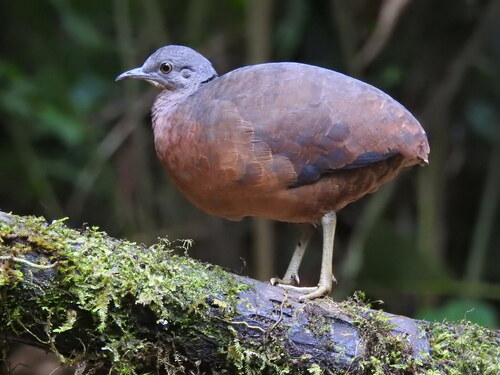
The neck is brown, with dark spots on the lower neck, and the grey side of the chest has complex streaked patterning. Populations of Chilean tinamou that live just south of Chile's Maule Region have a brownish chest instead of a grey one, and more reddish-brown stripes on the upperbody and buttocks.
Wing Characteristics
Across all populations, the wings are large and rounded: they cover the body when the bird is on the ground, and when flying, the wings appear large with reddish-brown undersides.
Normal Vocalization
The Chilean tinamou's call is a loud double-syllabled stride whistle that sounds like "sweee weee".
Stress Response
When under stress, it produces a descending series of whistles that sound like "swee wee wee wee", paired with fast wing sounds.
Elevation Range
The Chilean tinamou occurs in high elevation shrubland between 400 and 2,000 m (1,300–6,600 ft) in elevation.
Native Distribution
It is native to most of Chile, excluding southern Los Lagos, Tarapacá, Antofagasta, Aisén, and Magallanes y Antarctica Chilena.
Habitat and Associated Flora
It also inhabits arid mountain forests, where it is associated with trees including Acacia caven, Porlieria chilensis, and the endangered Jubaea chilensis.
Introduced Range
This species has been introduced to Easter Island.