About Tinamus solitarius (Vieillot, 1819)
Scientific Naming and General Appearance
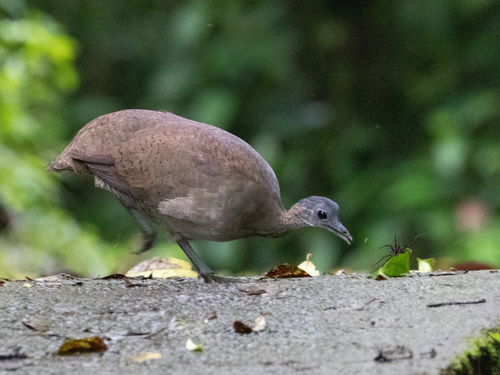
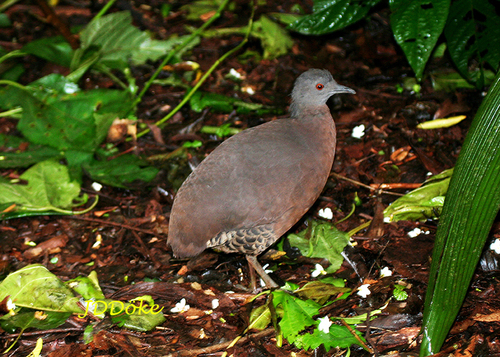
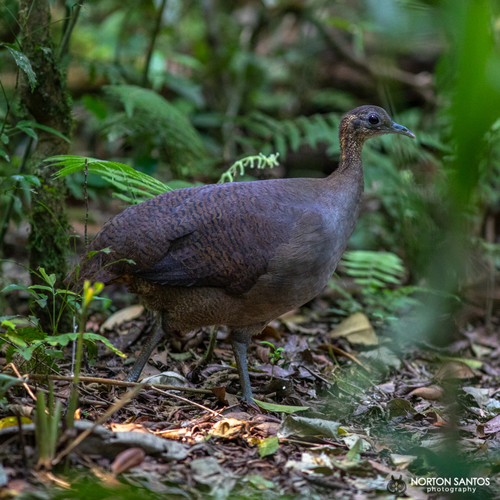
The solitary tinamou, with the scientific name Tinamus solitarius (Vieillot, 1819), is a large brownish tinamou that has heavy black barring across its body. Its neck, breast, and flanks are grey, while its belly is white.
Head and Neck Coloration
It has a dark brown crown and a white throat set on its yellowish head and neck; this coloration contrasts with a distinct buff stripe that runs along the side of the neck.
Body Length
On average, the species measures 45 cm (18 in) in total length.
Brazilian Range
This tinamou's range covers the southeastern Bahia, eastern Minas Gerais, Espírito Santo, Rio de Janeiro, São Paulo, eastern Mato Grosso do Sul, Paraná, Santa Catarina, and northern Rio Grande do Sul states of Brazil.
Non-Brazilian Range
It also occurs in southeastern Paraguay and extreme northeastern Argentina, specifically in Misiones province.
Primary Habitat and Elevation Range
The solitary tinamou inhabits lowland humid tropical forest and montane forests up to 1,200 m (3,900 ft) above sea level.
Tolerance of Modified Forest Habitats
It readily settles in secondary forest, and can be not uncommon in extensively used forest plots, tolerating a degree of selective logging.
Unfavored Habitat
It does not favor large plantations of exotic species.
Mosaic Landscape Habitat Suitability
However, the birds can be numerous enough to sustain some hunting pressure in specific mosaic landscapes: these are cabruca smallholder plantings, interspersed with secondary growth that has a dense understorey of caeté (from the Marantaceae family), Merostachys bamboo, larger Guadua bamboo, and mature heart-of-palm trees (Euterpe edulis).
Minimum Fragment Size for Viable Populations
In the little-disturbed ecotone of Dense Ombrophyllous Montane Forest, viable thriving populations can persist in forest fragments as small as 1,000 acres (400 ha).