About Myuchelys latisternum (Gray, 1867)
Sexual Size Dimorphism
Myuchelys latisternum shows strong sexual size dimorphism: females grow considerably larger than males. Females can reach a carapace length of up to 28 cm, while males rarely exceed around 18 cm in length.
Carapace Shape
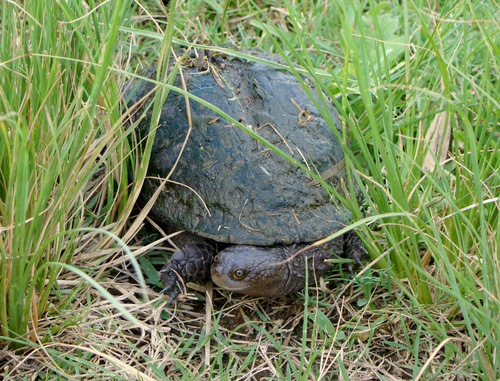
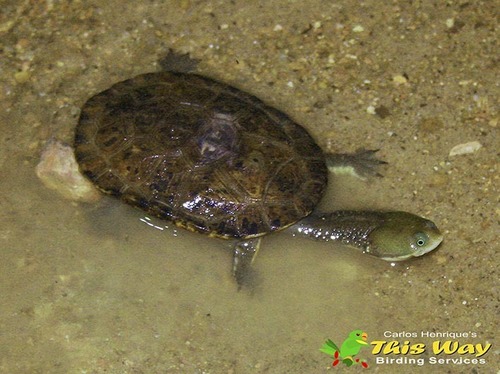
The carapace is roughly oval in shape and broad at the rear.
Defensive Behaviors
This species is not usually aggressive, but it can bite fiercely when threatened, and it can also emit a strong odor.
Carapace Serrations
The shell has marginal serrations, which is the trait that gives the species its common name; individuals retain some of these serrations across their entire lifespan.
Head and Neck Morphology
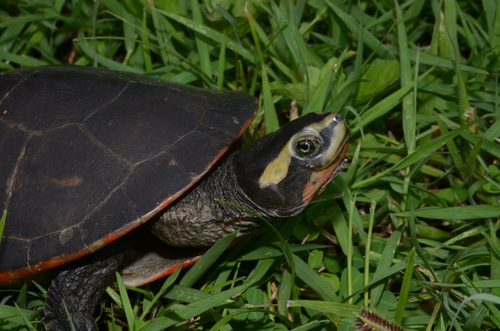
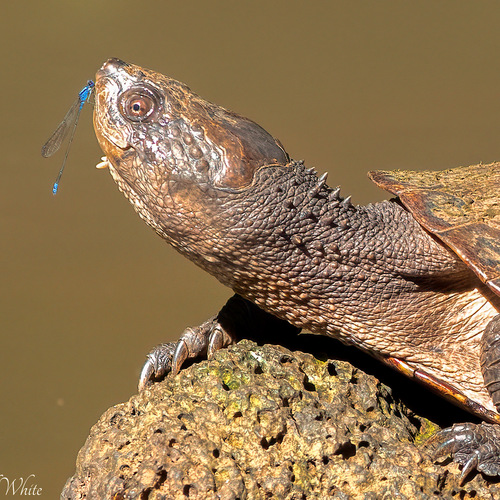
The head shield extends down the side of the head to just above the tympanum, and the upper surface of the neck has prominent pointed tubercles, many of which have an apical sensory pit.
Carapace Coloration
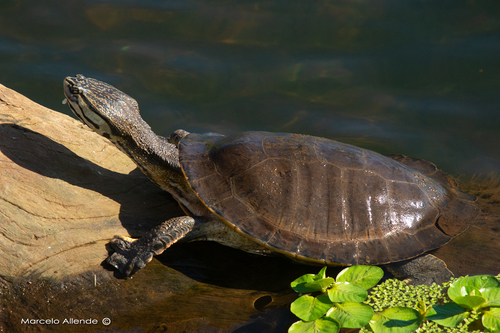
The carapace is mostly brown to dark brown, and commonly marked with scattered dark blotches.
Plastron Coloration
The plastron, the underside of the shell, is yellowish.
Head Structure
Individuals have a large head with a projecting snout, and a horny plate on the top of the head.
Neck Flexion
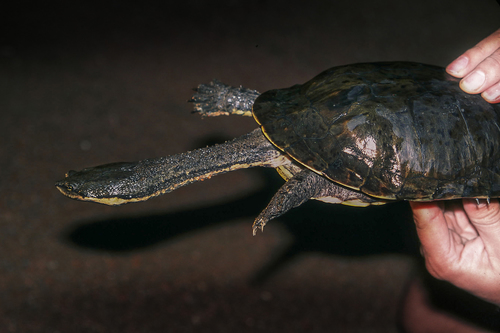
The neck can fold sideways.
Foot Structure
The feet are both webbed and clawed.
Hatchling Leg Morphology
Hatchlings have serrated hind legs that smooth out as they mature.
Aquatic Habitat Range
Myuchelys latisternum is most commonly found in headwaters or tributaries of larger rivers, including creeks, waterholes, dams, and lakes.
Terrestrial Habitat Adaptability
It is a highly adaptable species, and has been recorded across a range of landscapes including savannah woodlands, tropical rainforest, farmland, and semi-urban environments.
Basking Behavior
Individuals can often be seen basking on logs and rocks adjacent to their aquatic habitat; it remains unknown whether this basking behavior serves a thermoregulatory purpose.
Sexual Maturity Size
Males of this species reach sexual maturity when they have a straight carapace length (SCL) of 125–135 mm, while females reach sexual maturity at an SCL of 182–189 mm.
Mating Period
Courtship behaviors occur year-round, but mating has only been observed in mid-January.
Nesting Site Distribution
Nesting sites are not found in large groups; instead, nesting individuals are typically seen alone or in pairs at dispersed locations along watercourses. Nests have been found in soil up to 100 meters away from the water.
Nesting Season
Females nest between September and December each year.
Clutch Characteristics
They can produce three to four clutches per nesting season, each containing 9 to 20 eggs.
Egg Incubation
Eggs hatch in approximately 60 days, before the start of winter; the incubation period is shorter in southern parts of the species' range.
Egg Structure Variation
Descriptions of egg structure vary: some sources note eggs are hard-shelled, measuring 34 × 22 mm, while others describe eggs as small and flexible-shelled.
Hatchling Size Variation
Hatchlings from central Queensland measure 30 × 29 mm (SCL × carapace width), while hatchlings from northern New South Wales average 32.5 × 22.5 mm in the same measurements.