About Hydromedusa maximiliani (Mikan, 1825)
Common Name and Classification
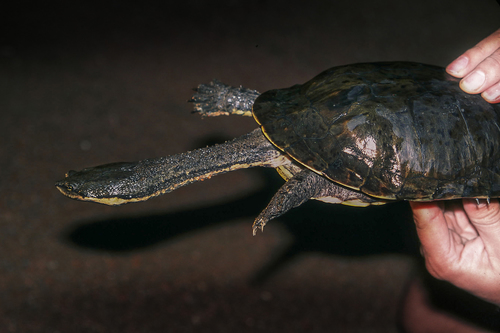
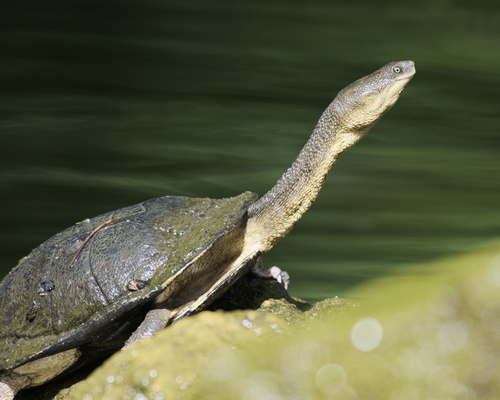
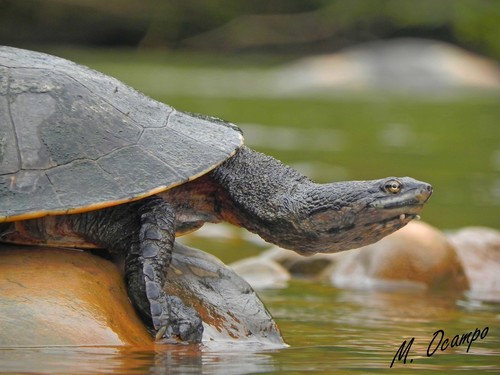
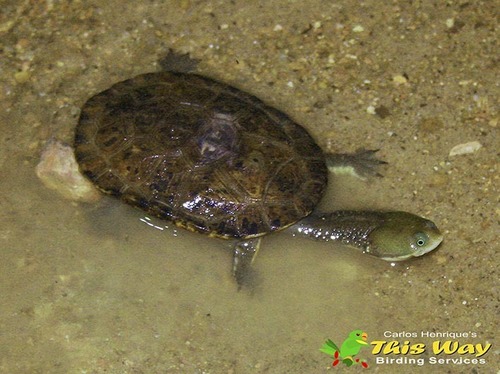
Hydromedusa maximiliani, commonly called the Brazilian snake-necked turtle, is a small turtle species.
Adult Size and Weight
Adults reach a straight carapace length of 10–20 cm (3.9–7.9 in) and weigh between 120–520 g (4.2–18.3 oz).
Carapace Characteristics
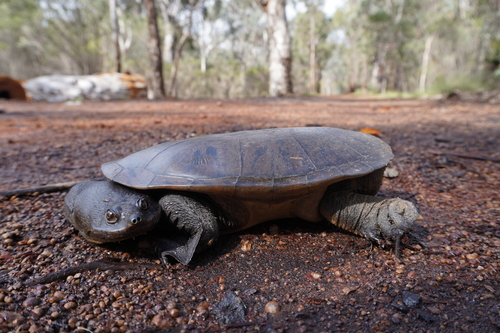
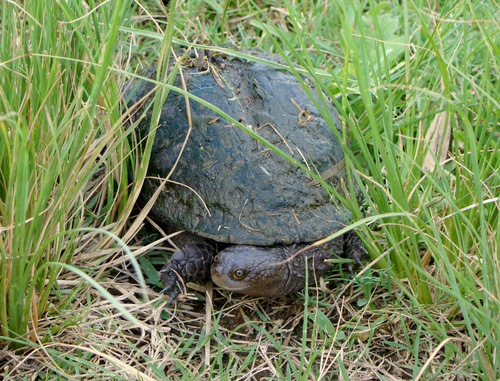
Adult carapaces are oval-shaped, and range in color from dark gray to dark or light brown.
Plastron Coloration
The plastron is yellow or cream colored.
Head and Jaw Features
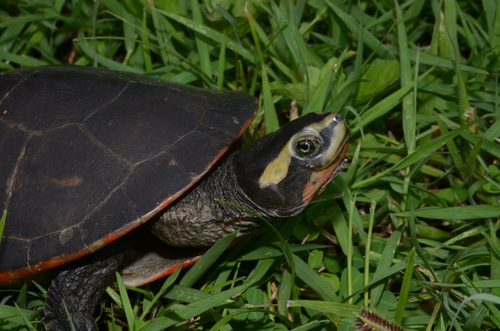
This species has a moderate-sized head with a small snout and yellowish jaws, and has no barbels on the chin.
Iris Color
The iris is black.
Body Surface Coloration
The dorsal surface of the head, neck, and limbs is olive green to gray, while the ventral surface is a lighter cream color.
Geographical Distribution
This turtle is native to southeastern Brazil, where it occurs in the states of Bahia, Minas Gerais, Espírito Santo, Rio de Janeiro, and São Paulo.
Habitat Range and Elevation
Its range is linked to the mountainous Atlantic rainforest, and it is generally found in mountain streams located above 600 m (2,000 ft) elevation.
Stream Habitat Characteristics
It inhabits shallow streams 15 to 100 cm (6–39 in) deep, with clear, cold water and sandy or rocky substrates.
Basking Behavior
Due to the dense forest canopy and closed understory, these streams get very little sunlight, so the turtles can only bask in gaps along the stream banks.
Reproduction
Hydromedusa maximiliani is oviparous, and lays its eggs in terrestrial nesting sites.