About Myodes gapperi (Vigors, 1830)
Common Name and General Appearance
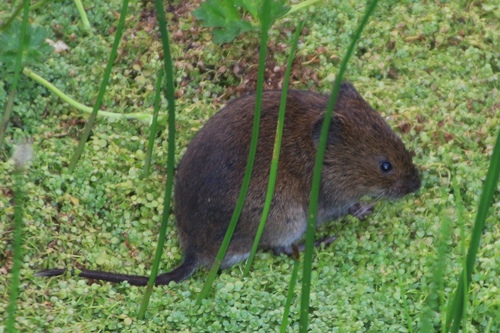
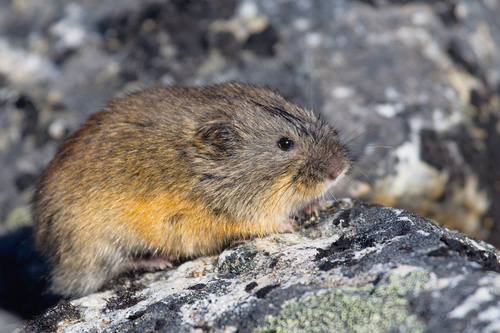
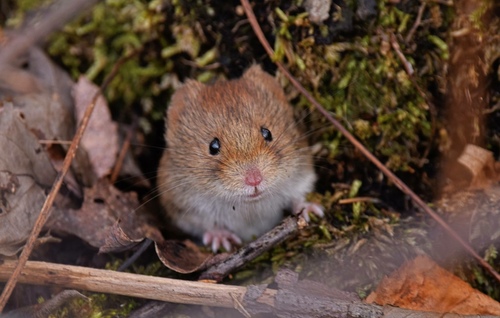
This species, commonly called the southern red-backed vole, has short, slender bodies with a reddish band running along the back, and a short tail.
Body Coloration
The sides of the body and head are grey, and the underparts are a paler shade. A grey color morph occurs in the northeast portion of this species' range.
Adult Size and Weight
Adult individuals measure 12–16.5 cm (4.7–6.5 in) in total length, with a 4 cm tail, and weigh between 6 and 42 g, with an average weight of 20.6 g (0.21–1.48 oz; average 0.72 oz).
Habitat Preferences
Southern red-backed voles inhabit coniferous, deciduous, and mixed forests, and are often found near wetlands.
Movement Paths
They travel along established paths: these are runways through low surface vegetation in warm weather, and tunnels through snow in winter.
Diet Components
They are omnivorous, feeding on green plants, underground fungi, seeds, nuts, roots, insects, snails, and berries.
Food Storage Behavior
They store food items including roots, bulbs, and nuts to eat later.
Activity Patterns
Southern red-backed voles are active year-round, and are most active at night.
Burrow Use
They use burrows dug by other small animals like squirrels and groundhogs.
Nest Characteristics
Their nests measure 7–10 cm in length; nests are built from scavenged plant materials collected from the forest floor, and are located either underground or in trees.