About Microtus townsendii (Bachman, 1839)
Species Classification
Townsend's vole (Microtus townsendii) is one of the largest vole species native to North America.
Adult Size and Weight
Adults reach a total length of 169 to 225 mm (6.7 to 8.9 in), which includes a tail measuring 48 to 70 mm (1.9 to 2.8 in), and have a body weight of 48 to 73 g (1.7 to 2.6 oz).
Ear and Fur Characteristics
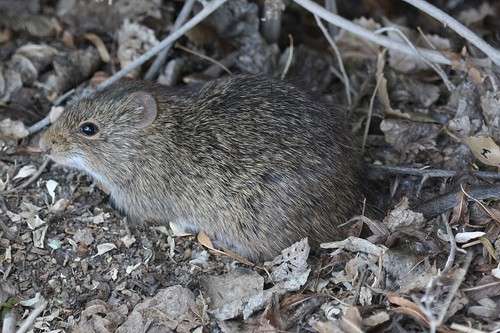
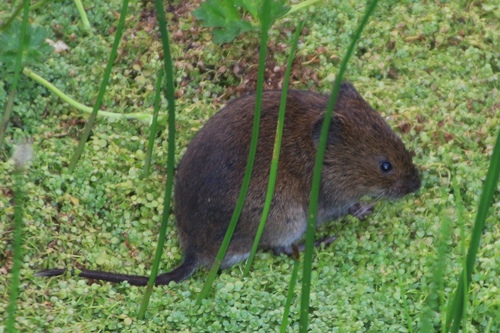
This species has wide, prominent ears that are clearly visible above its thin, coarse fur.
Adult Body Coloration
The upper body is dark brown, with many guard hairs that have black tips, while the underparts are a paler shade.
Extremity Coloration
The feet are slate grey, and the tail is blackish on its upper surface and dark brown underneath.
Juvenile Appearance
Juvenile Townsend's voles are generally darker than adults, with dark grey underparts and entirely black tails and feet.
General Distribution Range
Townsend's vole occupies the extreme western portion of North America.
Latitudinal Range
Its range stretches south from Vancouver Island, British Columbia, through Washington state and Oregon, to Humboldt Bay in California.
Elevational Range
The species occurs from sea level up to 1,830 m (6,000 ft) in the Olympic Mountains, and up to 915 m (3,002 ft) in the Cascade Range.
Habitat Preferences
These voles typically inhabit wet meadows, marshes, flood plains, wet areas with dense tall vegetation, and salt marshes.
Population Density Impacts
Their populations can reach extremely high densities, which can impact or displace other local species.
Ecological Role as Prey
Their rapid proliferation rate makes them a reliable food source for many other animal species.