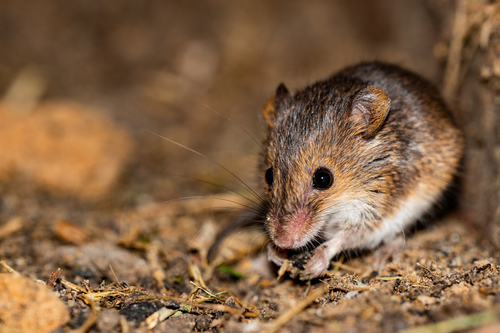
About Mus minutoides A.Smith, 1834
Taxonomy and Distribution
The African pygmy mouse (Mus minutoides, first described by A. Smith in 1834) is one of the smallest rodent species. It is widespread across sub-Saharan Africa, and kept as a pet in other regions of the world. Like the common, widely introduced European house mouse, the African pygmy mouse belongs to the large superfamily Muroidea, a group that contains over 1000 different species. It forms a superspecies complex with Mus musculoides.
Coloration
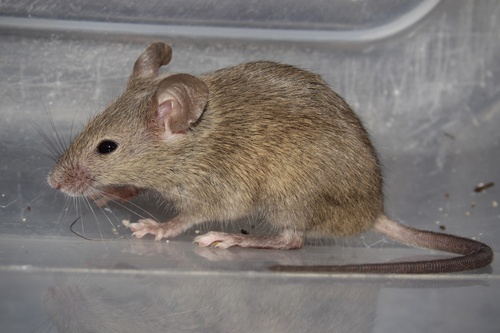
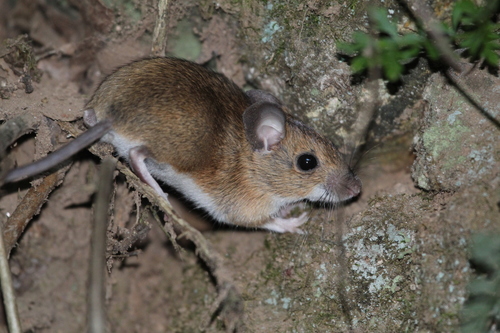
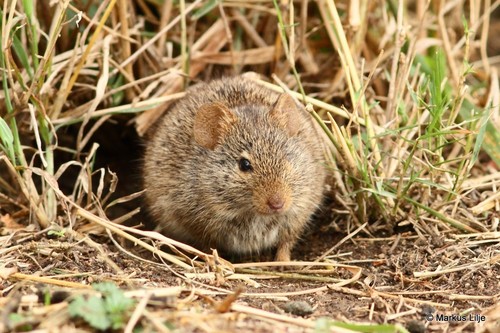
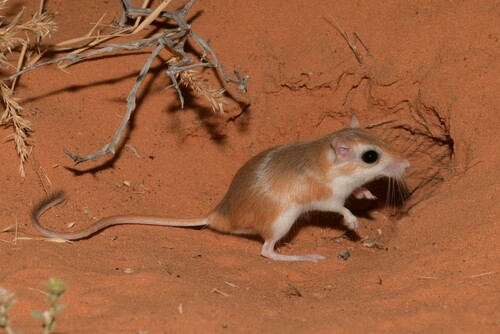
The African pygmy mouse ranges in color from grey to brick-red over its whole body, with a pale underside. It has small but prominent triangular ears.
Body Size
The average adult body length is 50 mm (2.0 in), with an additional 40 mm (1.6 in) of tail length. The average adult body weight is 5 g (0.18 oz).
Breeding and Birth
This species reaches breeding age at around 6 to 8 weeks. Pregnancy lasts approximately 20 days, and litters of around three young are born blind and hairless. Newborns weigh an average of 0.8 g (0.028 oz).
Development and Lifespan
Their eyes open after 2 weeks, and weaning finishes after 3 weeks. The typical lifespan of the African pygmy mouse is about 2 years, though some captive individuals have been recorded living over 4 years.
Dew Collection Behavior
The African pygmy mouse has several unique traits. It stacks pebbles at the entrance to its burrow; overnight, the pebbles collect dew, and the mouse drinks this dew in the morning before returning to its den.
Sex Determination System
Its sex determination system differs from that of most mammals: rearrangements of the X chromosome mean that many XY individuals of this species are actually female.
Habitat and Behavior
African pygmy mice live in colonies or pairs in grass habitat near water, and are excellent climbers.