About Mus musculus Linnaeus, 1758
Taxonomic Identity
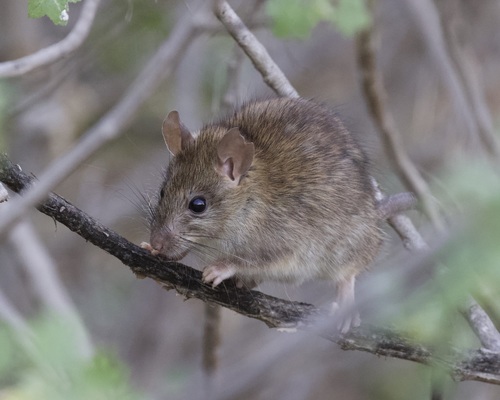
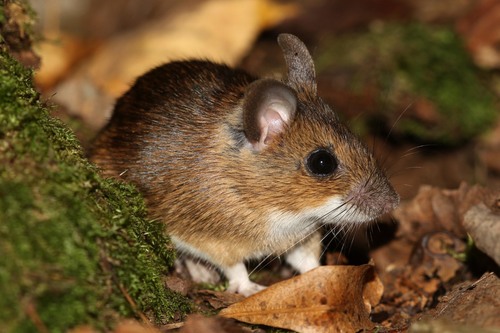
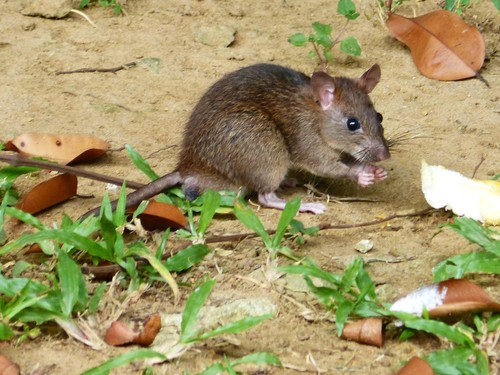
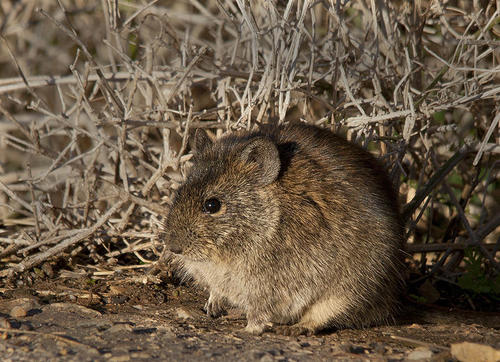
Mus musculus (house mouse, Mus musculus Linnaeus, 1758) has the following physical, ecological and life history characteristics.
Body and Tail Length
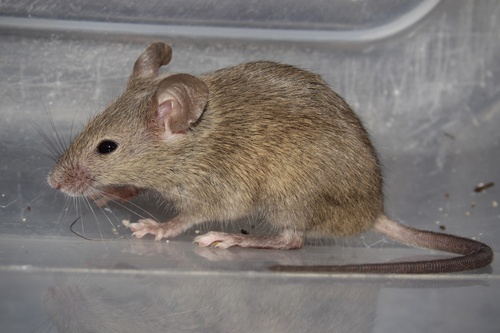
Adult house mice have a body length (from nose to the base of the tail) of 7.5–10 cm (3–4 in), a tail length of 5–10 cm (2–4 in), and typically weigh 11–30 g (3⁄8–1 oz).
Fur Coloration
Wild house mice vary in fur color from grey and light brown to black, with individual agouti-colored hairs; domesticated fancy mice and laboratory mice are bred in many colors ranging from white to champagne to pink.
Fur Distribution
They have short hair, and some but not all subspecies have a light-colored belly. Very little hair grows on their ears and tail.
Hind Foot Size
Compared to Apodemus mice, house mice have short hind feet that are only 15–19 mm (9⁄16–3⁄4 in) long.
Locomotion Traits
Their normal gait is a run with a stride of about 4.5 cm (1+3⁄4 in), and they can jump vertically up to 45 cm (18 in).
Vocalization
They produce a high-pitched squeak as their vocalization.
Habitat Range
House mice can thrive in a wide variety of conditions; they live in and around homes and commercial structures, as well as in open fields and agricultural lands.
Newborn Sex Identification
Newborn male and female house mice can be distinguished on close inspection: the anogenital distance in males is roughly double that of females.
Juvenile Sex Traits
From around 10 days of age, females have five pairs of mammary glands and nipples, while males have no nipples.
Adult Sex Traits
When sexually mature, the most obvious, striking difference is the presence of testicles in males; these testicles are large relative to the rest of the body and can be retracted into the body.
Tail Hair Covering
The house mouse's tail aids in balance, and only has a thin covering of hair.
Tail Thermoregulation Function
It is the main peripheral organ the species uses for heat loss during thermoregulation, with the hairless parts of the paws and ears contributing to heat loss to a lesser degree. Blood flow to the tail can be precisely controlled in response to changes in ambient temperature via a system of arteriovenous anastomoses, which can increase the temperature of the tail skin by as much as 10 °C (10 K; 18 °F) to release excess body heat.
Tail Length Variation
Tail length varies based on the environmental temperature the mouse experiences during postnatal development, so mice living in colder regions usually have shorter tails.
Additional Tail Functions
The tail also helps with balance when the mouse climbs or runs, acts as a support base when the mouse stands on its hind legs in a behavior called tripoding, and conveys information about an individual's dominance status during interactions with other mice.
Thymus Organ Structure
In addition to the regular pea-sized thymus organ located in the chest, house mice have a second functional pinhead-sized thymus organ in the neck next to the trachea.
Female Estrous Cycle
Female house mice have an estrous cycle that is around four to six days long, with estrus itself lasting less than one day. If multiple females are kept together in crowded conditions, they often do not enter estrus at all; if they are then exposed to male urine, they will enter estrus after 72 hours.
Male Courtship Vocalizations
Male house mice court females by emitting characteristic ultrasonic calls in the 30 kHz–110 kHz range. These calls are most frequent during courtship when the male is sniffing and following the female; calls continue after mating starts, and coincide with mounting behavior.
Courtship Call Triggers
Female pheromones can trigger males to produce these calls. The vocalizations differ between individual mice and have been compared to bird songs due to their complexity.
Female Mating Vocalizations
Although females are capable of producing ultrasonic calls, they typically do not do so during mating behavior.
Mating Plug Function
After copulation, female house mice normally develop a mating plug that prevents additional copulation. This plug is not required for pregnancy to start, as pregnancy can occur without the plug, and the presence or absence of the plug does not affect litter size.
Mating Plug Duration
The plug stays in place for around 24 hours.
Gestation and Litter Size
The gestation period is approximately 19–21 days, and females give birth to litters of 3–14 young, with an average of six to eight per litter.
Reproductive Output
A single female can produce 5 to 10 litters per year, allowing house mouse populations to grow very quickly.
Breeding Seasonality
Breeding can occur year-round; however, wild house mice do not reproduce during colder months, even though they do not hibernate.
Newborn Pup Traits
Pups are born blind, without fur, and without fully developed ears.
Pup Developmental Milestones
Their ears are fully developed by the fourth day after birth, fur begins to grow at around six days, and the eyes open around 13 days after birth. Pups are weaned at around 21 days.
Sexual Maturity Age
Females reach sexual maturity at about six weeks of age, and males at about eight weeks, but both can mate as early as five weeks of age.