About Apodemus agrarius (Pallas, 1771)
Upperpart Coloration
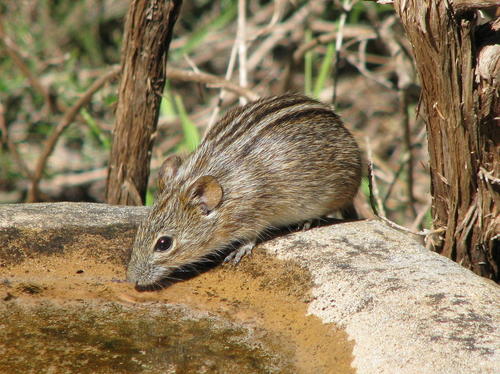
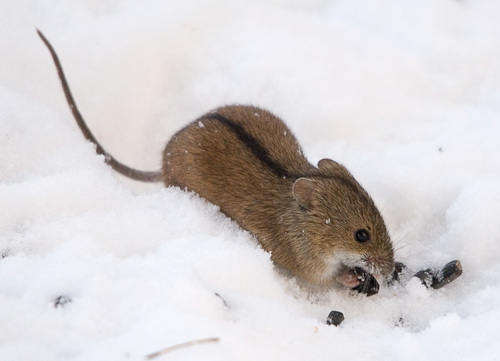
The striped field mouse (Apodemus agrarius (Pallas, 1771)) has grayish brown upperparts with a rusty tint and a prominent black mid-dorsal stripe.
Underpart & Head Features
Its underparts are paler and grayish, and it has relatively small ears and eyes.
Adult Size & Weight
Adults can reach a body length of 126 mm, have a tail up to 90 mm long, and weigh up to 50 g.
Distribution Pattern
This species has an extensive but disjunct distribution split into two separate ranges.
Western Range Extent
The first range extends from central and eastern Europe north to Russia's Lake Baikal, and south to China.
Eastern Range Extent
The second range covers parts of the Russian Far East, stretching from Mongolia to Japan.
Range Expansion History
Its expansion across Eastern Europe is a relatively recent event, and the species is believed to have arrived in Austria during the 1990s.
Warm Season Habitats
It occupies a wide variety of habitats, including woodland edges, grasslands, marshes, pastures, gardens, and urban areas.
Winter Shelter Sites
In winter, it can often be found in haystacks, storehouses, and human dwellings.
Burrow Characteristics
The striped field mouse digs short burrows that have a nesting chamber at a shallow depth.
Activity Pattern
It is nocturnal in summer, but active mostly during the day in winter.
Diet Composition
It has a varied diet that includes green plant parts, roots, seeds, berries, nuts, and insects.
Reproduction Rate
This mouse produces three to five broods per year, with an average of six young per litter, so populations can grow rapidly during favorable conditions.
Population Limiting Factors
Limiting factors for populations include frequent torrential rain in the warm season, early soil freezing, and predation.