About Morus capensis (Lichtenstein, 1823)
Adult Plumage (Distant View)
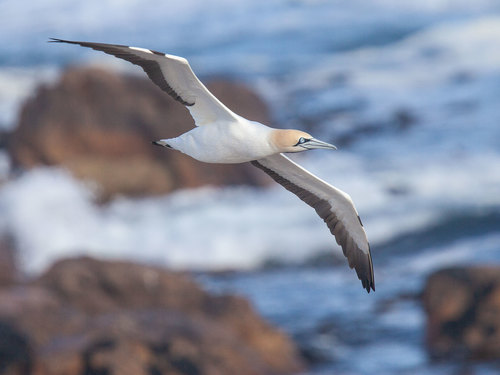
In flight, the Cape gannet is easy to identify by its snow-white body, black tail, black primary and secondary wing feathers, and dark bill.
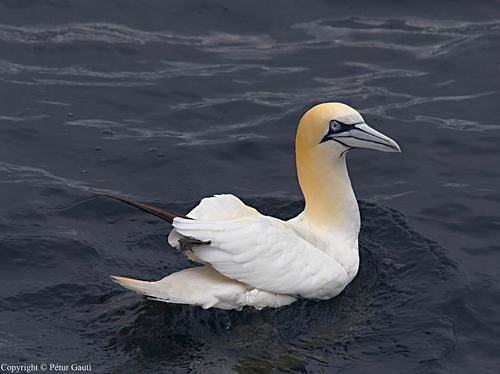
Adult Plumage (Close View)
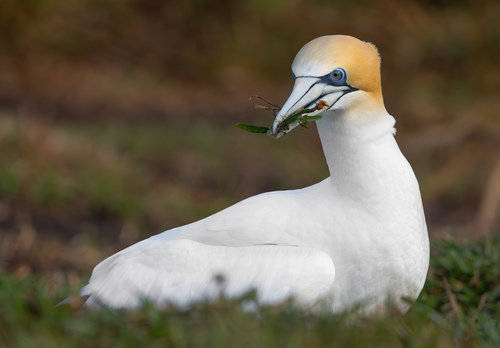
When viewed up close, its distinctive golden crown and nape are visible, with the golden color gradually fading to white on the neck.
Juvenile Plumage
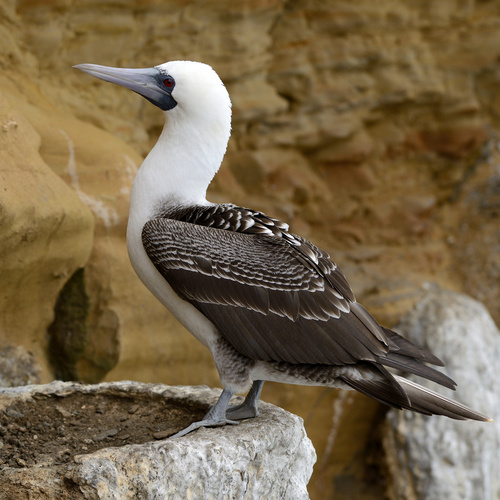
Juvenile and immature Cape gannets are dark brown with a pale bill, and can be mistaken for dark-colored boobies at first glance.
Adult Size Measurements
Adult Cape gannets measure roughly 84–94 cm (33–37 in) in length, have a wingspan of 171–185 cm (67–73 in), and weigh approximately 2.6 kg (5.7 lb).
Distinction from Australasian Gannets
Cape gannets can be distinguished from Australasian gannets by their all-black tail, a longer black stripe running down the throat from under the beak, and more extensive black coloring on the face, though all these differences are only visible when seen from close range.
Distinction from Northern Gannets
Cape gannets are also very similar to northern gannets; northern gannets differ from Cape gannets by having an entirely white tail and wings that are only black at the tips.
Similarity to Blue-footed Booby
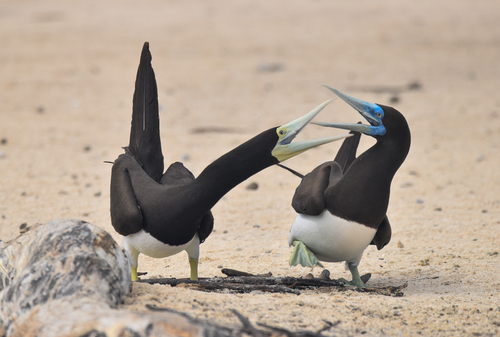
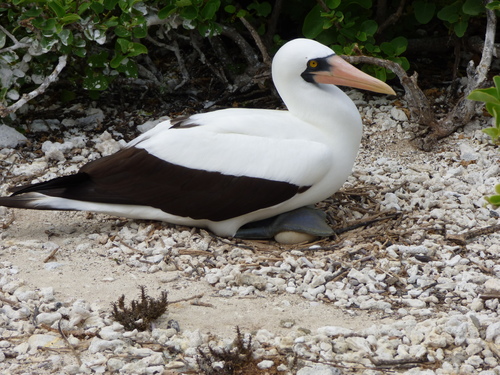
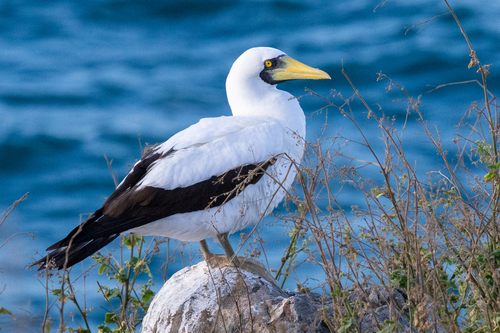
Cape gannets are also similar in appearance to the blue-footed booby (Sula nebouxii).
Breeding Range
The breeding range of the Cape gannet is limited to southern Africa, spanning three islands off Namibia and three islands off South Africa.
Nesting Habitat
They typically nest in large, dense colonies on flat islands, or on flat ledges on the steeply sloped Mercury Island off Namibia.
1996 Global Population Estimate
In 1996, the global Cape gannet population was estimated to be around 340,000 birds, with 12% of the population located in Namibia and 88% located in South Africa.
Largest Breeding Colony
The largest colony of Cape gannets, which hosts over 140,000 birds, is found on Malgas Island, South Africa.
Vagrant Breeding Records
Vagrant Cape gannets have been recorded successfully breeding with Australasian gannets at Australian breeding colonies.
Non-breeding Range
The non-breeding range of the Cape gannet stretches along African coasts, from the coastal waters of the Gulf of Guinea on the west coast to Mozambique on the east coast.
Offshore Occurrence
They rarely occur more than 100 km offshore, though there are records of Cape gannets found more than 200 km offshore in both the Atlantic and Indian Oceans.