About Sula variegata (Tschudi, 1843)
Scientific Name and Overall Plumage
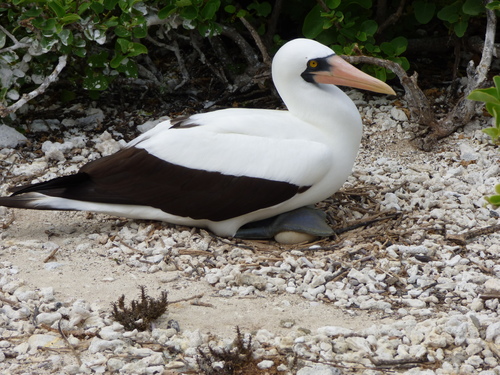
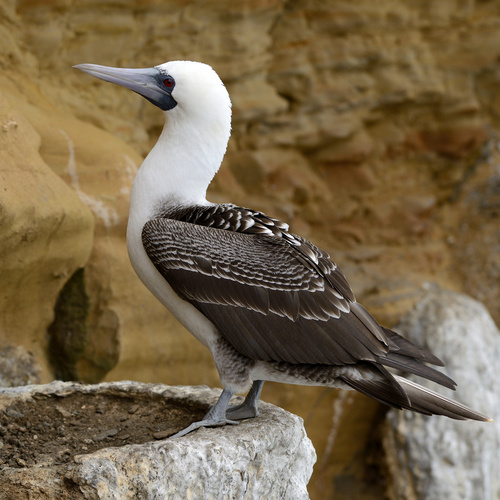
The Peruvian booby, with the scientific name Sula variegata (Tschudi, 1843), has brown upperparts, and a white head and underparts.
Wing Pattern
There is noticeable white mottling on the upper side of the wings, and its wing-coverts are tipped white, creating a scale-like pattern.
Bill and Feet Morphology
It has a long, pointed, grey bill and grey webbed feet.
Distinction from Congeners
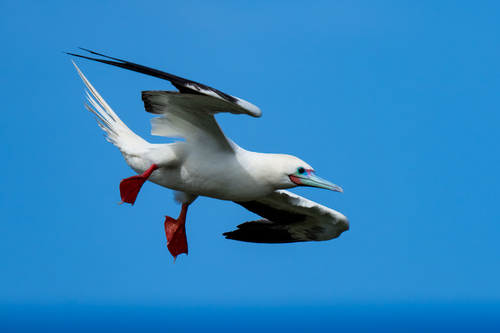
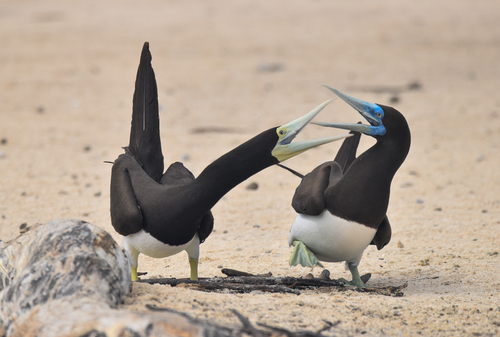
This set of features differentiates the Peruvian booby from the characteristic coloring of blue-footed and red-footed boobies.
Sexual Size Dimorphism
Females are generally larger than males: on average, female bodies are 19% heavier, and their wings are 4% larger.
Marine Range
The Peruvian booby is restricted to the waters of the Humboldt Current, off the coast of South America.
Coastal Distribution
It can be found off the shores of Peru, ranging south to the middle part of Chile.
Key Research Locations
Because the species is abundant on the islands of Lobos de Tierra and Lobos de Afuera, a great deal of research on this species has been done at these locations.
Nesting Habitat Temperature
Its colonies nest on smooth, windswept sand flats that keep nest temperatures within approximately 28 °C to 38 °C.
Nest Density
These salt flats, also called pampas, allow for a fairly high density of Peruvian booby nests.
Breeding Season Timing
Peruvian boobies can breed year-round, but the main breeding season falls during the austral spring and summer, from September to March.
Multiple Breeding Attempts
Paired birds may attempt to breed a second time in a single year depending on food availability.
Clutch Size
Clutch size ranges from one to four eggs, but most clutches have 2–3 eggs.
Incubation Details
The eggs are pale blue, and are incubated for approximately 4 to 5 weeks, with both male and female parents sharing nest attendance duties.
Chick Rearing Period
The chick rearing period lasts about 3 months.
Breeding Success Factors
Breeding success depends on food availability, and is linked to factors including colony location, colony size, and timing of breeding, among other variables.