About Monarda punctata L.
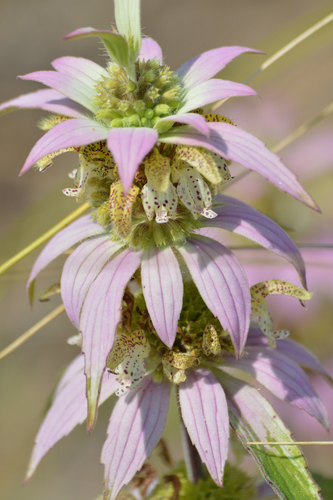
Monarda punctata L. is a thyme-scented plant. It produces heads of purple-spotted tubular yellow flowers that grow above rosettes of large bracts tipped with white or pink. This plant contains thymol, a compound that acts as an antiseptic and fungicide. Unlike most species in the Monarda genus, which produce a single flower head per stem, Monarda punctata has flowers arranged in stacked clusters up the stem, with bracts growing outward from the stem just below each flower cluster. The bracts range in color from light pink to white, are longer than the flowers, and are valued for their ornamental appearance, while the yellow flowers marked with brown spots are only visible when viewed up close. Its native range covers Ontario and Quebec, and most of the Eastern United States, stretching from Vermont to Minnesota, south to Texas and New Mexico, and north to Kansas, across the entire east coast with the exception of West Virginia. Isolated populations of this species also grow in California. In the U.S. state of Ohio, Monarda punctata is classified as locally endangered. Historically, this plant was used to treat upset stomachs, colds, diarrhea, neuralgia, and kidney disease.