About Mirabilis jalapa L.
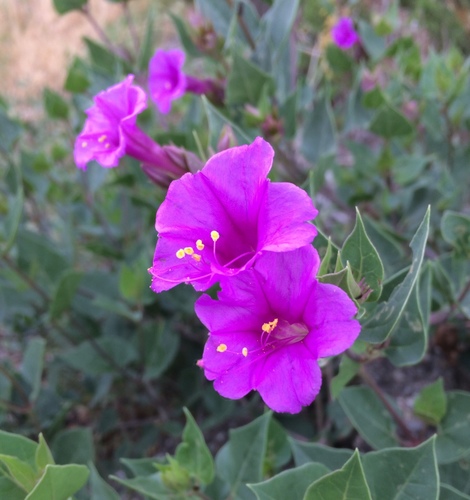
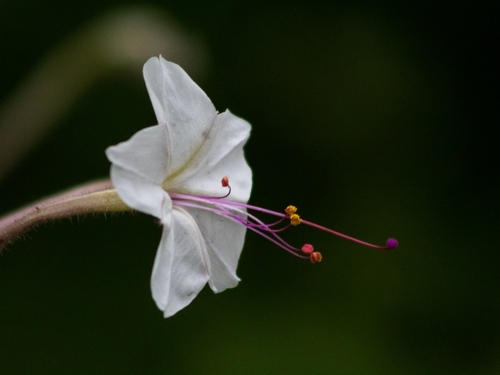
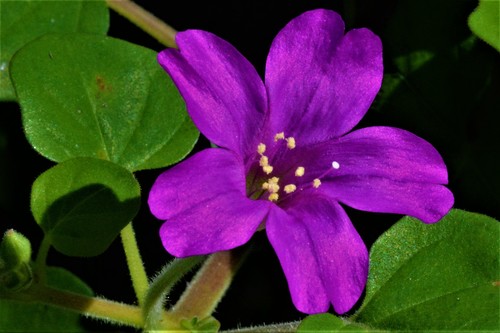
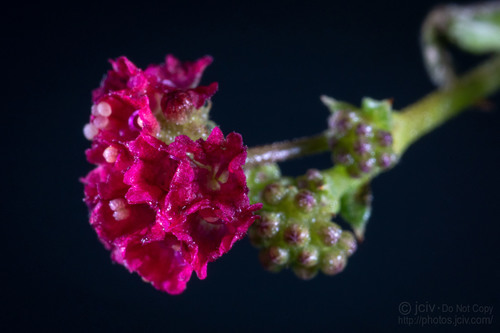
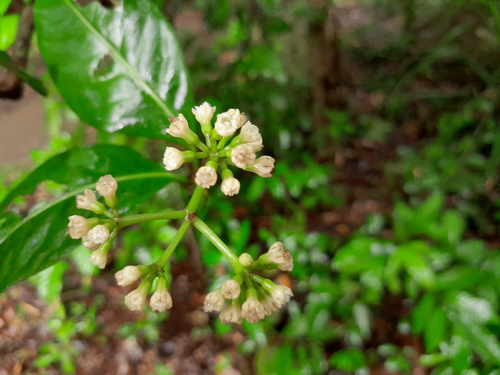
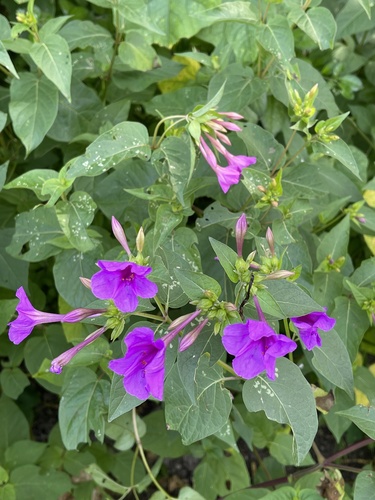
Mirabilis jalapa L. is a perennial herbaceous bushy plant. It most often reaches 1 meter in height, and rarely grows as tall as 2 meters. It may also be grown as an annual, particularly in the temperate zone. Its single-seeded fruits start out greenish-yellow, turning spherical, wrinkled, and black when mature. The plant has thick, solid, quadrangular stems with many branches, and roots form at the stem nodes; its growth habit is often prostrate. A notable characteristic of M. jalapa is that flowers of different colors can grow at the same time on the same plant, and a single flower can have patches of multiple different colors. Flower patterns are categorized as sectors (whole sections of the flower), flakes (stripes of varying lengths), and spots. A single flower can be solid yellow, red, magenta, pink, or white, or it can have a combination of sectors, flakes, and spots. Different flowers on the same plant can have different combinations of colors and patterns. While yellow, pink, and white are the most common flower colors, any mix of these can appear on a single four o'clock plant. Another notable feature is its color-changing phenomenon: for example, flowers on mature yellow varieties can gradually turn dark pink, and white flowers can change to light violet. Contrary to their appearance, the colorful showy structures of M. jalapa are not petals, but pigment-modified calyx tissue. What appears to be the calyx is actually an involucre of bracts. The flowers are funnel-shaped with five lobes; there is no calyx cup (it is replaced by bract leaves), and the structure functions as a corolla. Each inflorescence holds three to seven unopened flowers. It gets the common name "four o'clock flower" from its habit of opening its fragrant flowers in the late afternoon or early evening, and it also opens during overcast weather. Its scent resembles that of tobacco flowers, and attracts moths for pollination. Flowering (anthesis) lasts 16 to 20 hours, so the flowers remain visible for part of the day. Pollination is done by long-tongued moths in the family Sphingidae (sphinx moths or hawk moths) and other nocturnal pollinators drawn to its fragrance. Mirabilis jalapa is native to dry tropical regions of North, Central, and South America, specifically Mexico, Guatemala, Chile, and Peru. It was introduced worldwide as an ornamental plant, and has become naturalized across tropical, subtropical, and temperate regions. It is currently found in many countries across Asia, Africa, the United States, the Middle East, and Europe. In Réunion, it was originally grown as an ornamental, but became naturalized on the west coast between 400 and 700 meters altitude, and on the south coast between 0 and 700 meters. It grows in ruderal debris areas, and is relatively common as a weed in sugarcane fields on the west and south coasts. Its high seed production and rapid growth allow it to cover 30% to 50% of affected sugarcane plots. In cooler subtropical and temperate regions, the above-ground growth dies back after the first frosts or as temperatures cool, typically after the plant matures and finishes self-seeding. It regrows the following spring from its tuberous roots. Mirabilis jalapa grows best in full sun. When grown in full sun, its leaves often wilt, then recover vigorously in the evening as temperatures drop and the sun sets. It cannot tolerate cold: the above-ground portion is damaged and may die after the first frost, but the underground portion remains alive and regrows in spring. The plant self-seeds readily, and often spreads rapidly if left unmanaged in a garden. Some gardeners recommend soaking seeds before planting, but this is not required. In North America, it grows as a perennial in warm coastal areas, specifically in USDA zones 7 through 10. The plant is easy to grow in full sun or partial shade, and grows very quickly under these conditions. It prefers light, humus-rich, well-draining soil with close to neutral pH. It can be grown in pots in a mixture of 80% potting soil and 20% garden soil, using a very deep container with tubers planted 10 cm deep. Seeds are typically sown from mid-February to May, and germinate rapidly at 18 °C. The flowers of M. jalapa are used to make food coloring. An edible crimson dye from the flowers is used to color cakes and jellies. The leaves may be eaten cooked, but only as an emergency food. In herbal medicine, different parts of the plant are used as a diuretic, purgative, and for wound healing. The root is thought to act as an aphrodisiac, and also has diuretic and purgative properties; it is also used to treat dropsy. The leaves are used to reduce inflammation, and a decoction of mashed, boiled leaves is used to treat abscesses. Leaf juice may be applied to wounds to aid healing. The bulbous roots have a laxative effect. Powdered seeds of some varieties are used as a cosmetic and a dye. The seeds are considered poisonous. The plant has potential for bioremediation of soils polluted with moderate concentrations of heavy metals such as cadmium. Among the Kayapo people of Brazil, powder made from dried flowers is sniffed to treat headaches, and root decoction is used to wash wounds and treat skin conditions including leprosy. In Peru, flower juice is used to treat herpes lesions and earache, and root juice is used for earache, as well as for diarrhea, dysentery, syphilis, and liver infections. In Mexico, whole-plant decoctions are used for dysentery, infected wounds, and bee and scorpion stings. Flower extract can be used as a natural pH indicator for acid-base titration; this use was found to be economical and accurate in a 2008 demonstration by Shishir et al. Some studies suggest M. jalapa was introduced to the Himalayan region in ancient times.