About Abronia nana S.Watson
Taxonomic Recognition and Growth Habit
Abronia nana S.Watson is recognized for its delicate low-growing growth habit and vibrant flowers.
Preferred Soil and Habitat Types
It grows best in sandy, well-drained soils, and is most often found in dunes, desert flats, and rocky outcrops.
Plant Structure and Size
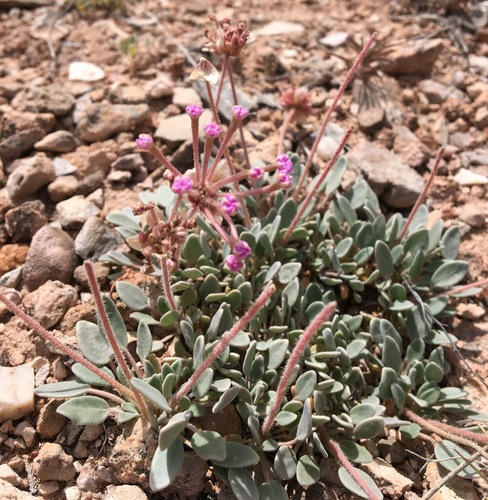
The species forms a compact, prostrate or low-mounding structure that usually reaches no more than a few inches in height.
Ecological Role of Growth Form
Its sprawling growth helps stabilize the sandy soils of its native habitat.
Leaf Morphology and Texture
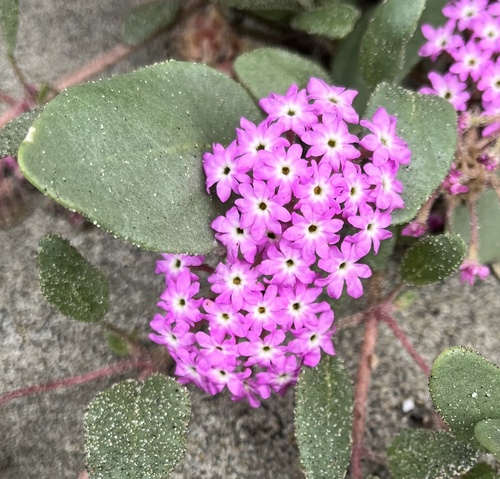
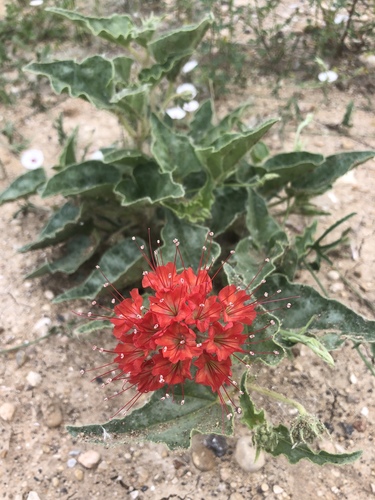
The leaves of Abronia nana are simple, shaped from ovate to lanceolate, and are frequently covered in fine glandular hairs, which creates a somewhat sticky texture.
Adaptive Trait Functions
This adaptive trait helps the plant reduce water loss and deters herbivory.
Flower Structure and Arrangement
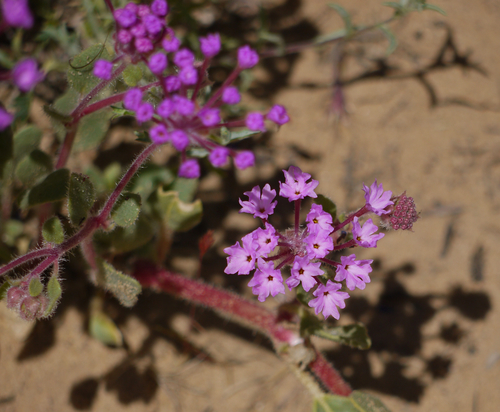
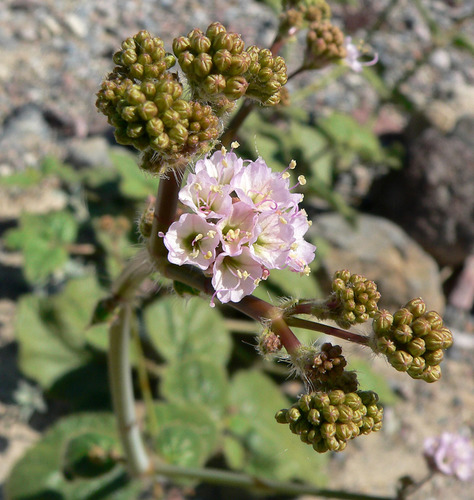
Its flowers are tubular and arranged in clustered umbels at the tips of stems.
Flower Color and Pollination Trait
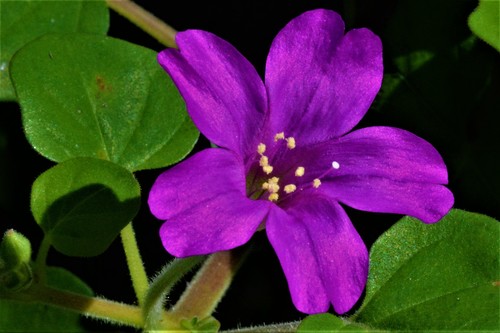
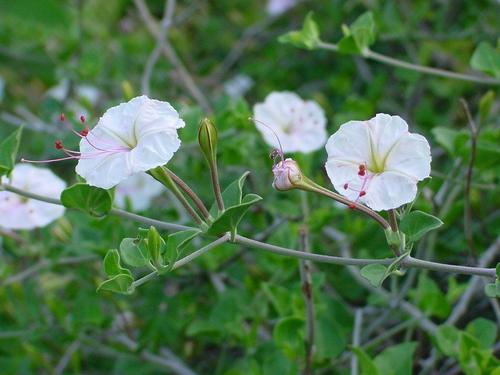
The blooms are typically pink, magenta, or occasionally white, and release a pleasant fragrance in the evening and early morning to attract pollinators.
Fruit and Seed Dispersal
Abronia nana also produces small dry fruits with wings that help the seeds disperse via wind.