About Microtus ochrogaster (Wagner, 1842)
Fur Characteristics
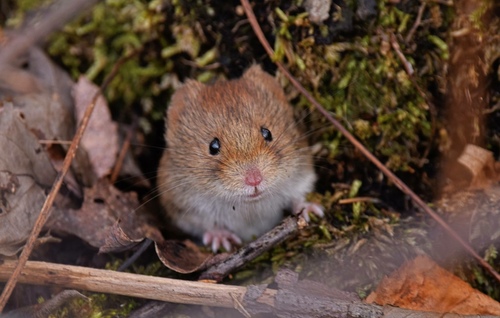
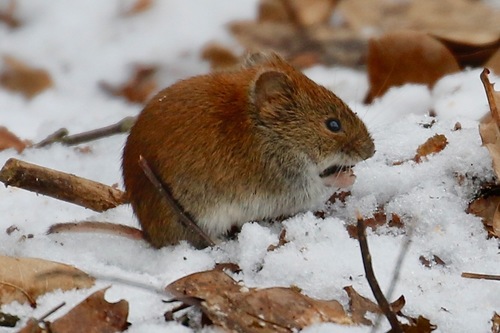
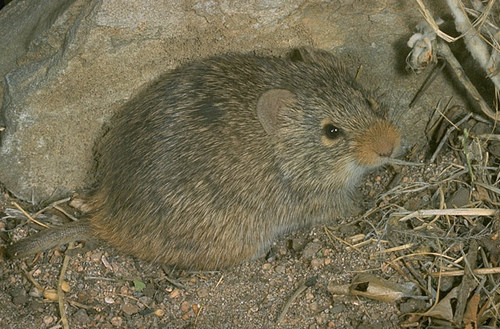
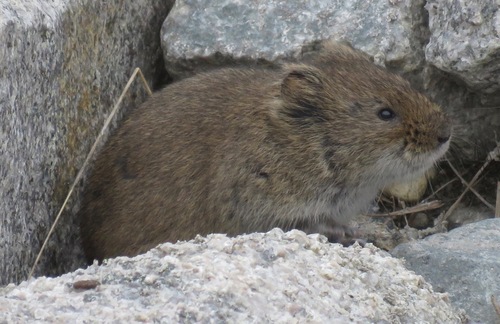
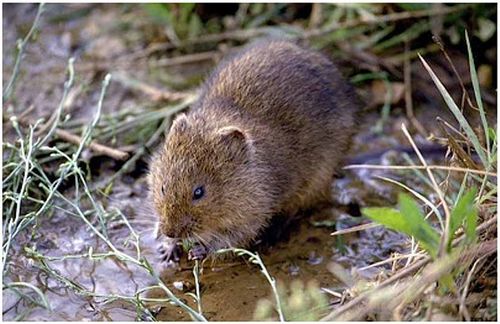
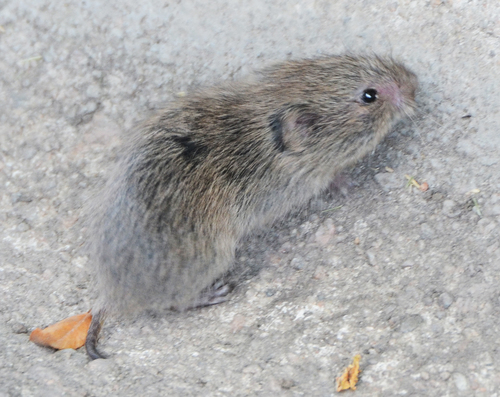
This species, the prairie vole, has long, coarse grayish-brown fur on its upper body and yellowish fur on its lower body.
External Morphology
It has short ears and a short tail that is somewhat darker on the upper side.
Lifespan
Prairie voles rarely live longer than one to two years, and their life expectancy depends on predator presence and local natural environmental factors.
General Distribution
Prairie voles are found in grasslands across the central United States and Canada.
Range Extent
Their range extends from the eastern Rocky Mountains in the west to West Virginia in the east, and north into the Canadian Prairies.
Isolated Subspecies
An isolated relict subspecies, the Louisiana vole, was once found in the Western Gulf coastal grasslands of Texas and Louisiana.
Subspecies Status
It was reportedly abundant in the 1900s, but is now considered extinct, meaning prairie voles are extirpated from Louisiana.
Habitat Type
Prairie voles live in dry fields covered with grasses and weeds; the largest populations are typically found in fallow fields or hay fields.
Burrowing Behavior
They dig shallow burrows and create runways through surface vegetation.
Winter Tunneling
In winter, they tunnel underneath snow.
Runway Functions
These runways serve many purposes, from protecting against predators to helping them access food.
Anti-Predator Behavior
Prairie voles are easily disturbed, and will quickly use their burrows if they detect nearby predators or threatening disturbances.
Habitat Preference
Compared to meadow voles, prairie voles prefer to live in drier areas.
Diet Composition
Prairie voles are primarily herbivorous, feeding on grasses, roots, fruit, seeds, and bark, and they also eat some insects.
Food Storage
They store food for later use.
Predators
Their predators include coyotes, hawks, owls, foxes, and prairie rattlesnakes.
Human Interaction
Prairie voles may cause damage to garden plants and small trees.
Mating Season Territoriality
During mating season, prairie voles establish individual territories and defend them from other voles.
Territory Marking
They mark their territories with urine and other secretions.
Defensive Posture
When facing competitors or enemies, they take a defensive posture by raising their forefeet, extending their head forward, and chattering their teeth.
Non-Mating Social Structure
Outside of mating season, prairie voles live communally.
Breeding Seasons
Like other voles, prairie voles can reproduce at any time of year, but their main breeding seasons are fall and spring.
Mating System
Unlike other voles, prairie voles are generally monogamous.
Research Model Relevance
The prairie vole is a well-known animal model for studying monogamous behavior and social bonding, because male and female partners form lifelong pair bonds, huddle and groom each other, share nesting and pup-raising responsibilities, and generally show a high level of affiliative behavior.
Extra-Pair Mating
However, they are not sexually faithful.
Extra-Pair Mating Context
While pair-bonded females usually act aggressively towards unfamiliar males, both sexes will occasionally mate with other voles if given the opportunity.
Gestation Period
The female's gestation period lasts between 20 and 30 days.
Litter Production
Female voles produce two to four litters per year, with each litter containing two to seven young.
Nesting for Birth
They give birth in a vegetation-lined nest located in a burrow or a ground depression.
Litter Size Factors
Litter size varies based on food availability and the age of the female.
Peak Breeding Periods
The highest number of pregnancies, with the largest number of offspring per pregnancy, occur in spring and fall.
Pup Development
Vole pups open their eyes around eight days after birth, and become able to feed on their own at approximately two weeks old.