About Arvicola sapidus Miller, 1908
Taxonomy and Naming
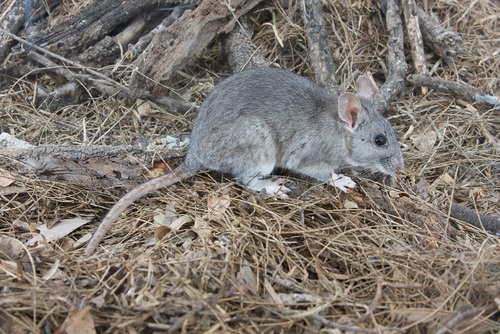
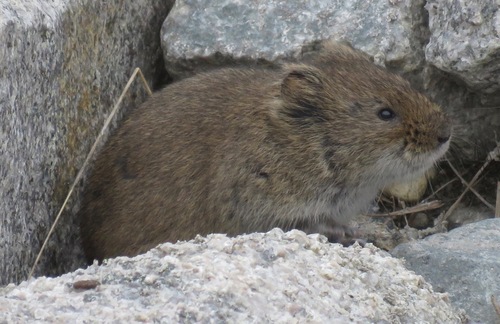
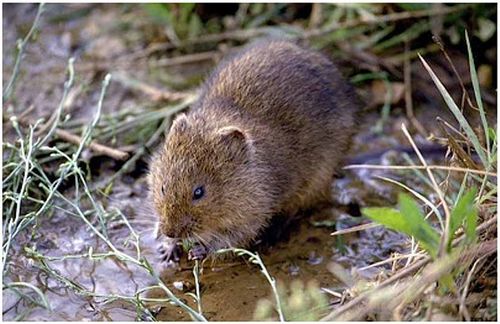
The southwestern water vole, also called the southern water vole (Arvicola sapidus Miller, 1908), is a large amphibious vole native to most of France and the southwestward region spanning Spain and Portugal.
Conservation Status
It is classified as a Near Threatened species on the IUCN Red List.
Habitat Characteristics
This vole occupies scattered, specialized habitats, most commonly small vegetation patches on muddy soil alongside water bodies.
Habitat Use
It uses dense vegetation cover for protection from predators and drought.
Habitat Availability in Southern Spain
In southern Spain, these suitable habitats make up less than 2% of the studied region, which leaves the species' populations naturally fragmented and vulnerable to local extinctions.
Dispersal Patterns
Even though the southwestern water vole is a habitat specialist, it has relatively generalist dispersal patterns.
It is able to cross terrain that appears inhospitable to colonize distant patches of suitable habitat.
Population Gene Flow
Genetic studies using microsatellite markers and mitochondrial DNA have shown that gene flow between populations remains fairly high, even between non-adjacent habitat patches.
This indicates the species has adapted to patchy, unstable habitats through effective long-distance dispersal strategies.
Population Genetic Structure
Population genetic analyses found moderate genetic diversity, with significant genetic structuring that is explained mostly by geographic distance between populations, rather than by specific landscape features.
Dispersal Distance Measurements
Field studies have recorded an average dispersal distance of approximately 700 metres (2,300 ft), with no significant difference in dispersal distance between males and females.
Ecological Resilience
These ecological and genetic results emphasize the vole's resilience and adaptability in naturally fragmented landscapes.
Congeneric Dispersal Comparison
This pattern differs from that of the closely related European water vole (Arvicola amphibius), whose dispersal behavior is typically more restricted by landscape features.