About Mesembrinibis cayennensis (Gmelin, 1789)
Scientific Naming and General Morphology
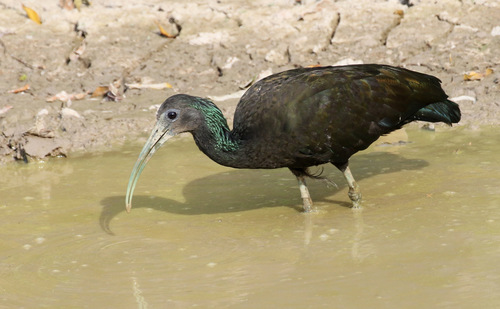
The green ibis (scientific name Mesembrinibis cayennensis (Gmelin, 1789)) is a medium-sized ibis with short legs and a long, slender, decurved bill.
Size Measurements
It measures 45–60 cm (18–24 in) in length and weighs between 700 and 890 g (1.5 to 2.0 lb).
Sexual Dimorphism
Males and females have identical plumage, and their measurements overlap somewhat, though the largest individuals of the species are male.
Breeding Adult Plumage
Breeding adults have glossy greenish-black bodies, pale green legs and bills, and grey bare patches of facial skin.
Juvenile Plumage and Identification
Juveniles have much duller plumage, and can be told apart from the similar glossy ibis by their bulkier build, shorter legs and broader wings.
Flight Posture
Like other ibises, this species flies with its neck held outstretched.
Flight Characteristics
Its flight is heavy, with fewer glides and jerkier wingbeats than its close relatives.
Call Timing and Qualities
Its call is a hollow, hooting sound that accelerates, and is most frequently heard at dawn and dusk.
Call Transcription
The call has been transcribed as kro kro or koro koro, and is described as "mellow".
Current Geographical Range
The green ibis is distributed from Costa Rica south to northern Argentina and Paraguay.
Historical and Vagrant Range
There have been documented sightings of the species as far north as Honduras, and fossil records show that this species previously occurred as far north as Kansas in the United States.
Habitat and Altitude Range
It inhabits a variety of forested wetland habitats, especially swamps and areas along the edges of rivers and lakes, and can be found at altitudes up to 500 m (1,600 ft).