About Marmosa robinsoni Bangs, 1898
Dorsal Coloration
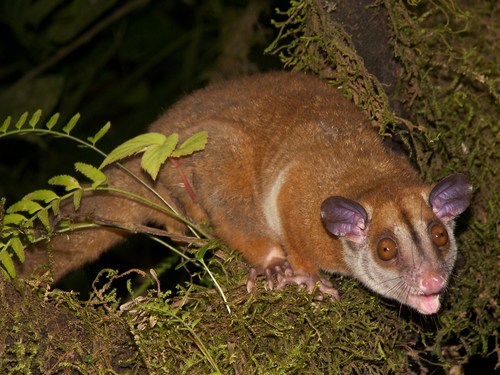
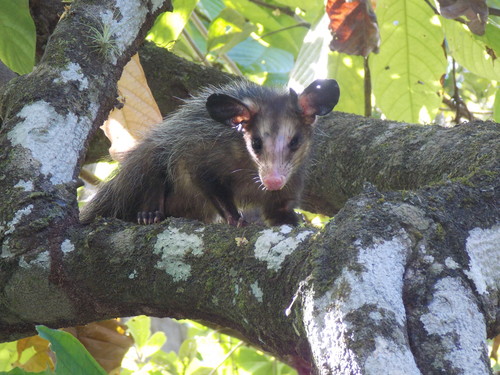
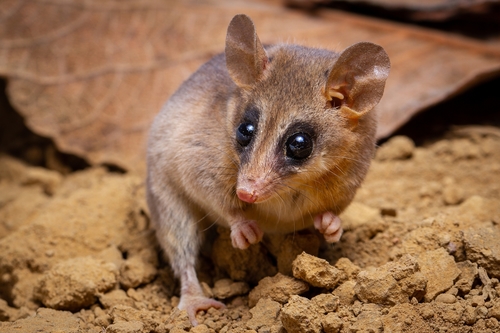
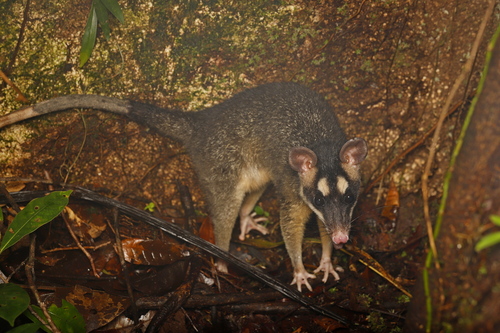
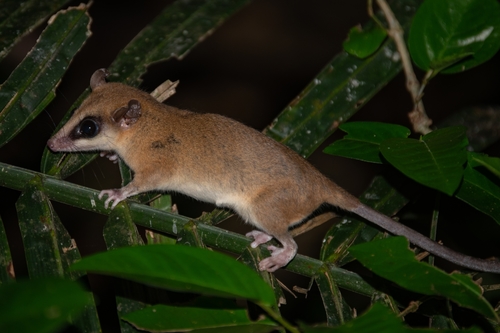
Marmosa robinsoni Bangs, 1898 is typically cinnamon brown with a yellow underside. Its dorsal color ranges from russet to gray, and the top of the head is generally paler than the rest of the body.
Facial Markings
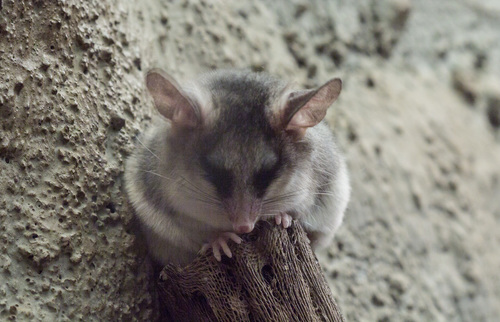
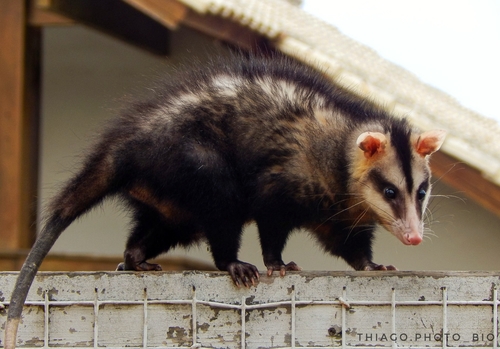
A black facial mask is always present, but its size varies based on the region the individual comes from.
Tail Characteristics
This species has a prehensile tail that is about 1.3 times its body length, covered in fine white hairs.
Foot Structure
Its feet are modified for grasping, with specialized pads and an opposable hallux.
Type Locality
This species was originally collected on Margarita Island, Venezuela.
Habitat Range
It can live in a wide range of habitats from sea level up to 2,600 m in elevation, including lowland and montane moist forests, lowland dry forests, mangroves, savannas, and xeric shrublands.
Sexual Mass Growth Rate
A study conducted in a xeric shrubland of northwestern Venezuela found that female Marmosa robinsoni gain mass three times faster than males.
Home Range Size
The same study also found that individuals of both sexes typically are active in home ranges of approximately 25 m², but pregnant females dramatically reduce their active area to around 1–6 m².
Diet
Observations confirm that M. robinsoni feeds on fruits of columnar cacti, and the species is also thought to prey on insects, as most didelphids do.
Habitat-related Size Variation
In Venezuela, specimens living in agricultural lands and disturbed forests are larger than those collected from cloud and gallery forest, a difference likely caused by the higher productivity of agricultural and disturbed forest habitats.
Mainland Distribution
The known distribution of Marmosa robinsoni extends from Finca Santa Clara in the western Panamanian province of Chiriquì, eastward across the Isthmus of Panama to Colombia and northern Venezuela. While most Venezuelan specimens have been collected north of the Orinoco River, one specimen was found from Ciudad Bolivar on the south (right) bank of the river in Bolívar state.
Island Distribution
The species is also recorded from several continental shelf islands off Central America (for example, Isla del Rey and Isla Saboga) and South America (Isla Margarita, Trinidad, and Tobago), as well as from the Caribbean island of Grenada.
Reproductive Schedule Overview
Marmosa robinsoni follows a simple reproductive schedule.
Litter Size and Gestation
It gives birth to 6 to 14 young after a gestation period of only 14 days.
Neonatal Attachment Period
The tiny newborns, which measure no more than 12 millimeters, attach themselves to the mother's mammae, where they remain for around 30 days.
Pouch Absence
Unlike many marsupials, female mouse opossums of this species do not have a pouch to protect developing young.
Neonatal Development
The young are so underdeveloped when born that their eyes do not open until 39 to 40 days after birth.
Weaning and Lifespan
Young are likely completely weaned after around 65 days, and the species may have an incredibly short lifespan of only one year.
Nest Site Options
Marmosa species build nests for shelter, or make use of abandoned bird nests, holes in trees, or banana stalks.
Nest Site Fidelity
These nest sites are usually not permanent; instead, the opossum will use whatever suitable site is available as sunrise approaches.