About Macaca sinica (Linnaeus, 1771)
Physical description
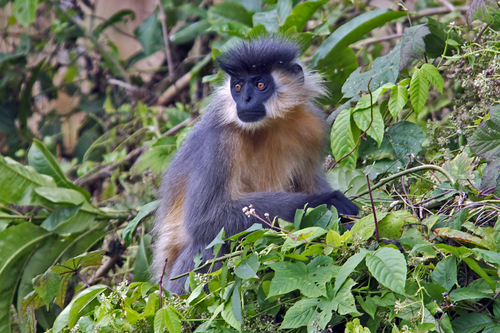
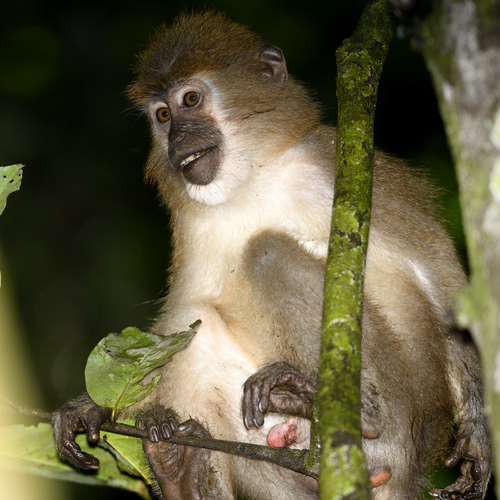
As female Macaca sinica age, their faces turn slightly pink. This color change is especially noticeable in the subspecies M. s. sinica.
Distribution
M. s. sinica Range
The subspecies M. s. sinica occurs from the areas of Vavuniya and Mannar to the lowlands of Anuradhapura, Polonnaruwa, Puttalam, and Kurunegala. It is also found along the arid zone of the Monaragala and Hambantota districts.
M. s. aurifrons Range
The subspecies M. s. aurifrons lives sympatrically with M. s. sinica in the intermediate regions of the country in Kegalle and parts of Kurunegala. It also occurs in the south-western parts of the island, in the Galle and Matara districts near Kalu Ganga.
M. s. opisthomelas Range
The subspecies M. s. opisthomelas was recently identified as a separate subspecies. It is found across the entire south-western region of Ratnapura, in the Nuwara Eliya districts, and around Hakgala Botanical Garden as well as other cold-climate montane forest patches.
Reproduction
Estrus Signaling
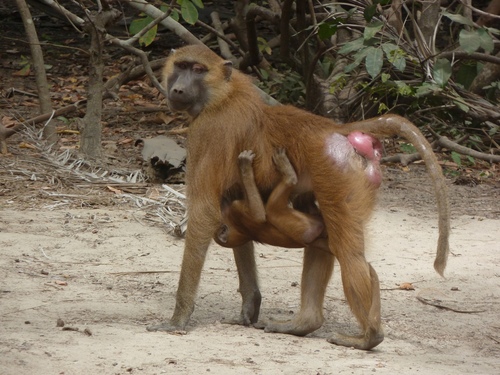
When a female M. sinica is in estrus, her perineum becomes reddish and swells. This signals to males that she is ready to mate.
Birth Interval and Gestation
On average, there are 18 months between births. After a gestation period of 5 to 6 months, the female gives birth to a single offspring.
Infant Development
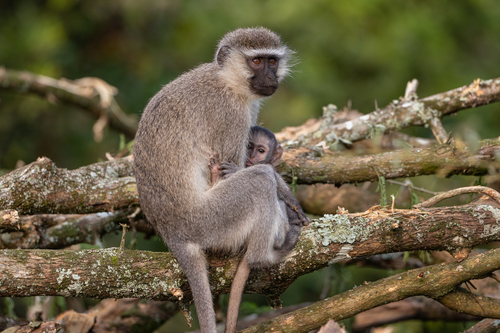
The baby clings to its mother for approximately 2 months; during this period the infant learns social skills critical for survival, and inherits its social standing from its mother's position in the troop.
Male Dispersal
Young males are forced to leave their natal troop when they are between 6 and 8 years of age. This prevents inbreeding and helps the current alpha male keep his position in the troop.
Male Social Mobility
Leaving the troop is the only way a male can change his social standing; if a dispersing male has strong social skills and is physically strong, he may become an alpha male. A single alpha male can sire all of the troop's offspring.
Birth Timing and Location
Birth rarely happens during the day or on the ground. During labor, the female isolates herself from the group, moving roughly 100 meters away.
Parturition Process
The mother stands bipedally during parturition and assists delivery with her hands. The infant is usually born 2 minutes after crowning.
Infant Vocalization
The infant can vocalize almost immediately after birth; this vocal ability is important for the mother and infant to recognize each other's voices. Vocalization also lets the mother alert the infant to imminent danger, and helps them find each other if they become separated.
Post-Birth Maternal Behavior
After birth, the mother licks the infant and positions it so it can access her breasts. She resumes foraging within 20 minutes of parturition.
Placenta Consumption
The mother also eats part of the placenta, because it provides needed protein. The group's alpha female asserts her power by taking part of the placenta for herself to eat.