About Macaca fascicularis (Raffles, 1821)
Sexual Dimorphism Baseline
Crab-eating macaques (Macaca fascicularis) are sexually dimorphic.
Adult Male Size
Adult males weigh between 4.7 and 8.3 kg, with a height ranging from 412 to 648 mm.
Adult Female Size
Adult females weigh between 2.5 and 5.7 kg, and have a height between 385 and 505 mm.
Tail Morphology
Their tails are as long as their head and body combined.
General Fur Coloration
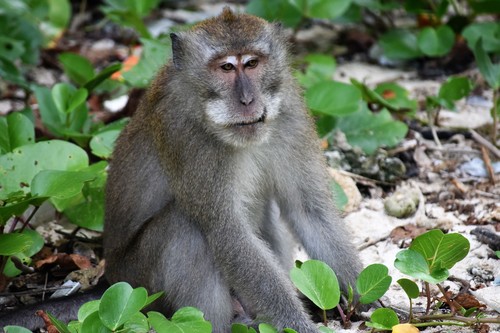
Dorsal fur is generally greyish or brownish, with a white underbelly, and black and white highlights around the crown and face.
Facial Skin Pigmentation
The skin of the face is brownish to pinkish, except for the eyelids, which are white.
Adult Facial Hair Traits
Most adults have a beard covering the face and surrounding areas, excluding the regions around the snout and eyes. Older females have the fullest beards, while males’ beards are more whisker-like.
Subspecies Color Variation
Island-dwelling subspecies tend to have black fur, while subspecies from large islands and the mainland have lighter coloration.
Native Range Overview
The native range of the crab-eating macaque covers most of mainland Southeast Asia, including the Malay Peninsula and Singapore, plus the Maritime Southeast Asian islands of Sumatra, Java, and Borneo, nearby offshore islands, the islands of the Philippines, and the Nicobar Islands in the Bay of Bengal.
Wallace Line Crossing
This primate is a rare example of a terrestrial mammal that crosses the Wallace line, and is found across the Lesser Sunda Islands.
Natural Habitat Types
It inhabits a wide variety of habitats: primary lowland rainforests, disturbed and secondary rainforests, shrubland, and riverine and coastal forests of nipa palm and mangrove.
Human Settlement Adaptation
It also adjusts easily to human settlements.
Cultural and Pest Status
It is considered sacred at some Hindu temples and on some small islands, but is considered a pest around farms and villages.
Habitat Preference
It typically prefers disturbed habitats and forest peripheries.
Anthropogenic Habitat Adaptation
The crab-eating macaque is highly adaptive, and lives near humans and benefits from human-caused environmental modifications.
Gestation and Birth Basics
After a gestation period of 162 to 193 days, a female crab-eating macaque gives birth to a single infant. At birth, infants weigh around 320 g (11 oz).
Infant Fur Development
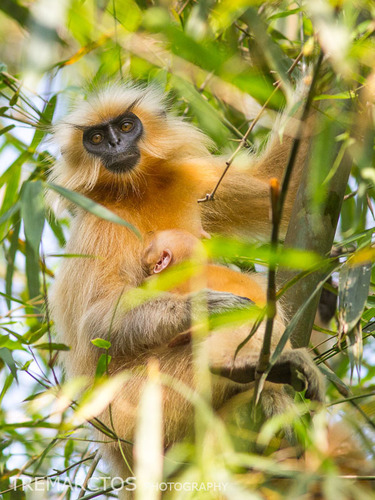
Infants are born with black fur that begins to turn grey or reddish-brown (varying by subspecies) after around three months of age.
Natal Fur Function
This natal fur may signal an infant’s status to other group members; other group members treat infants gently and will quickly defend them if they are distressed.
Infanticide by Immigrant Males
Immigrant males sometimes kill non-biological infants to shorten the time until the mother’s next birth.
Infant Kidnapping by Females
High-ranking females will sometimes kidnap infants of lower-ranking females. These kidnappings often result in the infant’s death, because the abducting female is not usually lactating.
Juvenile Social Behavior Basics
Young juveniles spend most of their time close to their mother and maternal relatives.
Male Juvenile Dispersal Prep
As male juveniles grow older, they move to the edges of the group. Here they play together, forming important social bonds that may help them after they leave their natal group. Males that emigrate from the group with a partner are more successful than males that leave alone.
Female Juvenile Group Residency
Young females, however, remain in the group and become part of the matriline they were born into.
Grooming and Mating Success
Male crab-eating macaques groom females to increase their chance of mating. A female is more likely to mate with a male that has recently groomed her than with one that has not.
Male Dominance and Reproduction
Studies have found that dominant males copulate more frequently than other males in the group. DNA tests confirm that dominant males sire most offspring in natural crab-eating macaque troops.
Female Dominance and Reproductive Success
Reproductive success in females is also linked to social dominance: high-ranking females produce more offspring over their lifetime than low-ranking females. High-ranking females begin reproducing at a younger age, and their offspring have a higher chance of survival.
Stone Tool Use Prevalence
Crab-eating macaques are the only Old World monkey known to use stone tools during daily foraging. This behavior is mostly observed in ocean-side populations in Thailand and Myanmar, belonging to the M. f. aurea subspecies.
Tool Use Research Timeline
An 1887 report recorded tool use in a Myanmar population, but the first published report of this behavior was released in 2007.
Shellfish Cracking Tool Use
The 2007 report described Thai crab-eating macaques using axe-shaped stones to crack rock oysters, detached gastropods, bivalves, and swimming crabs.
Oil Palm Nut Cracking Behavior
Also in Thailand, crab-eating macaques have been observed using tools to crack open oil palm nuts in abandoned plantations.
Nutcracking Behavior Implications
The rapid spread of oil palm nutcracking behavior shows that macaques can take advantage of human-caused environmental changes. The recent development of this behavior also suggests macaques may have cultural tendencies.
Threats to Tool Use Traditions
Unfortunately, human activities can harm tool-using macaque populations, and disrupt the continued transmission of these stone tool use traditions.
Food Processing Tool Use
Another example of tool use is washing and rubbing foods including sweet potatoes, cassava roots, and papaya leaves before eating. Crab-eating macaques either soak these foods in water or rub them between their hands to clean them.
Sweet Potato Peeling Behavior
They also peel sweet potatoes using their incisors and canine teeth.
Tool Use Social Learning
Adolescents appear to learn these behaviors by observing older individuals.