About Lysapsus limellum Cope, 1862
Adult Size
For Lysapsus limellum Cope, 1862, females have a snout-vent length ranging from 16.2 to 24.8 mm, while males have a smaller snout-vent length of 15.2 to 21.0 mm.
Adult Coloration
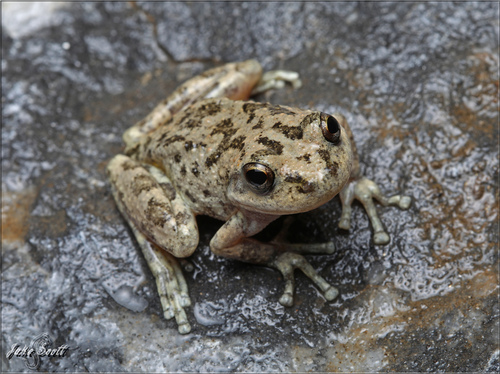
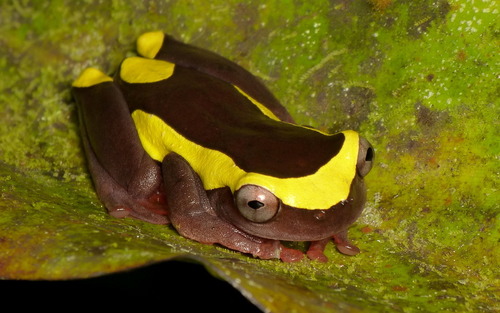
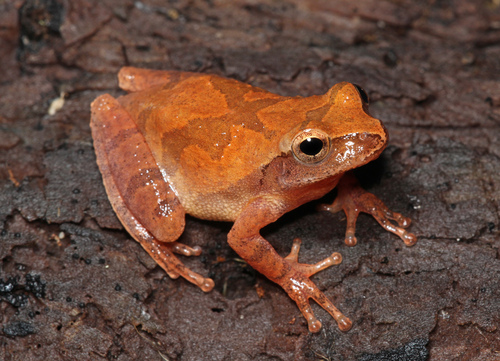
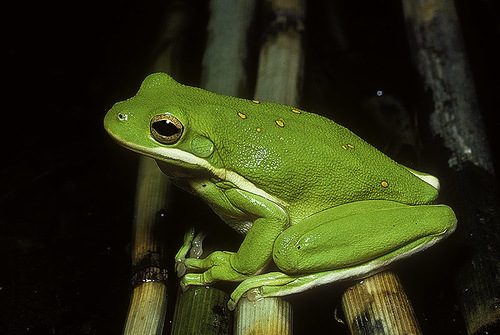
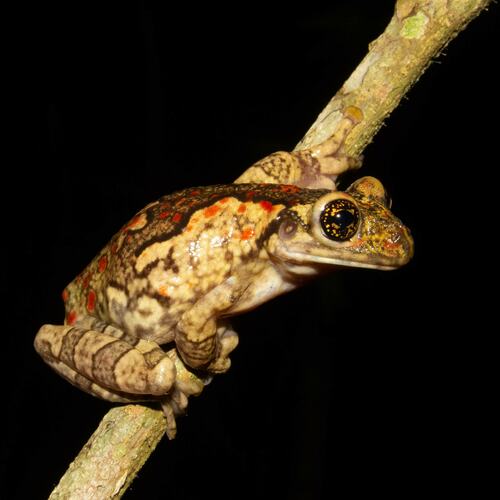
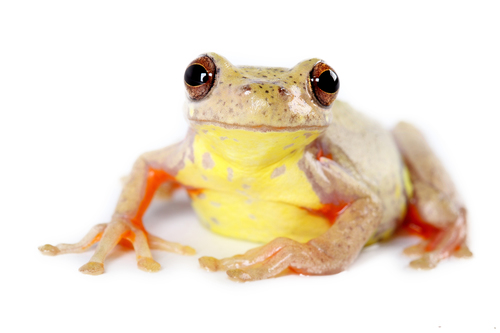
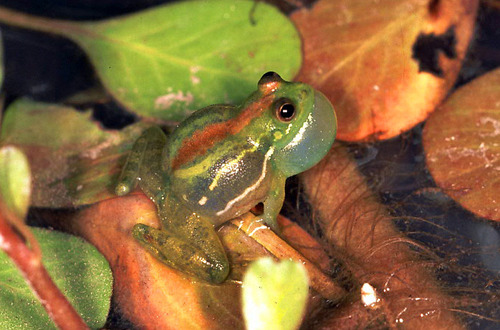
This species can display a wide range of colors, from pale green to dark brown-green, and its eyes are typically golden.
Adult Pattern Variation
Individual frogs may have distinct patterns, but no single pattern occurs across all members of the species.
Species Distribution
It is distributed across northern Argentina, Bolivia, Brazil, Paraguay, and Uruguay.
Natural Habitats
Its natural habitats include moist savanna, subtropical or tropical seasonally wet or flooded lowland grassland, rivers, swamps, freshwater lakes, freshwater marshes, and pastureland.
Local Threat
It is locally affected by habitat loss.
Tadpole Size
In its life cycle, fully developed tadpoles of L. limellum can reach a total length of 40 mm including tail and body, with a body length of 11 mm.
Tadpole Tail Feature
Mature tadpoles may have a black tip on their tail, which is thought to encourage predators to attack the tail rather than the tadpole’s body.
Predation
Aquatic insects prey on L. limellum tadpoles, while fish and large invertebrates prey on fully grown adult L. limellum.
Breeding Season
L. limellum does not have a fixed breeding season, and breeds continuously year-round.
Male Calling Location
Males call from the tops of floating vegetation throughout the day.
Diel Activity and Calling Pattern
They are more active during the day but call less often, while they are less active at night and call more frequently.
Male Call Types
Males produce two distinct calls: one is likely an advertisement call, and the other is a social call.
Egg Clutch Size
Females lay egg clutches that contain between 10 and 182 eggs.