About Dendropsophus carnifex (Duellman, 1969)
Common Names and Taxonomy
Dendropsophus carnifex, commonly called the executioner tree frog, executioner clown frog, or hangman swamp frog, is a species of frog in the Hylidae family.
Distribution
This species is confirmed to live in Ecuador, and may also be found in Colombia.
Habitat and Elevation Range
Its natural habitats lie at elevations between 1250 and 2500 meters above sea level, and include subtropical or tropical forests, subtropical or tropical moist montane forests, swamps, freshwater marshes, intermittent freshwater marshes, plantations, rural gardens, heavily degraded former forest, ponds, and canals and ditches.
Size
This frog reaches a snout-vent length of less than 3.5 cm.
Physical Morphology
It has proportionately large climbing disks on its toes, a robust body that is longer than it is wide, and webbed front and hind feet, with more extensive webbing on the hind feet.
Male Secondary Sexual Traits
Male Dendropsophus carnifex do not have nuptial pads.
Coloration Variation
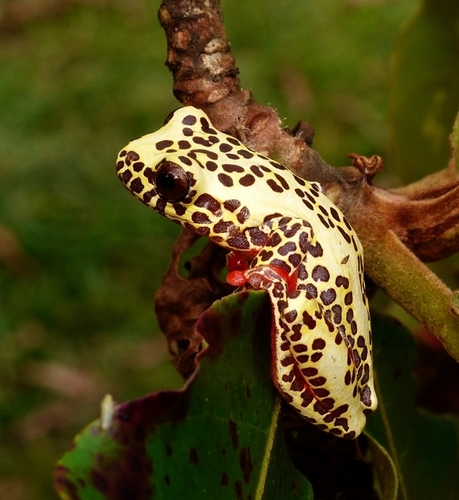
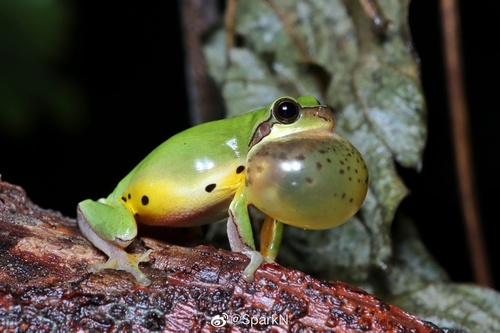
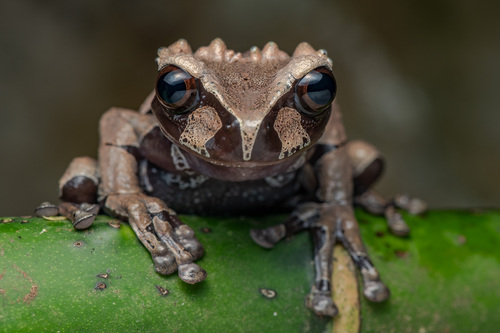
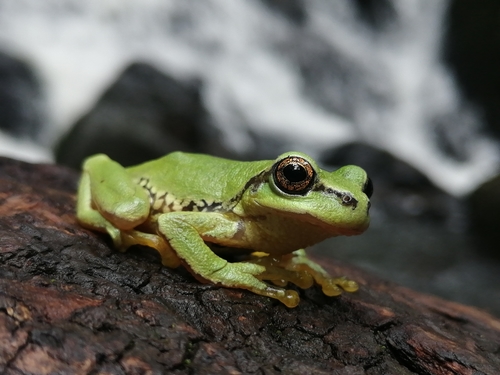
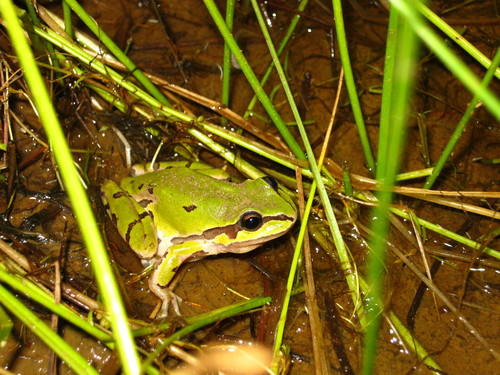
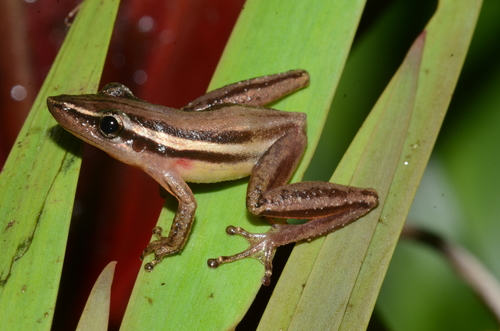
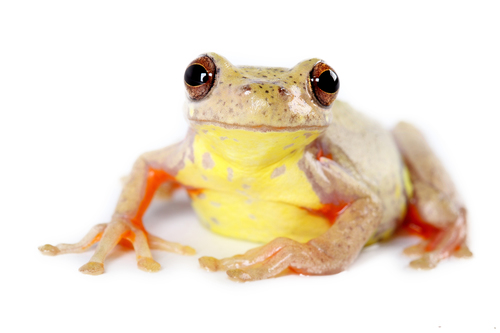
Most individuals are pale in color, though some are bright. The back is typically bronze-green or bronze-gray, marked with brown or brown-gray patches. The belly is yellow or yellowish-white.
Coloration Functions
Bright body coloration can increase this frog's fitness. Body coloration helps the frog camouflage itself from predators, and hide from prey before attacking. It also assists with regulating body temperature, provides protection from harmful solar radiation, and facilitates social interactions between individuals (Pintanel et al., 2019, p. 1298).
Etymology Origin
Both this species' English common names and its scientific Latin name reference John D. Lynch, who collected many of the original specimens. The connection comes from the term "lynching," which is a form of execution.