About Locustella luscinioides (Savi, 1824)
Upperpart Coloration
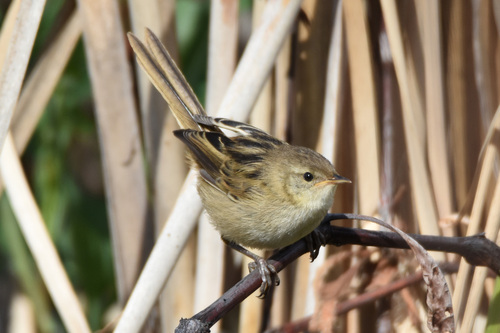
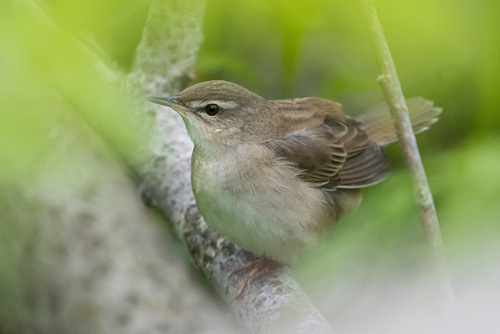
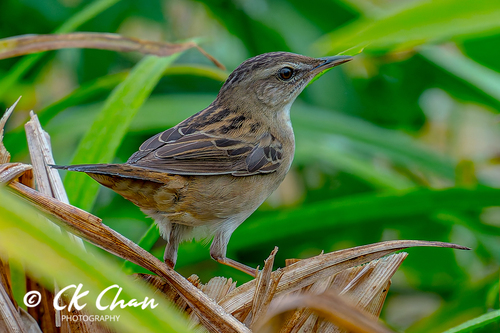
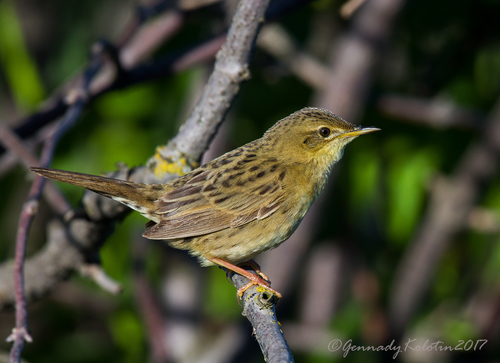
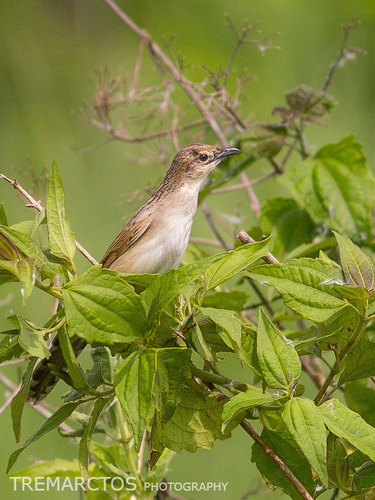
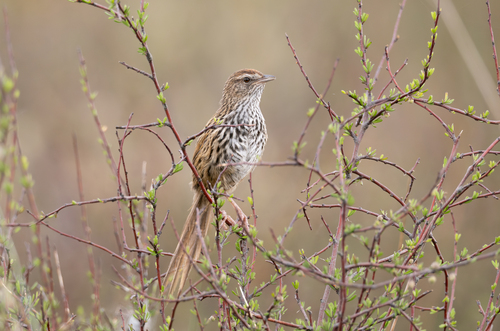
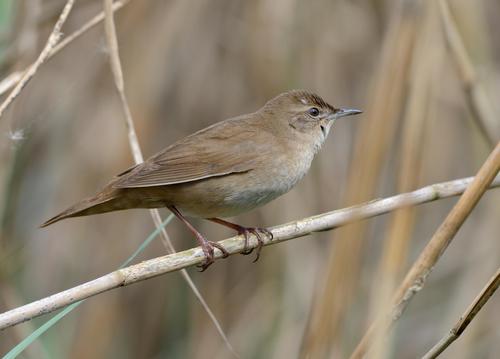
Savi's warbler (Locustella luscinioides (Savi, 1824)) has uniform dark reddish-brown upperparts, which sometimes carry a faint greenish tinge.
Head Features
It has indistinct buff eye stripes, dark lores, and pale brown ear-coverts. Its slender beak is brown, and its irises are also brown.
Underpart Coloration
The chin, throat, and belly are whitish-buff, while the rest of its underparts are sandy brown. During the breeding season, both the upperparts and underparts become slightly paler.
Size and Legs
Its legs are brown, and the bird reaches an average length of around 14 cm (5.5 in).
Song Characteristics
The song of Savi's warbler is a trill very similar to that of the grasshopper warbler, but it is slightly lower in pitch and less prolonged. The trill is often preceded by a series of low ticks that gradually merge into the trill.
Singing Behavior
The bird sings from the top of a reed stem, with its beak open and its throat vibrating. Both males and females produce this song.
Breeding Range
Savi's warbler breeds across Algeria, Spain, Mallorca, France, Sicily, Crete, Italy, Netherlands, Germany, Poland, Romania, Bulgaria, Albania, Croatia, Slovenia, Serbia, Jordan, Turkey, and Russia as far east as the River Volga.
Wintering Range
It winters in Algeria, Morocco, Sudan, and Ethiopia.
Vagrant Occurrence
It is an occasional visitor to the United Kingdom, where a small number of pairs breed sporadically, as well as to Ireland, Belgium, Switzerland, Corsica, Sardinia, Malta, Cyprus, and Israel.
Breeding Habitat
This species lives in reed beds, marshes, and lagoons that support reeds, sedges, and other marsh vegetation, which may include scattered sallows or bushes.
General Behavior
It climbs stems to sing in full view, but is hard to spot at other times: it flits quickly through tangled stems and undergrowth, and is rarely seen out in the open.
Wintering Habitat
It uses similar habitats in its winter range, but may also occur in fens or marshy areas with open water that are not surrounded by reeds.