About Locustella lanceolata (Temminck, 1840)
Taxonomic Classification
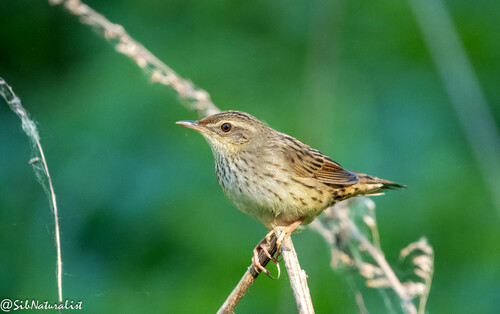
The lanceolated warbler, with the scientific name Locustella lanceolata, is an Old World warbler species belonging to the genus Locustella.
Breeding Range
It breeds across the Palearctic region, from northeast European Russia extending to northern Hokkaidō, Japan.
Migratory Pattern
It is a migratory species, and spends the winter in Southeast Asia.
Genus Name Etymology
The genus name Locustella comes from Latin, and it is the diminutive form of locusta, the Latin word for "grasshopper". This name refers to the song of the common grasshopper warbler and some other species in the same genus.
Specific Epithet Etymology
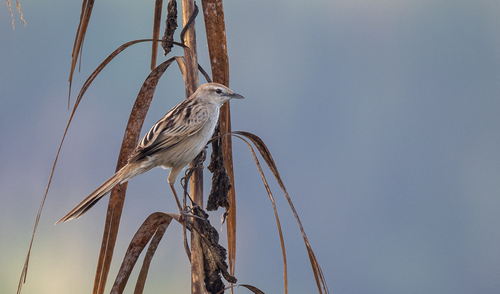
The specific epithet lanceolata is Latin for "spear-shaped", which refers to the streaks on the bird's breast.
Habitat Preferences
This small passerine bird occurs in grassland that has some thicker shrubby vegetation or trees, and it is often found near water in bogs or wet clearings.
Reproduction
It lays five eggs in a nest built in a grass tussock.
Vagrant Occurrence
This species is a rare vagrant to western Europe, and Fair Isle, Shetland is one of the best locations to spot this skulking vagrant species.
Size
It is a small warbler.
Adult Plumage
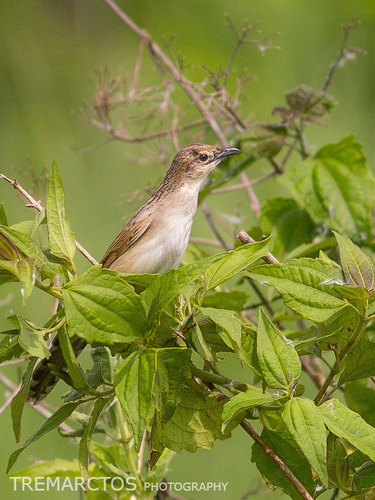
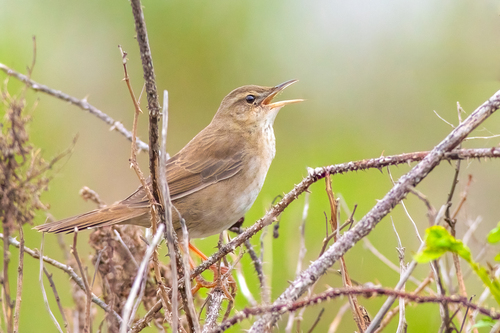
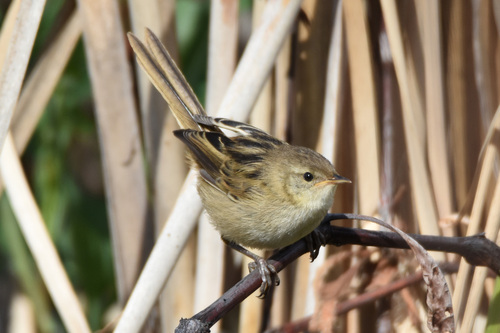
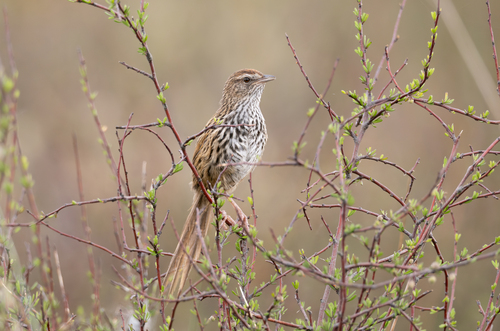
Adult individuals have a streaked brown back and whitish grey underparts, which bear small spear-head-like streaks; these streaks are also found on the undertail.
Sexual and Juvenile Plumage
As with most warblers, the sexes look identical, but young birds have a yellower colouration on their underparts.
Diet
Like most warblers, it is insectivorous.
Skulking Behavior
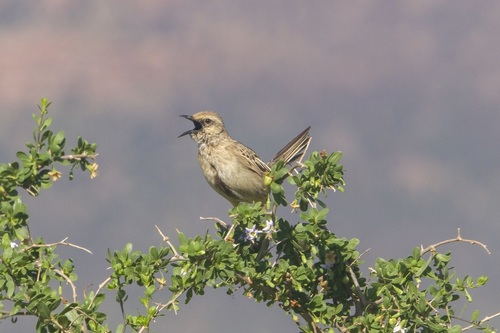
This is a skulking species that is very hard to observe, only occasionally visible when singing. It creeps through grass and low foliage.
Song Characteristics
Its song is a monotonous, mechanical insect-like reeling, similar to the songs of other species in this group, and is often produced at dusk.
Subspecies
Two subspecies of this species are currently recorded: L. l. lanceolata (Temminck, 1840) and L. l. hendersonii (Cassin, 1858).