About Lithobates areolatus (Baird & Girard, 1852)
Size
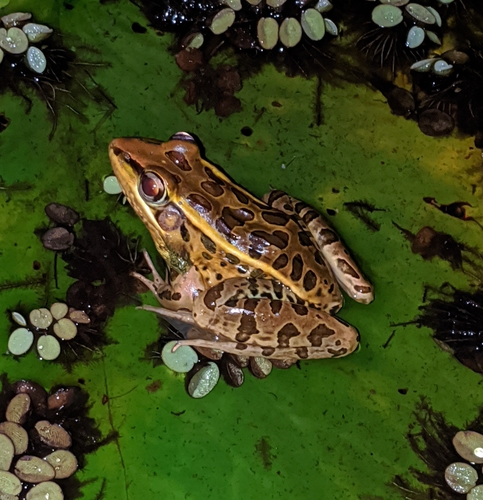
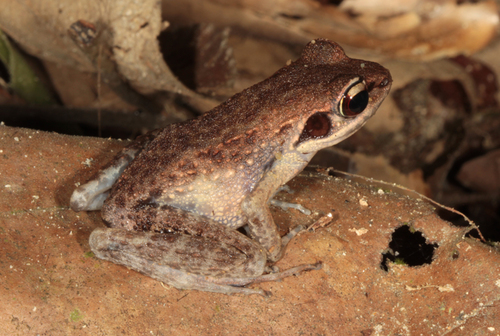
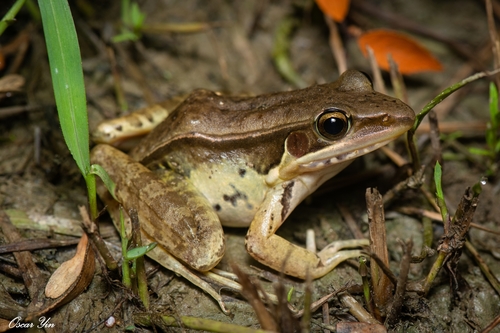
Lithobates areolatus, commonly called the crawfish frog, reaches a length of 2.2 to 3.0 inches (5.6 to 7.6 cm).
Body Coloration
Its body color ranges from yellow to brown, with a white ventral surface.
Dorsal Spot Pattern
The numerous dark brown spots on the back of L. areolatus each have a light-colored ring around them.
Skin Fold & Tympanum Characteristics
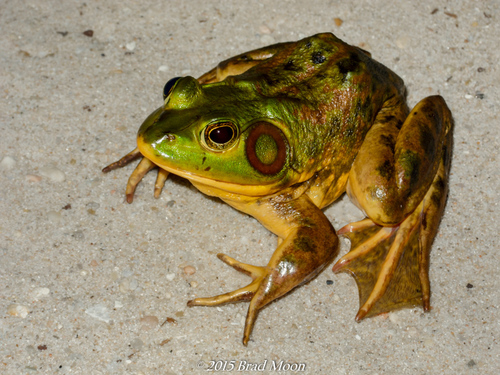
It has a distinct skin fold on either side of its back; these folds are much more pronounced in males than in females, and the species has a relatively small tympanum.
Geographic Range
The crawfish frog is found in parts of the central and southern United States, ranging from Indiana west to Kansas, south to Texas, and east to Alabama.
Habitat Association
This species is largely associated with former prairie regions that contain crawfish burrows.
Population Decline Cause
Due to habitat loss and urbanization, many of its populations have been extirpated.
2016 Alabama Population Record
A sizable population of this species was documented in Sumter County, Alabama in 2016.
2017 Arkansas County Record
A new county record for the species was added in 2017, from Perry County, Arkansas within the Ouachita Mountains.
Additional Information Note
Additional information can be found in the notes section below.