About Linaria supina (L.) Chaz.
Taxonomy and Distribution
Linaria supina, commonly known as trailing toadflax, is a low-growing perennial plant that belongs to the Plantaginaceae family. Native to Europe and Asia, this plant has also been introduced in other regions around the world as an ornamental species.
Size and Growth Habit
With its trailing habit, Linaria supina can grow up to 30 cm in height and spread up to 60 cm.
Leaf Features
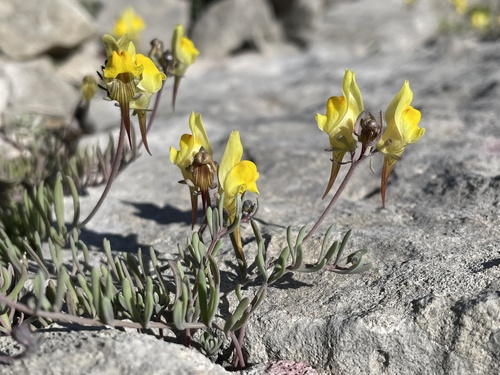
The leaves of Linaria supina are small, narrow, and lance-shaped with a bluish-green hue.
Flower Arrangement and Structure
Its numerous, small flowers are arranged in clusters along the stems. These flowers have five petals fused at the base, forming an elongated, tube-like structure with two lips at the top.
Flower Color and Blooming Period
The blossoms come in various shades of purple-blue or pinkish-purple and bloom from late spring through summer, attracting bees and butterflies for pollination.
Soil Preferences
Linaria supina prefers well-drained, moderately fertile soils, but it can also tolerate poor soils.
Light Requirements
It thrives best in full sun but can grow under partial shade conditions as well.
Common Horticultural Uses
Trailing toadflax is often used for ground cover or in rock gardens due to its low-growing habit, making it ideal for covering bare ground or slopes where other plants may struggle because of soil erosion.
Ornamental Value
Overall, Linaria supina is an attractive perennial plant that adds beauty wherever it grows.
Ecological Benefits
It also offers ecological benefits by attracting pollinators, thus helping to maintain biodiversity through cross-pollination among different plant species in the garden or landscape.