About Lasiurus seminolus (Rhoads, 1895)
Common Name & Coloration Similarity
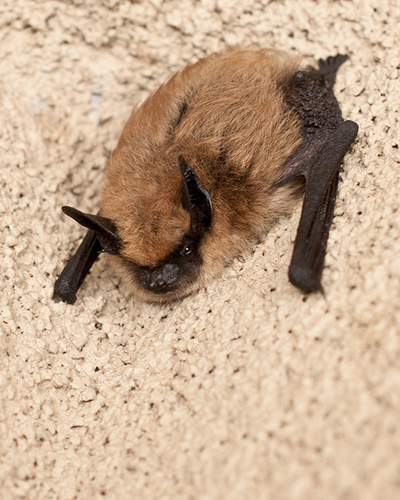
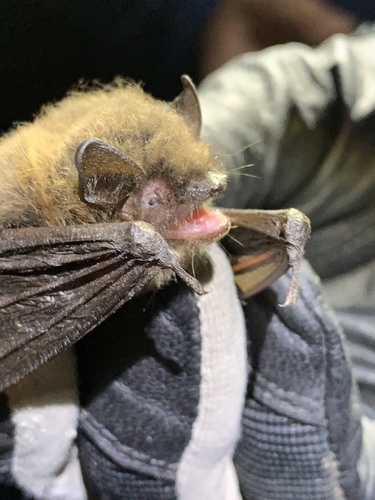
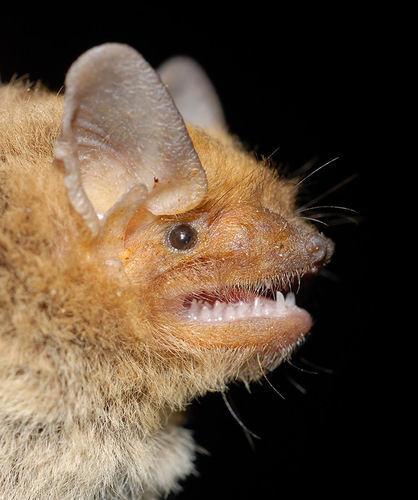
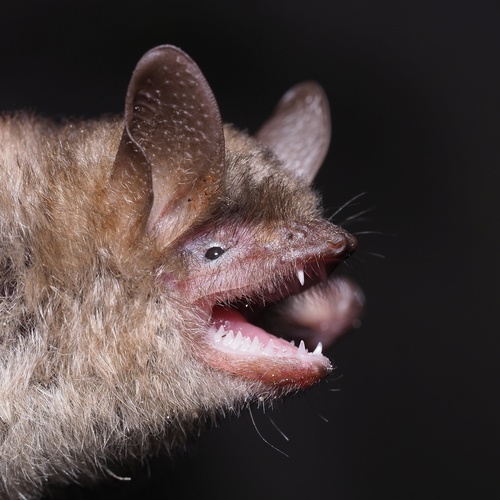
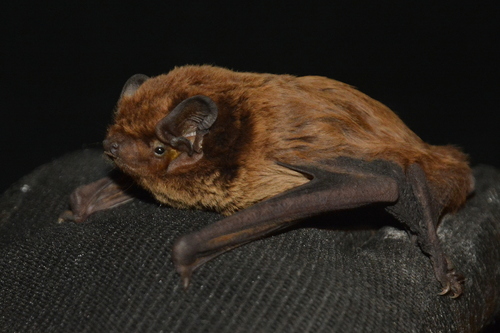
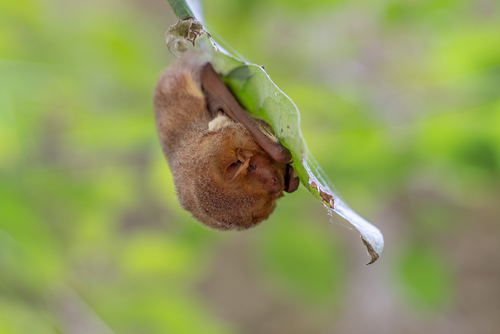
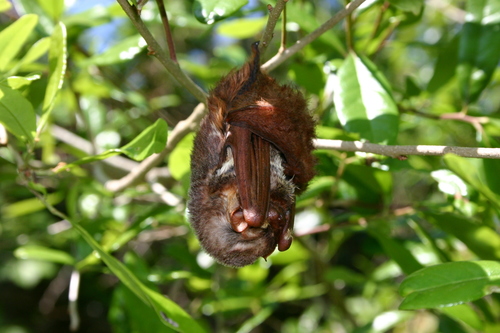
Lasiurus seminolus, commonly called the Seminole bat, is often confused with the red bat because of its mahogany fur coloring.
Frosted Fur Appearance
The species has a frosted appearance from the white tips on its dorsal hairs.
Sexual Dimorphism in Coloration
Its coloring is not sexually dimorphic, so males and females share similar coloration.
Size & Weight Characteristics
The species has an average weight of around 12 grams, and females are larger than males.
Core Distribution Range
The Seminole bat occurs in the Southeastern United States, including Louisiana, Georgia, Alabama, Mississippi, and South Carolina, as well as parts of Texas, Tennessee, Arkansas, and North Carolina.
Southern Distribution Record
There are also recorded records of this species as far south as Mexico.
Winter Migratory Range
It is a migratory species: during the winter, it lives along the Gulf Coast, in the Carolinas, and in southern Arkansas.
Summer Migratory Range
In the summer, it migrates north as far as Missouri and Kentucky.
New Distribution Documentation
In 2015, the Seminole bat was documented for the first time in northwestern North Carolina.
Preferred Habitat Type
These bats prefer to live in forested areas.
Winter Roost Insulation Materials
In winter, they use leaf litter and Spanish moss as insulation at their roost sites.
Spanish Moss Habitat Significance
Spanish moss is considered an important part of the Seminole bat's environment year-round, and it is thought to be a limiting factor for the species' distribution.