About Nyctalus leisleri (Kuhl, 1817)
Common Name and Size Comparison
Nyctalus leisleri, commonly called the lesser noctule, is a medium-sized bat that is slightly smaller than the common noctule.
Body and Wing Length
Its head and body length ranges from 48 to 68 mm, with a wingspan of 260 to 330 mm.
Forearm Length and Weight
Forearm length measures 38 to 47 mm, and adult weight falls between 11 and 20 grams.
Fur Coloration
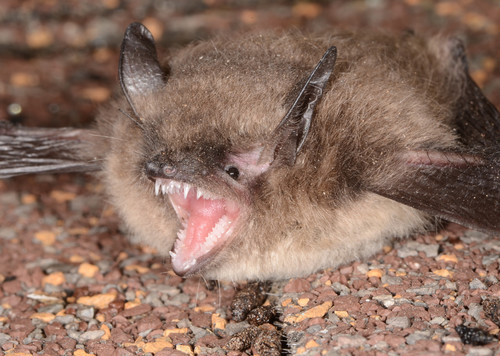
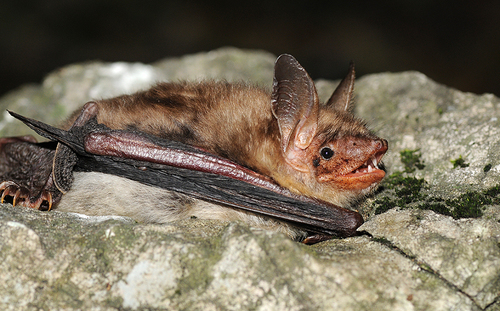
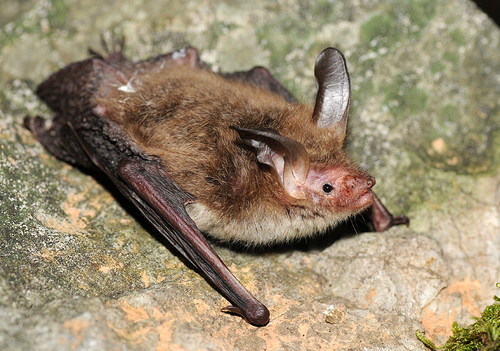
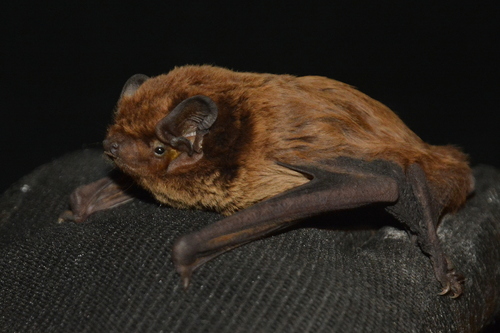
Its face, ears, and wings are dark, and its fur is brown, with darker fur at the base than at the tip – this differs from common noctule fur, which is uniform in colour along its entire length.
Hairy Arm Trait
The undersides of its arms are covered in hair, which gives the species its alternative common name: hairy-armed bat.
Ear and Wing Structure
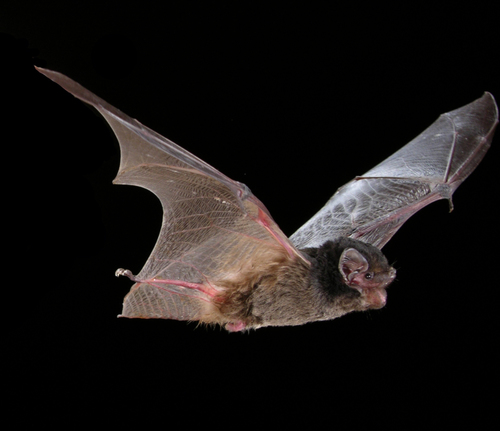
Its ears are short and rounded, with a mushroom-shaped tragus, and its wings are long and narrow.
Eurasian Distribution
The lesser noctule occurs locally across Europe and western Asia, ranging east as far as the Urals and Himalayas.
North Atlantic Distribution
It is also found in north-west Africa, the Canary Islands, and Madeira.
Azores Taxonomic Note
The population found in the Azores is often recognized as a separate species, the Azores noctule Nyctalus azoreum.
Habitat and Roosting
This species typically lives in both coniferous and deciduous forests, but it has also adapted to parkland and urban areas, and frequently roosts in buildings.
Irish Population Status
Across most of its range, the lesser noctule is rare, but it is much more common in Ireland, where it is the island’s largest bat species and the third most common.
Irish Global Stronghold
Because of the species’ widespread abundance there, Ireland is considered the lesser noctule’s global stronghold.
British Population Distribution
In Britain, the species is only found in a small number of colonies in England and Wales, with occasional wandering individuals reaching Scotland.
Survival Threats
Threats to the lesser noctule’s survival include population declines of large insects, loss of forests and hollow trees, and exposure to toxic chemicals in pressure-treated timber used in buildings.
Breeding Colony Size
Lesser noctules usually breed in small colonies of 20 to 50 individuals, but colonies can be much larger in Ireland, with some holding as many as 1,000 individuals.
Colony Location
Colonies are usually located in hollow trees or buildings, and sometimes use bat boxes.
Reproduction Traits
Female lesser noctules give birth to one or two young, and twins are more common in the eastern portion of the species’ range.