About Lacerta bilineata Daudin, 1802
Size
Lacerta bilineata Daudin, 1802 reaches an average body length (excluding the tail) of about 13 centimetres (5.1 in), with a maximum total length of 40 centimetres (16 in) including the tail. The tail may grow up to twice as long as the body.
Weight
The average weight of this species is about 35 grams.
Adult Body Coloration
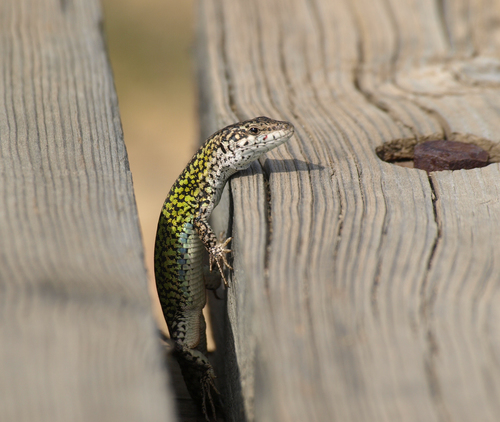
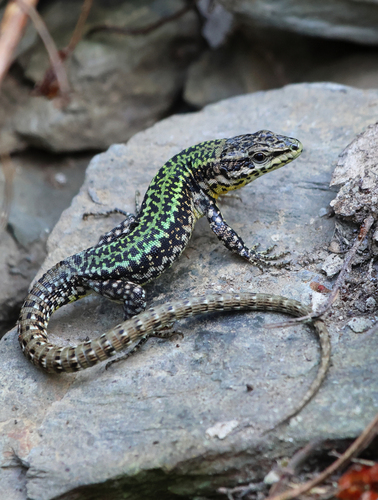
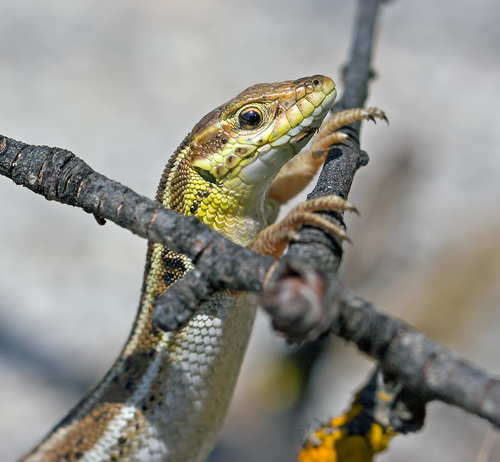
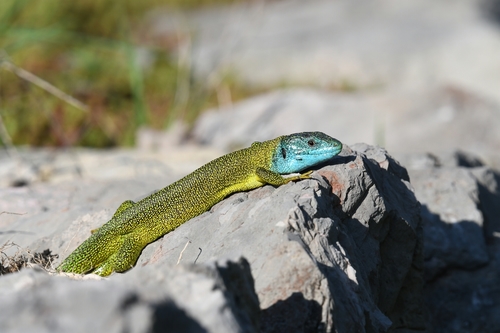
Its body is bright green.
Sexual Dimorphism
Males have larger heads than females, and males often have a blue throat.
Juvenile Coloration
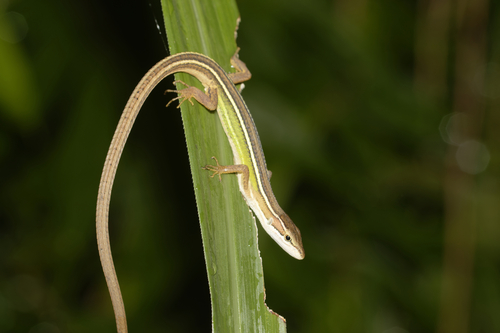
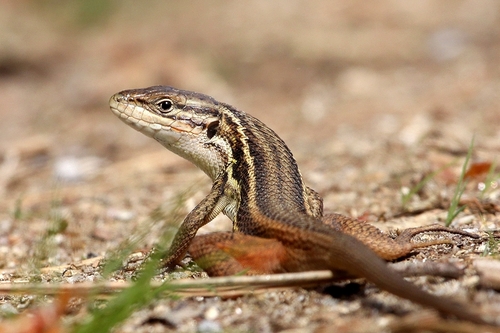
Juveniles are almost entirely brown, with a yellowish belly and two to four pale longitudinal lines along their flanks.
Sub-adult Markings
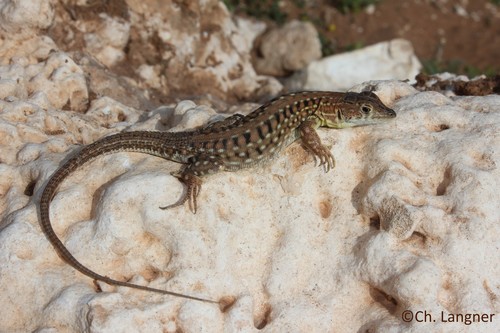
Sub-adults retain these lines, and also have several small brown spots on their backs.
Territoriality
These lizards are territorial.
Sexual Maturity
They reach sexual maturity at around two years of age, when they are approximately 8 cm long excluding the tail.
Male Agonistic Behavior
Males fight one another, especially during the mating season, when they are very aggressive toward rival males.
Mating Ritual
The mating ritual follows a specific pattern, beginning with a bite to the base of the female's tail.
Reproduction
Females lay between 6 and 25 eggs in a humid, warm location, such as inside a decomposing log.
Lifespan
The average lifespan of this species is about 15 years.
Diet
They feed on arthropods, including large insects, isopods, and spiders.
Native Range
This species is native to Andorra, Croatia, France, Germany, Italy, Monaco, Serbia, Slovenia, Spain, Switzerland, Guernsey, and Jersey in the Channel Islands.
Introduced Range
It has been introduced into the United States, and there are also introduced colonies along the south coast of the U.K, most notably around Poole Bay in Dorset.
Natural Habitats
Its natural habitats include green humid areas, temperate forest, woodland edges, shrubland, open grassland, arable land, and pastureland.
Threats
It is currently threatened by habitat loss.