Plants — 23,508 Species
Top Families in Plants
All Plants Species
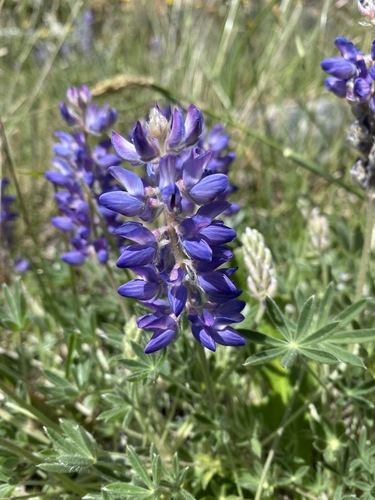
Dwarf Lupine
Lupinus lepidus Douglas ex Lindl.
Lupinus lepidus is a small hairy perennial lupine endemic to open habitats across western North America.
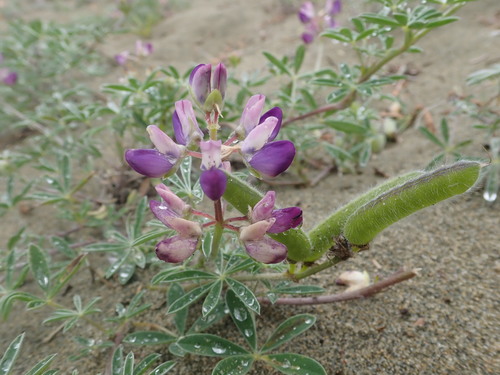
Seashore Lupine
Lupinus littoralis Douglas ex Lindl.
Lupinus littoralis, the seashore lupine, is a low North American coastal lupine that hosts Arrowhead Blue butterflies, with edible roots for some Native American tribes.
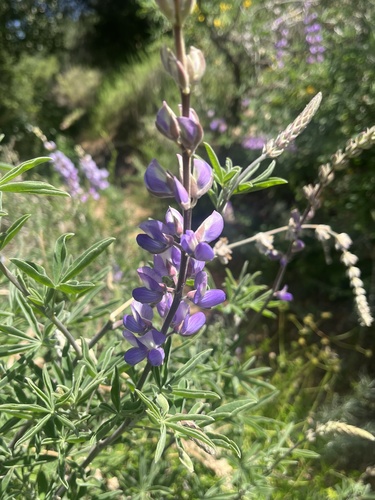
longleaf bush lupine
Lupinus longifolius (S.Watson) Abrams
Lupinus longifolius is an upright bushy shrub with purple/blue flowers and hairy legume fruit pods, growing up to 1.5 meters tall.
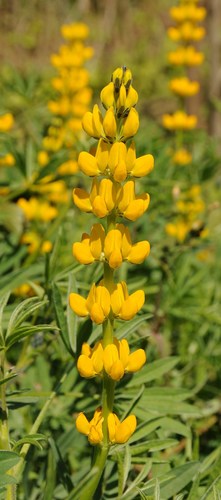
European yellow lupine
Lupinus luteus L.
Lupinus luteus L. (yellow lupin) is an annual Mediterranean legume grown for food, feed, and ornament.
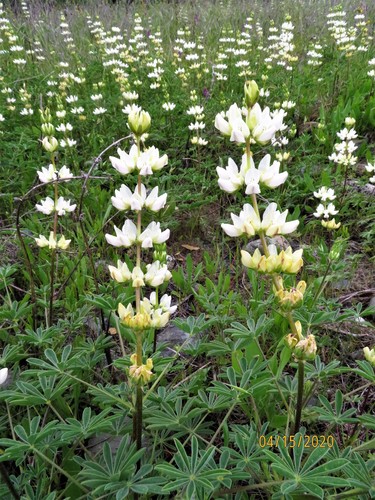
chick lupine
Lupinus microcarpus Sims
Lupinus microcarpus is an annual lupine with compound leaves and colored flowers, growing up to 1600 m in Southern California.
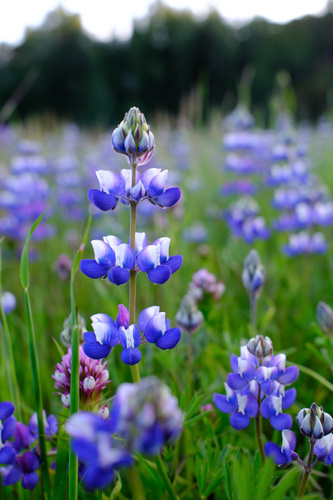
Sky Lupine
Lupinus nanus Douglas ex Benth.
Lupinus nanus is an annual toxic lupine native to the western United States that blooms spring with blue spotted flowers.
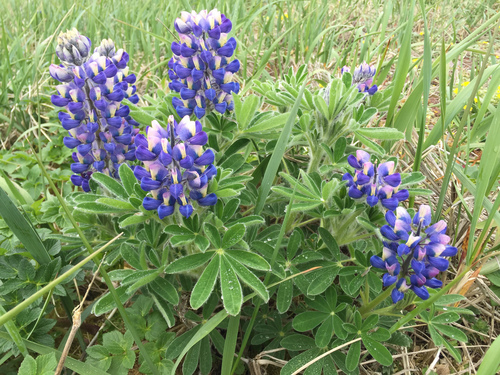
Nootka Lupine
Lupinus nootkatensis Donn ex Sims
Nootka lupine (Lupinus nootkatensis) is a toxic perennial North American legume grown for cool wet gardens.
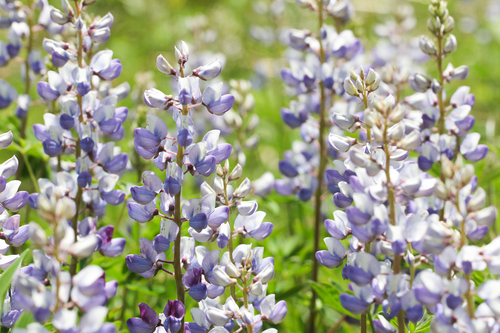
Sundial Lupine
Lupinus perennis L.
Lupinus perennis L., wild lupine, is a North American nitrogen-fixing legume and critical host for the endangered Karner blue butterfly.
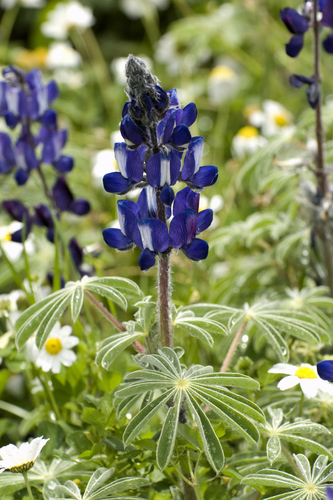
Blue Lupine
Lupinus pilosus L.
Lupinus pilosus L. is a lupine species with documented traditional culinary uses across parts of Europe and the Levant.
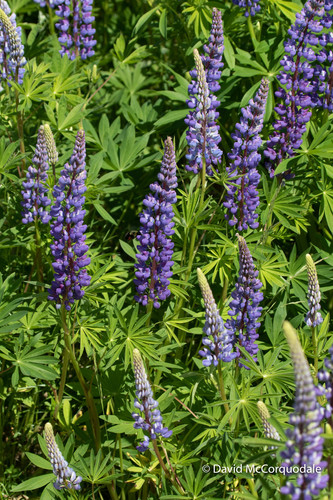
Large-leaved lupine
Lupinus polyphyllus Lindl.
Lupinus polyphyllus is a hardy perennial lupine, used in gardens and as fodder, that can be invasive and toxic.
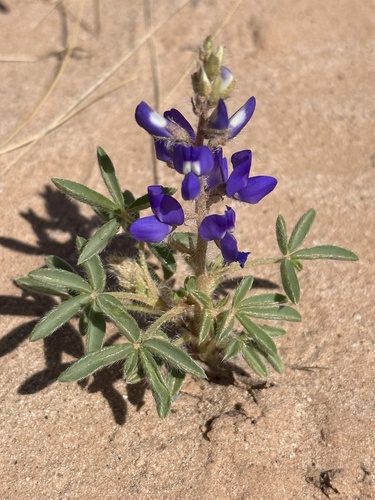
Rusty lupine
Lupinus pusillus Pursh
Lupinus pusillus, rusty or dwarf lupine, is an annual legume found across western and southwestern US in open woodlands and shrublands.
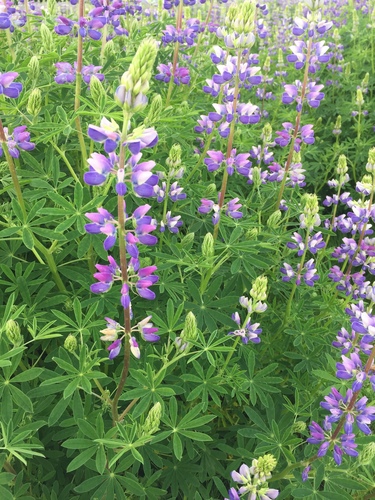
Riverbank Lupine
Lupinus rivularis Douglas ex Lindl.
Riverbank lupine (Lupinus rivularis) is a North American coastal perennial lupine used for erosion control, wildlife food, ornamentals and medicine.
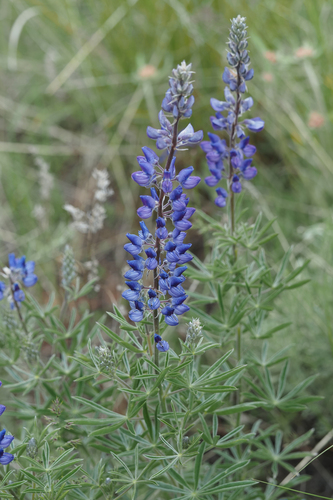
Silky Lupine
Lupinus sericeus Pursh
Lupinus sericeus, silky lupine, is a toxic perennial herb native to western North America.
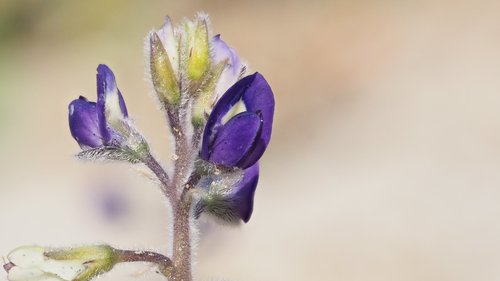
Purple Desert Lupine
Lupinus shockleyi S.Watson
Lupinus shockleyi is an annual herb lupine that grows in the southwestern US deserts and is rated not threatened.
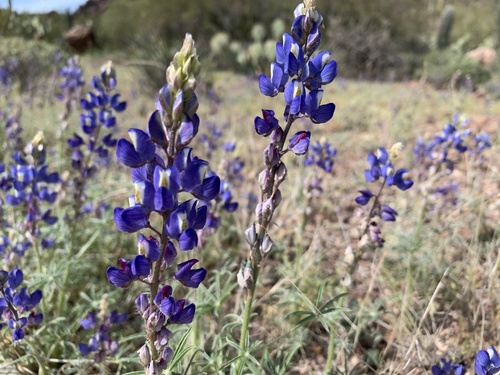
Coulter's lupine
Lupinus sparsiflorus Benth.
Lupinus sparsiflorus, commonly Coulter's lupine, is an annual North American native lupine from southwestern US and northwestern Mexico.
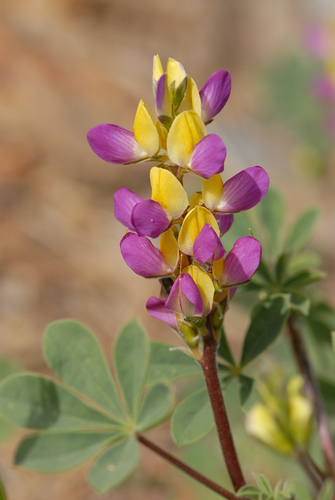
Harlequin Lupine
Lupinus stiversii Kellogg
Lupinus stiversii is a hairy annual herb endemic to California, bearing pink flowers with yellow banners.
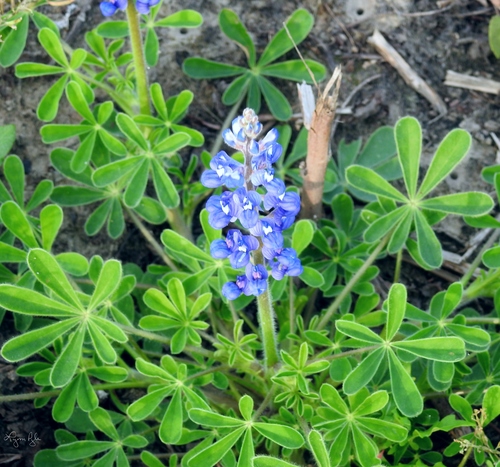
Sandyland Bluebonnet
Lupinus subcarnosus Hook.
Lupinus subcarnosus is a Texas state flower flowering annual native to Texas and northeastern Mexico.
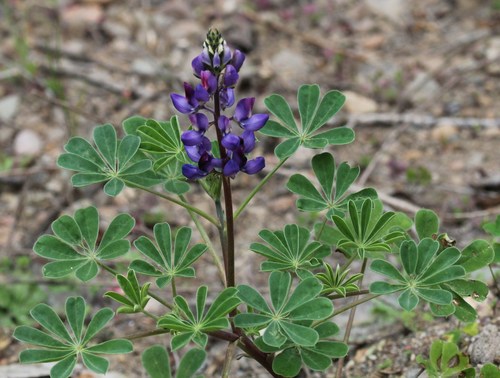
arroyo lupine
Lupinus succulentus Douglas ex K.Koch
Lupinus succulentus is a water-tolerant annual lupine cultivated as an ornamental for gardens and landscaping.
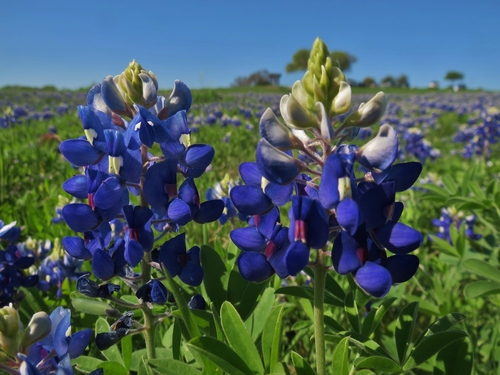
Texas bluebonnet
Lupinus texensis Hook.
Lupinus texensis, the Texas bluebonnet, is an annual lupine that is Texas' state flower, found in the south-central US and northeastern Mexico.
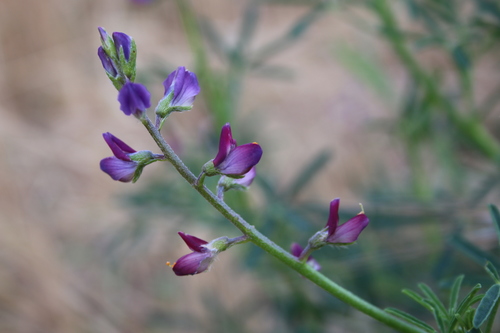
collared annual lupine
Lupinus truncatus Nutt. ex Hook. & Arn.
Lupinus truncatus is an annual herb named for its characteristic squared-off leaflet tips, bearing magenta to reddish purple flowers and hairy legume pods.
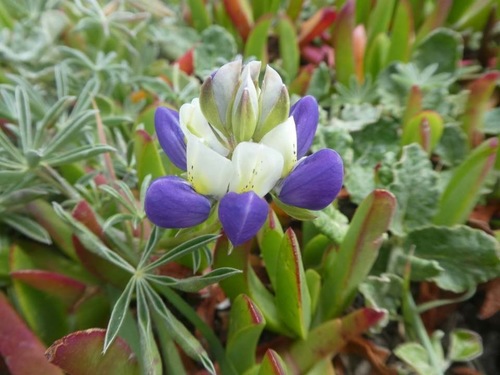
Varied Lupine
Lupinus variicolor Steud.
Lupinus variicolor is an endemic California shrub that is a foodplant for the endangered mission blue butterfly.
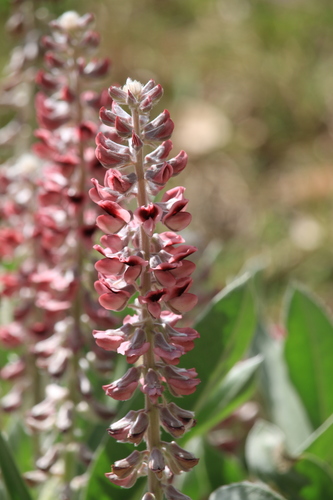
Lady Lupine
Lupinus villosus Willd.
Lupinus villosus Willd. is a perennial dicot that grows in sandy habitats of the southeastern US, attracting butterflies and hummingbirds.
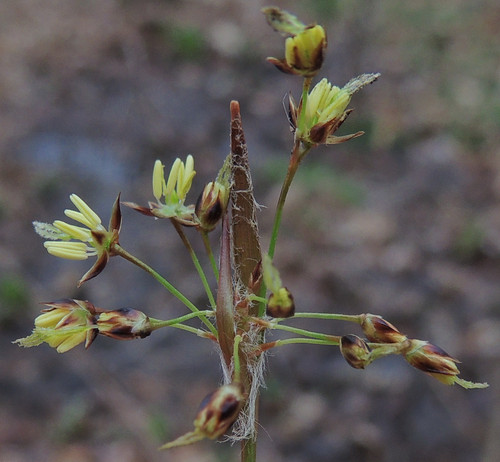
hairy woodrush
Luzula acuminata Raf.
Luzula acuminata (hairy woodrush) is a perennial grass-like forb native to central and eastern US, used in landscaping and erosion control.
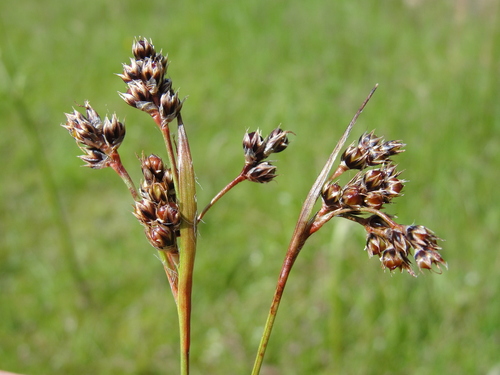
Field woodrush
Luzula campestris (L.) DC.
Luzula campestris is a short acid-preferring perennial rush native to temperate Eurasia and North Africa, introduced globally to suitable southern hemisphere habitats.
Start Exploring Nature Today
Download iNature for free. 10 identifications on us. No account needed. No credit card required.
Scan with iPhone camera
Scan with Android camera


