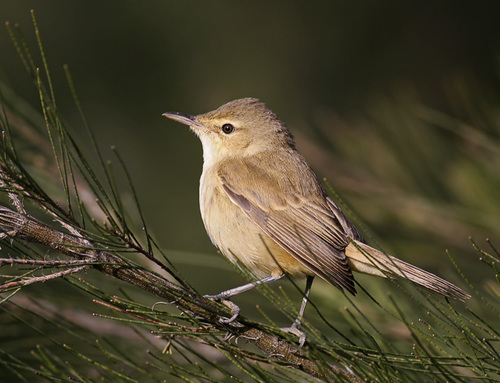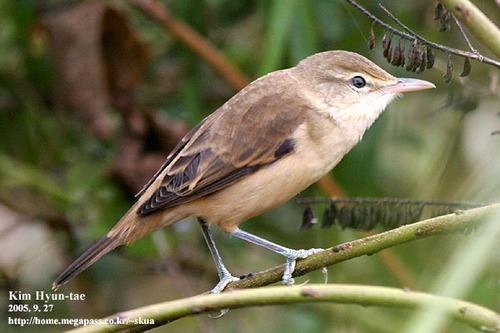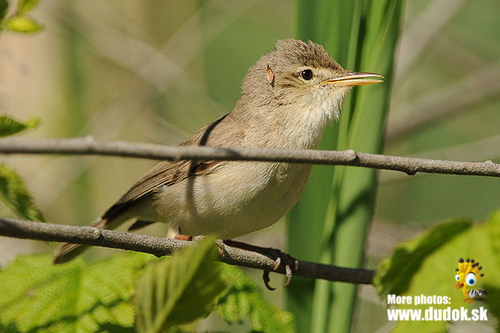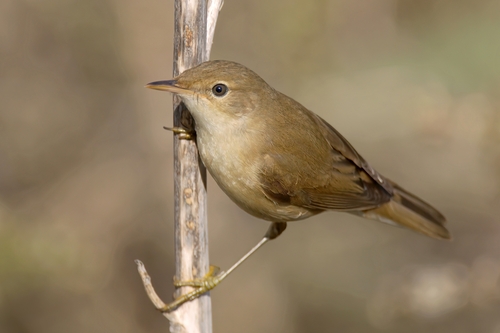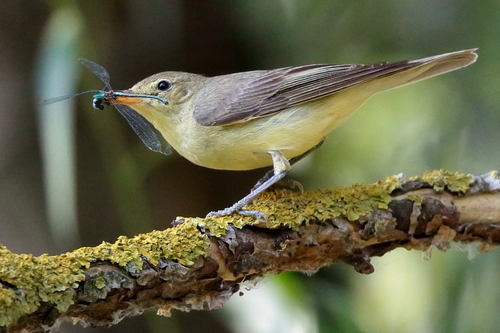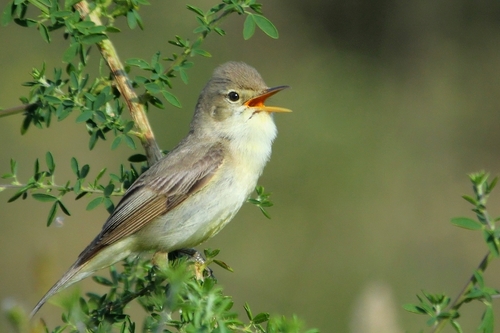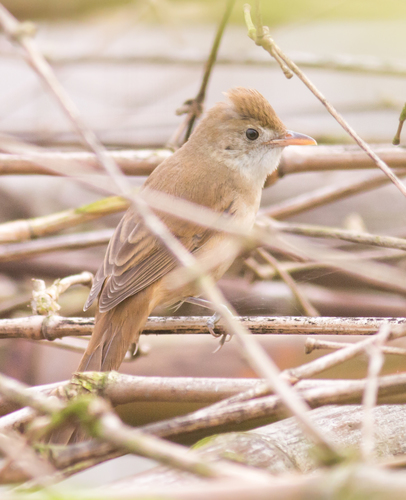
About Iduna aedon (Pallas, 1776)
Scientific Naming
The thick-billed warbler, previously known by the scientific name Arundinax aedon, currently has the scientific name Iduna aedon (Pallas, 1776).
Breeding Range
This species breeds in the temperate east Palearctic, ranging from south Siberia to west Mongolia.
Migratory Patterns
It is a migratory bird, and it winters in tropical South Asia and South-east Asia. It is a very rare vagrant in western Europe.
Habitat
This passerine bird lives in dense vegetation including reeds, bushes, and thick undergrowth.
Reproduction
Females lay five or six eggs in a nest built in a low tree.
Size
This is a large warbler, measuring 16–17.5 cm (6.3–6.9 in) in length, which is nearly as big as the great reed warbler.
Adult Plumage
Adult thick-billed warblers have an unstreaked brown back, buff underparts, and few obvious distinctive plumage features.
Head and Bill Morphology
They have a rounded forehead and a short, pointed bill.
Sexual Dimorphism
As with most warblers, the sexes look identical.
Juvenile Plumage
Young birds are a richer buff color on their underparts than adults.
Diet
Like most warblers, the thick-billed warbler is primarily insectivorous, but it will also eat other small prey items.
Vocalization
Its song is fast and loud, similar to the song of the marsh warbler; it includes extensive mimicry, plus the acrocephaline whistles typical of this group of warblers.
Historical Taxonomy
This species has had multiple taxonomic placements over time. It was sometimes placed in the monotypic genus Phragmaticola (or misspelled Phragamaticola), and was classified within the genus Acrocephalus for a long time.
2009 Taxonomic Proposal
In 2009, researchers suggested it belonged to the Iduna clade.
2014 Phylogenetic Study Findings
However, a 2014 phylogenetic study using a larger set of genetic loci found that the species did not actually fit within the Iduna clade. That study therefore recommended resurrecting either the genus Phragamaticola or Arundinax.
Genus Name Priority
Arundinax is the older available genus name, so it has taxonomic priority.
Genus Name Etymology
The genus name Arundinax comes from Latin arundo, arundinis meaning "reed", and Ancient Greek anax meaning "master".
Specific Epithet Etymology
The specific epithet aedon comes from Ancient Greek aedon, which means nightingale. In Greek mythology, Queen Aëdon was transformed into a nightingale after she accidentally killed her own son Itylus, when she intended to murder one of the sons of her sister-in-law Niobe.