About Ichthyaetus melanocephalus (Temminck, 1820)
Taxonomy and Size Comparison
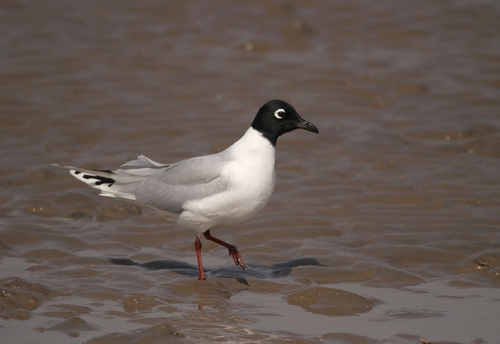
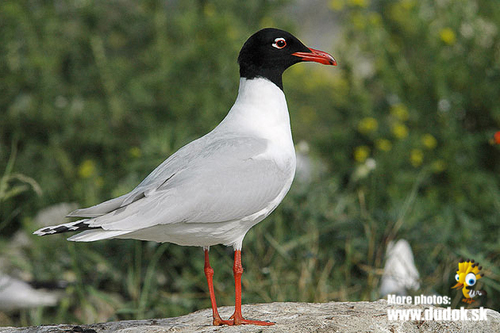
The Mediterranean gull, with the scientific name Ichthyaetus melanocephalus (Temminck, 1820), is slightly larger and bulkier than the black-headed gull, with a heavier bill and longer, darker legs.
Breeding Adult Plumage
Adult breeding plumage makes this a distinctive white gull, with a very pale grey mantle and wings that have white primary feathers lacking black tips. Its solid black hood extends down the nape and features clear white eye crescents. The sharp-tipped, parallel-sided dark red bill has a black subterminal band.
Non-breeding Adult Plumage
Non-breeding adults are similar in appearance, but their hood is reduced to an extensive dusky "bandit" mask that crosses through the eye.
Maturation Timeline
This species takes two years to reach full maturity.
First-year Plumage
First-year individuals have a black terminal tail band and more black areas on their upperwings, but have pale underwings.
Historical Range
Formerly restricted to the Black Sea and eastern Mediterranean, this species has now expanded its range across most of Europe, reaching as far as Great Britain and Ireland.
United Kingdom Breeding Records
In 2008, there were 543 to 592 breeding pairs across 37 sites in the United Kingdom, and the species bred in Scotland for the first time in 2023.
Ireland Breeding Records
Breeding has been recorded in at least four counties in Ireland.
Additional European Breeding Range
Breeding has also occurred in Belgium, the Netherlands, Denmark, Sweden, Estonia, Switzerland, the Czech Republic, Hungary and the Balkans.
Winter Migration
During the winter, this gull migrates to Mediterranean and Atlantic coasts.
Breeding Habitat
This gull breeds in colonies in large reed beds or marshes, or on islands in lakes; where its population is small, it nests within black-headed gull colonies.
Winter Gregariousness
Like most gulls, it is highly gregarious in winter, both when feeding and when gathering at evening roosts.
Marine Occurrence
It is not a pelagic species, and is rarely seen at sea far from coasts.
Diet
The Mediterranean gull is an opportunistic omnivore that feeds on fish, worms, insects, eggs, young birds, offal and carrion.
Vocalization
It is a noisy species, especially when at breeding colonies, and has a nasal "yeah" call.