About Hydrobates pelagicus (Linnaeus, 1758)
Common Name and Classification
Hydrobates pelagicus, the European storm petrel, is a small seabird.
Size Measurements
It measures 14–18 cm (5.5–7.1 in) in length, has a 36–39 cm (14–15 in) wingspan, and weighs 20–38 g (0.71–1.34 oz), with an average weight of 28 g (0.99 oz).
Adult Plumage
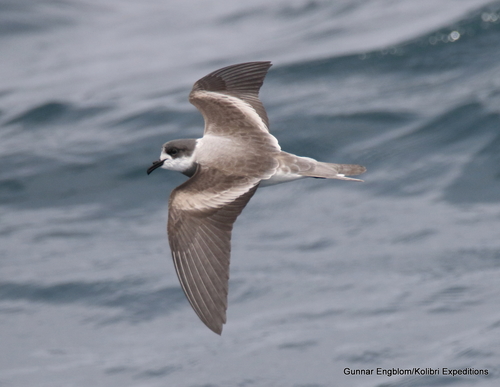
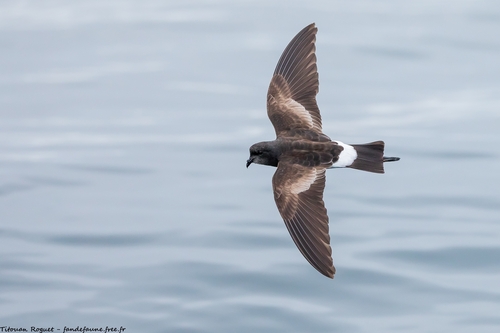
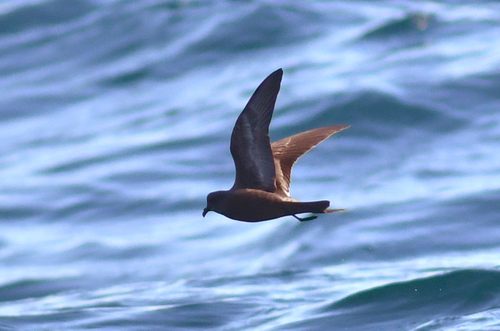
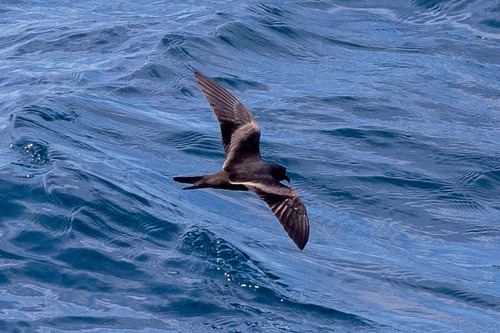
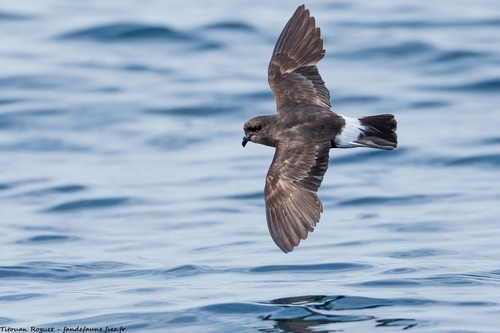
It has a square tail and entirely black plumage, except for a bright white rump that extends to the sides of the tail base, and a broad white band on its underwings.
Juvenile Plumage
Juveniles with fresh plumage may also show a narrow white bar on the upper wing.
Plumage Wear
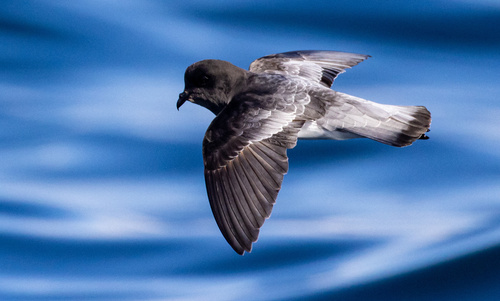
As plumage wears, it fades to dark brown rather than remaining black.
Sexual Dimorphism Visibility
There are no obvious visible differences between males and females.
Sexing Method for Mediterranean Subspecies
However, at least for the Mediterranean subspecies, most captured individuals can be sexed using a formula that multiplies wing length by the length of the white rump band.
Sexual Size and Rump Differences
Females are slightly larger and have a longer white rump than males.
Subspecies Morphological Differences
The Mediterranean subspecies averages longer wings and a heavier bill than the nominate form, but neither sex nor subspecies can be identified by observing the bird at sea.
Moult Period Adaptation
Moult is extended across a long period for all tubenoses, because these birds must retain the ability to fly.
Latitudinal Moult Timing Variation
Northern populations begin replacing their plumage later than populations further south, matching their later breeding season start.
Regional Moult Start Dates
Birds in a Welsh colony started moulting in early August, while northern Spanish populations began in early July, and Balearic populations started in mid-June.
Breeding Status Moult Difference
Breeding birds moult later than non-breeding birds.
Olfactory Adaptations
Unlike most birds, the European storm petrel has large nasal olfactory bulbs that support a sharp sense of smell.
Species Scent
The species also has a distinct musty scent that helps researchers find breeding colonies.
Scent Use for Nest Location
Individual petrels can recognize their own body scent and use it to locate their nests in the dark.
General Flight Characteristics
This petrel’s flight appears weak and resembles a bat’s flight, with fluttering movement mixed with short glides.
Feeding Flight Behavior
When feeding, the birds hang with raised wings and patter the water surface with their feet, but do not look like they are walking on water, unlike Wilson's storm petrel.
Water Resting Behavior
Individuals sometimes rest on the sea surface.
Terrestrial Locomotion
Like other petrels, European storm petrels cannot walk properly on land; they shuffle along on their tarsi, and will flap their wings to support themselves on their toes once they have enough open space.
Distinguishing Features from Related Species
The European storm petrel can be told apart from related Western Palaearctic species by its white under wing bar and its characteristic fluttering flight.
Comparison to Other Storm Petrel Species
Compared to Leach's storm petrel, band-rumped storm petrel, and the recently described Monteiro's storm petrel, it is smaller, darker, shorter-winged, and has a square tail.
Comparison to Wilson's Storm Petrel
Wilson's storm petrel has no under wing bar, and has long legs with feet that extend visible beyond the tail.
Breeding Range
European storm petrels only breed in the Western Palaearctic, on islands off the Atlantic and Mediterranean coasts of Europe.
Largest Breeding Colonies
The largest breeding colonies are in the Faroe Islands (150,000–400,000 breeding pairs), the United Kingdom (20,000–150,000 pairs), Ireland (50,000–100,000 pairs), and Iceland (50,000–100,000 pairs), with smaller breeding areas off Norway, Malta, Spain, the Canary Islands, Italy, France, and Greece.
Mediterranean Subspecies Breeding Strongholds
The strongholds of the H. p. melitensis subspecies are the islands of Filfla (Malta), Sicily, and the Balearic Islands, with smaller sites scattered across the rest of the Mediterranean.
North African Breeding Records
This subspecies also breeds in North Africa: it definitely breeds in Tunisia, probably breeds in Algeria, and may possibly breed in Morocco.
Distribution Knowledge Gaps
Due to the species’ nocturnal habits and the difficulty accessing the small islands it uses for breeding, its full distribution is not well understood.
Recent Breeding Colony Discovery
A new breeding colony was discovered on Lampedusa as recently as 2009.
Vagrant Records
This storm petrel has been recorded as a vagrant in multiple European countries as far east as Ukraine, in the Guinea region of West Africa, and in Turkey, Israel, Lebanon, and the United States.
North American Vagrant Trends
After the first North American record in 1970, no additional records were reported for more than 30 years, but the species has appeared in small numbers roughly annually in North America since 2003.
Breeding Habitat
The storm petrel breeds on exposed, usually uninhabited islands, which it only visits at night.
Non-Breeding Marine Habitat
Outside of breeding, it most often uses mid-depth waters located away from coastal areas, but does not occur over deep ocean areas.
Breeding Season Temperature Range
During the breeding season, it is mainly found between the 10–25 °C July isotherms.
Coastal Sightings in Europe
In Europe, it is rarely seen from land except during autumn storms.
Migratory Status
The European storm petrel is migratory.
Wintering Range
It spends the Northern Hemisphere winter mainly in cool waters off the coasts of South Africa and Namibia, ranging south to latitude 38°S and east to KwaZulu-Natal.
Partial Winter Residency
Some individuals stay north of the equator in the seas adjacent to Mauritania and Rio de Oro, and a small number remain near breeding islands, especially in the Mediterranean.
Non-Breeding Oceanic Habits
It is strictly oceanic outside the breeding season, though it is regularly seen from land in West Africa.
Age of First Return to Colonies
Young birds do not return to breeding colonies until their second or third year.
Southward Migration Timing
Most birds travel south from their breeding islands between September and November, reaching West Africa by mid-November and the south Atlantic by the end of the year.
Northward Migration Timing
The northward return journey begins in April, with late records from the tropics and further south most likely representing subadult birds that will not breed that year.