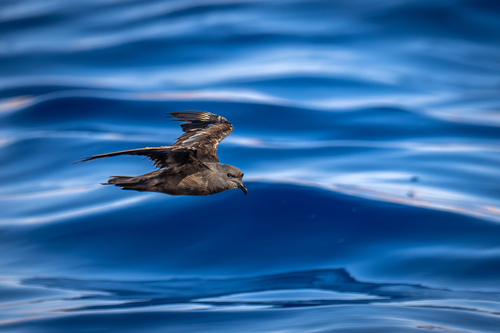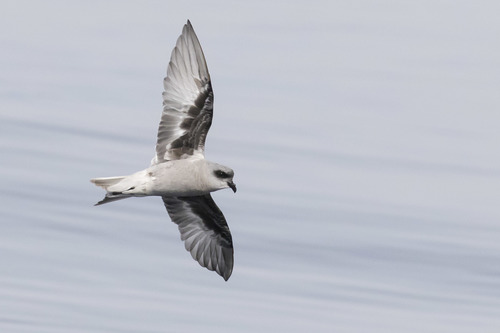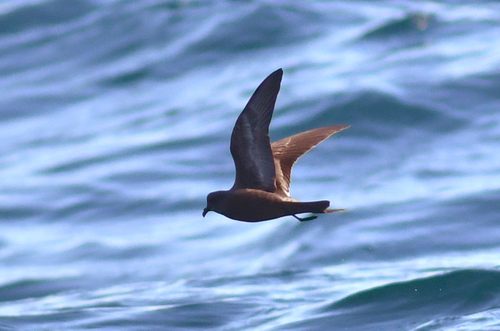
About Hydrobates homochroa (Coues, 1864)
Common Name & Physical Traits
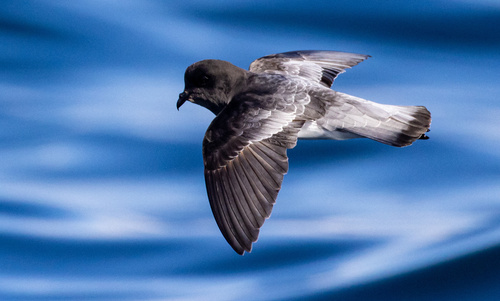
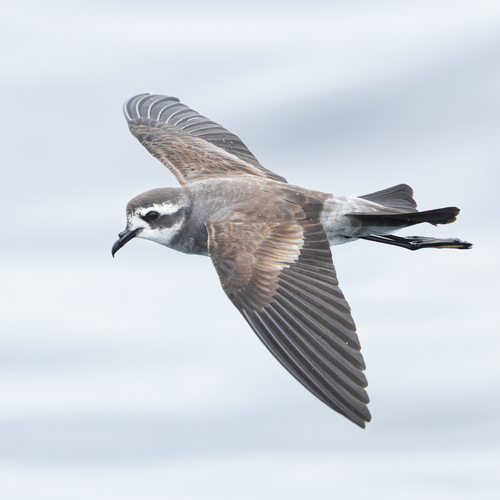
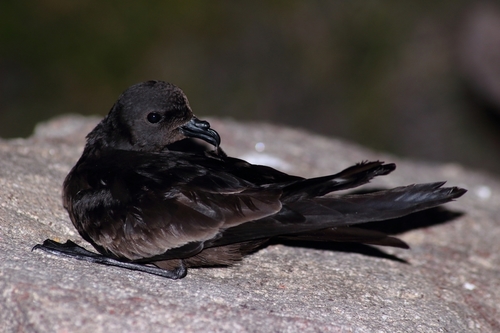
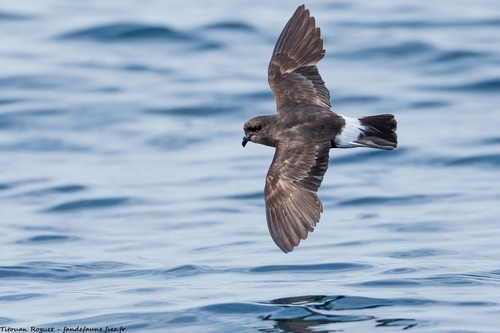
Hydrobates homochroa, commonly known as the ashy storm petrel, is a small storm petrel with uniformly sooty-brown plumage and a forked tail.
Flight Pattern
It closely resembles the black storm petrel, but is smaller and has a more fluttering flight pattern: its upstroke only reaches a horizontal position relative to its body before it begins the downstroke, while other storm petrels in its range have a higher upstroke.
Feeding Habits Overview
This is a gregarious seabird that feeds at night.
Diet Composition
Its diet includes cephalopods, fish (especially deep-sea myctophids, which rise to the sea surface at night), and euphausiid krill such as Thysanoessa spinifera, which also swarms at the surface.
Feeding Near Vessels
Individuals also gather around fishing vessels to feed on fish oils released when nets are pulled.
Nesting Basics
Ashy storm petrels nest in rock burrows on offshore islands, returning to their nests only at night.
Breeding Cycle Length
The species has a long breeding cycle: eggs are laid in May and chicks fledge in October, though timing varies much more widely than it does for most other storm petrels.
Breeding Timing Variation
Some pairs may have a half-grown chick while other pairs of the same species have not yet finished laying eggs.
Fidelity Traits
Like many other seabirds, ashy storm petrels display both mate fidelity and site fidelity: pairs stay together with the same mate for many years and nest in the same burrow year after year, even though members of the pair spend the non-breeding season separate from one another, and many individuals compete for burrows at nesting colonies.
Mate Change Cause
A change of mate is usually tied to a change in nesting site.
Lifespan
The ashy storm petrel is a long-lived species; one banded individual has been recorded living at least 31 years.
Breeding Range
Ashy storm petrels breed on 17 islands in the northeast Pacific Ocean, mostly off the coast of California, with a small number of breeding sites also found off the coast of northwestern Mexico.
Farallon Islands Breeding Population
Half of the global population nests on the Farallon Islands near San Francisco.
Other Breeding Islands
Other breeding islands include California's eight Channel Islands and a small population on Mexico's Coronados Islands.
Largest Nesting Colony
Bat Cave, on the north side of Santa Cruz Island in Southern California, hosts the largest ashy storm petrel nesting colony in the world, with over 100 nests.
Non-Breeding Distribution
Outside of the breeding season, the species is thought to have a wider distribution and forages along the California Current.
Migration Behavior
It does not undertake large-scale migration, and does not range as far from breeding grounds as other storm petrel species do.
Fall Flock Observations
Large flocks can be observed in Monterey Bay in early fall.
Inland Occurrence
The species does not travel any significant distance inland unless driven there by storms; for example, an inland sighting in San Mateo County, California, was considered unusual by an experienced naturalist.
Global Population Estimate
The global population of ashy storm petrels is estimated to be around 10,000 total individuals, 8,000 of which are breeding adults.
Farallon Population Decline
The Farallon Islands population declined by one-third between 1972 and 1992.
Conservation Status
The ashy storm petrel is designated a species of conservation concern in California.
Threat Sources
It is threatened by predation from western gulls and burrowing owls, artificial illumination from fishing boats, introduced predators including rats and feral cats, and pollution.
Breeding Site Protection
Most of the islands where the species breeds receive some level of protection.
Global Warming Impact Overview
Global warming is projected to have a substantial impact on ashy storm petrels.
Ocean Productivity Impact
Future changes to coastal California waters driven by global warming may result in warmer, less productive waters, which would reduce the amount of food available to the petrels.
Ocean Acidification Risk
Additionally, ocean acidification may cause declines in crustacean prey species, due to the negative effects of excess CO2 on these animals' shells.
Sea Level Rise Risk
Sea level rise also threatens certain nesting sites that are located too close to the water.