About Hoplocephalus bungaroides Schlegel, 1837
Scientific Classification and Basic Identity
The broad-headed snake (scientific name Hoplocephalus bungaroides Schlegel, 1837) is a small to medium-sized venomous snake.
Size
It reaches an average total length including tail of 60 cm (24 in), and some individuals have been recorded growing up to 90 cm (35 in) long.
Coloration and Pattern
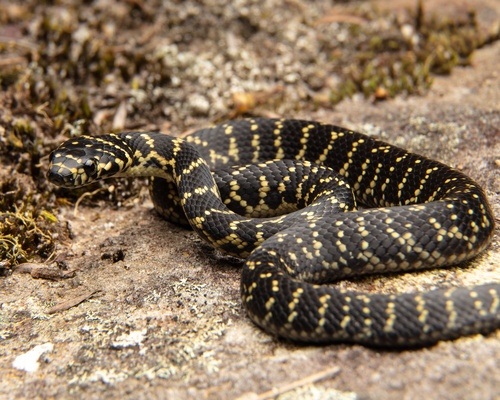
Its base color is black, marked with numerous irregular yellow spots arranged into narrow cross-bands.
Similar Species Confusion
This pattern makes it easy for inexperienced people to confuse broad-headed snakes with young diamond pythons; the two species look very similar on the surface and share the same habitat.
Bite Incident Record
One recorded 2023 incident saw a man bitten in the Southern Highlands of New South Wales, after he captured a broad-headed snake he mistook for a diamond python to show to his children.
Geographic Range
This snake species is found exclusively in the Sydney Basin of New South Wales, Australia.
Habitat Selection Drivers
The snake's habitat selection depends on temperature, age, sex, and breeding status.
Cold Month Habitat Use
During colder months, both adult and juvenile broad-headed snakes live in crevices of sandstone outcrops on exposed cliff edges, to absorb as much warmth from the sun as possible.
Warm Season Adult Habitat Use
When temperatures rise in spring, adult males and non-breeding females move to adjacent woodlands and forests, and live in hollow trees through the summer months.
Warm Season Juvenile and Gravid Female Habitat Use
Juvenile snakes and gravid (pregnant) females stay in the sandstone rock areas, and move into cooler, shaded spots there.
Habitat Threats
The species' habitat has been degraded by urbanization, illegal rock removal, vandalism, and unregulated indiscriminate reptile collecting.
Rock Removal Impact
The sandstone rocks that broad-headed snakes use are valued for landscaping, so their removal has caused habitat loss for both the snakes and their prey.