About Haematopus ostralegus Linnaeus, 1758
Taxonomy and Classification
The Eurasian oystercatcher, Haematopus ostralegus Linnaeus, 1758, is one of the largest wader birds in its region.
Size Measurements
It measures 40–45 cm (16–18 in) in total length, with its bill making up 8–9 cm (3–3+1⁄2 in) of this length, and has a wingspan of 80–85 cm (31–33 in).
Adult Plumage
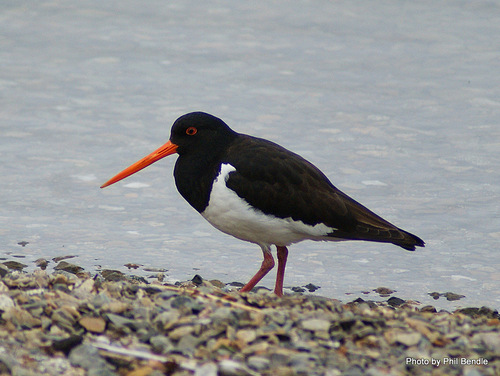
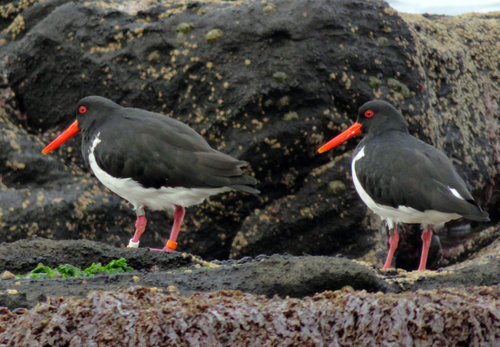
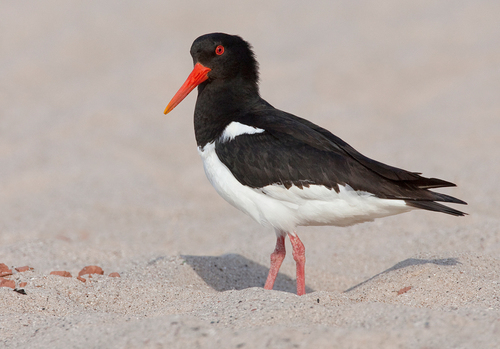
It is a conspicuous, noisy plover-like bird, with black and white plumage, pink legs, and a strong, broad red bill.
Bill Function
This bill is adapted for smashing or prising open molluscs such as mussels, or for finding earthworms.
Sexual Dimorphism
The sexes have similar plumage, but females have longer bills than males.
Seasonal and Immature Plumage
Winter plumage differs slightly from breeding plumage by featuring a white throat collar; this collar is only held for a short time by adults, but is retained for longer in immature birds.
Diet Composition
Despite its common name, oysters do not make up a large part of this bird’s diet. It still lives up to its name, however, because few if any other wading birds are capable of opening oysters.
Flight Appearance
This oystercatcher is unmistakable in flight: it has white patches on the wings and tail, black upperparts otherwise, and white underparts.
Juvenile Appearance
Young birds are more brown in overall colour, have a white neck collar, and a duller bill.
Vocalization
Its call is a distinctive loud piping.
Bill Shape Variation
Bill shape varies between individuals: oystercatchers with broad bill tips open molluscs by prising them apart or hammering through their shells, while individuals with pointed bills dig up worms. Much of this variation in bill shape comes from wear caused by feeding on different prey items.
Feeding Technique Learning
Individual birds specialise in one feeding technique or the other, which they learn from their parents.
Clinal Bill Variation
There is clinal variation in bill length, which increases from west to east across the species’ range.
Subspecies H. o. longipes Traits
The subspecies H. o. longipes has distinctly brownish upperparts, and its nasal groove extends more than halfway along the bill.
Subspecies H. o. ostralegus Traits
In the subspecies H. o. ostralegus, the nasal groove stops short of the halfway mark.
Related Species Comparison
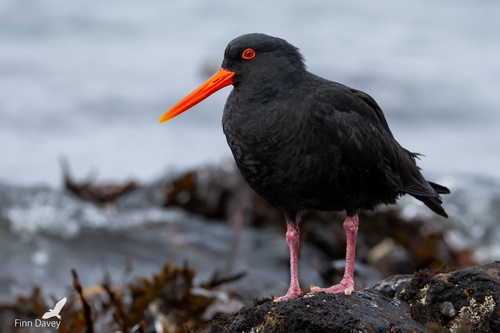
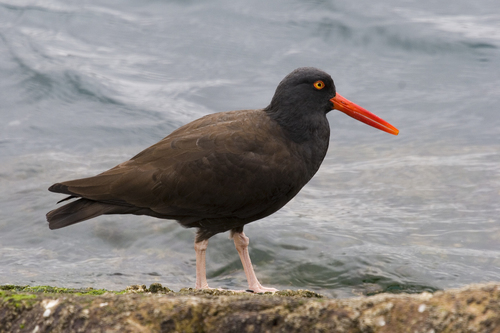
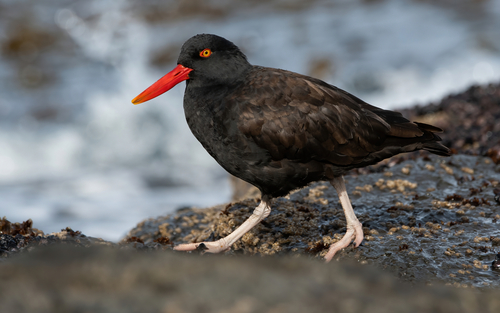
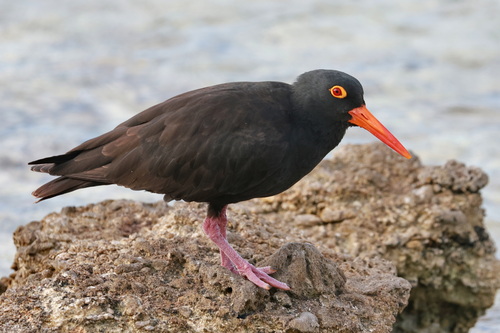
The related American oystercatcher (Haematopus palliatus) differs from the Eurasian oystercatcher by having a yellow eye and blackish-brown rather than solid black dorsal plumage.
Migratory Status
Haematopus ostralegus is a migratory species across most of its range.
European Population Movement
The European breeding population is concentrated mainly in northern Europe, while in winter these birds move to north Africa and southern parts of Europe. Though the species is present year-round in Ireland, Great Britain, and adjacent European coasts, migratory movement still occurs here: the large flocks found in the estuaries of south-west England in winter mainly breed in northern England or Scotland.
Asian Population Movement
Asian populations show similar migratory patterns.
Non-breeding Social Behavior
Outside of the breeding season, the birds are highly gregarious.
Vagrant Range
It is a rare vagrant as far south as southern Africa, where it can occur alongside the all-black African oystercatcher.
Habitat Preferences
It is most commonly found on flat lowland plains below 200 m above sea level, with short vegetation and close proximity to water.