About Haematopus ater Vieillot, 1825
Taxonomy and Plumage
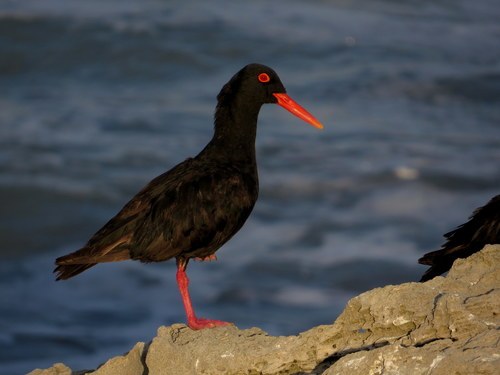
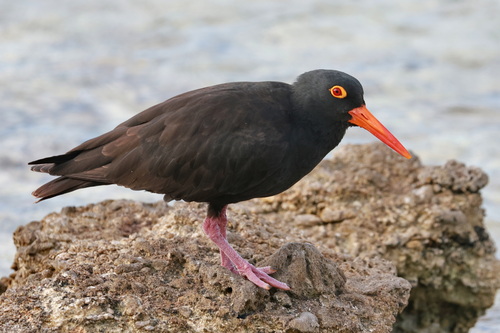
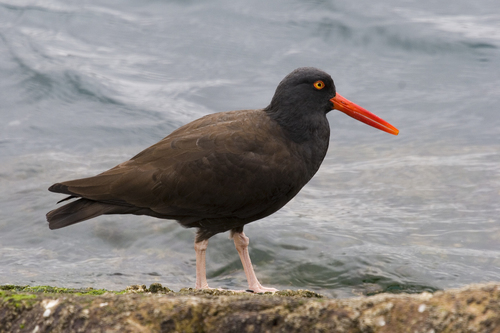
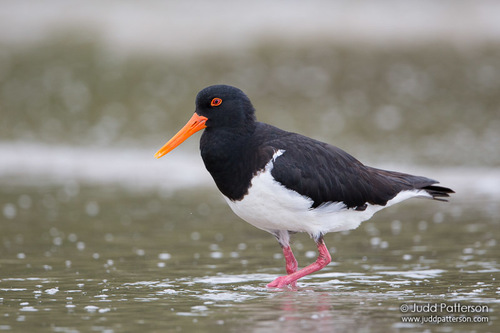
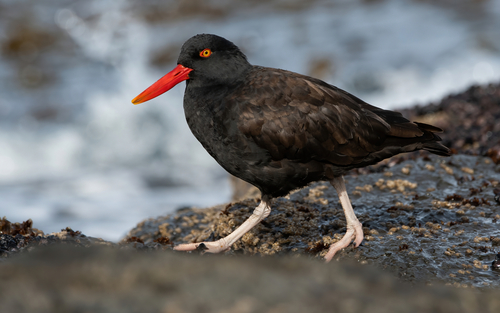
The blackish oystercatcher (Haematopus ater Vieillot, 1825) has slaty-black plumage, with darker brown coloring on the wings and back. It has a long blood-red bill and white legs, and males and females look similar in appearance.
Camouflage Trait
This bird is easy to overlook on rocky shores, because its dark color blends into the rocks it walks across while foraging, and it does not draw attention to itself.
Warning Calls
However, its presence can be easily detected by its loud, distinctive warning calls. When the bird sings in a duet, the song consists of an excited chatter of piping whistles.
Call Examples
Its recorded calls include notes that sound like "pip" and "peeeeyeeee".
Species Distribution
The blackish oystercatcher is native to the coasts of Argentina, Chile, the Falkland Islands and Peru, and it occurs as a vagrant in Uruguay.
Natural Habitat
Its natural habitat is rocky shores.
Common Foraging Locations
It feeds in the intertidal zone on rocky shorelines, in rockpools, and on pebble beaches.
Rare Habitat Occurrence
Rarely, it can be found on sandy beaches hunting for mole crabs.