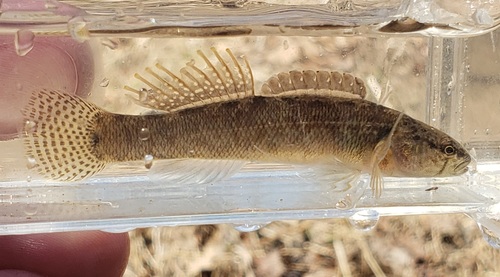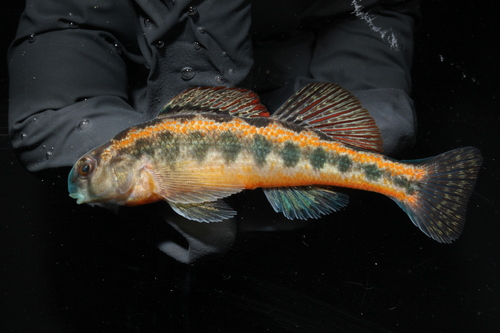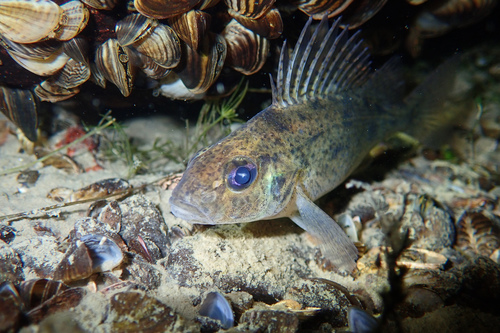
About Gymnocephalus cernua (Linnaeus, 1758)
Coloration
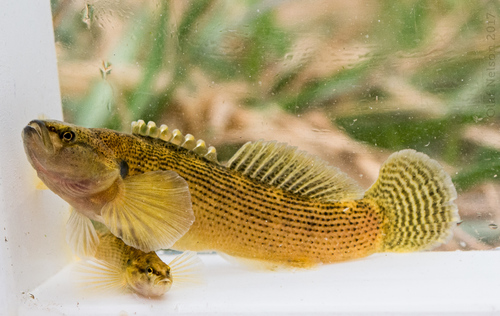
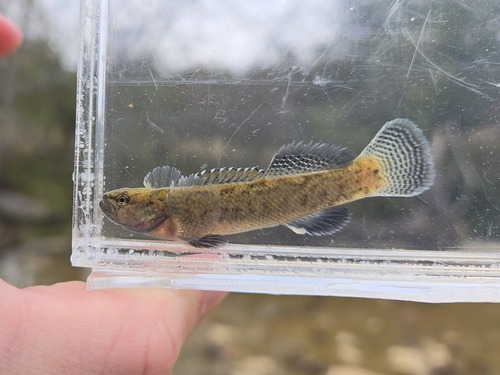
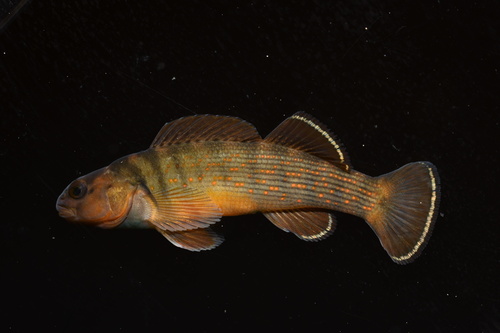
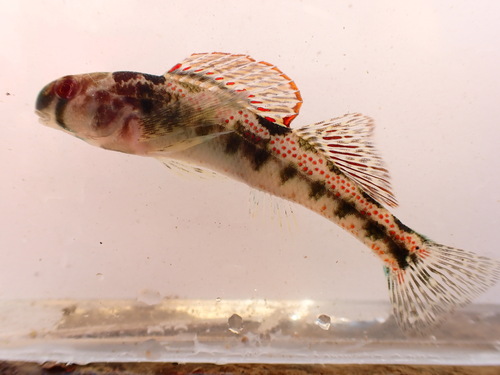
The ruffe (Gymnocephalus cernua) has coloring and patterning similar to the walleye, with an olive-brown to golden-brown back, paler sides, and yellowish white undersides.
Size
It can grow up to 25 cm (9.8 in) long, but most individuals are around half that maximum size.
Behavior
Relative to its small size, the ruffe is very aggressive.
Dorsal Fin Structure
It has a large, spiny dorsal fin that is likely distasteful to its predators. There are two dorsal fins on its back: the front fin has hard, sharp spines, while the back fin has soft spines called rays.
Identifying Features
The clearest identifying features of the ruffe are its large, continuous dorsal fin and slightly downturned mouth.
Native Range
This species is native to the basins of the Caspian, Black, Aral, Baltic, and North Sea. It is also native to Great Britain, parts of Scandinavia, and regions of the Arctic Ocean basin extending eastward to the Kolyma River drainage.
Introduced Range
It has been introduced to parts of Western Europe including France and northern Italy, to Greece, and to the North American Great Lakes.
Reproductive Rate
The ruffe has a very high reproductive rate.
Age at Maturity
Most ruffe reach maturity in two to three years, but individuals living in warmer waters can become mature and reproduce in their first year of life.
Fecundity
A single female can lay between 130,000 and 200,000 eggs each year.
Spawning Migration
To spawn, ruffe leave the deep, dark waters they normally prefer and travel to warmer shallow water.
Spawning Season
The main spawning season runs from mid-April through approximately June.
Egg Size Variation
Ruffe eggs typically measure 0.34 to 1.3 mm (0.013 to 0.051 in) in diameter, with egg size varying based on the size of the female. If a single female produces a second batch of eggs in the same spawning season, these eggs will be smaller than the eggs from her first batch.
Batch Egg Size Comparison
First batch eggs range from 0.90 to 1.213 mm (0.0354 to 0.0478 in), while second batch eggs measure 0.36 to 0.47 mm (0.014 to 0.019 in).
Batch Spawning Timing
When a female lays two batches in one season, the first is usually produced in late winter or early spring, and the second in late summer.
Egg Incubation Period
Eggs hatch 5 to 12 days after laying when kept at temperatures between 10–15 °C (50–59 °F).
Newly Hatched Size
After hatching, newly hatched embryonic juvenile ruffe measure between 3.5 and 4.4 mm (0.14 and 0.17 in) long.
Post-Hatching Development
Freshly hatched embryos stay sedentary for 3 to 7 days, during which time they grow to around 4.5 to 5.0 mm (0.18 to 0.20 in) in length.
Juvenile Behavior
One week after hatching, young ruffe begin to actively swim and feed, and they do not form schools at this young age.
Growth to Maturity
Ruffe then grow gradually until they reach full maturity at 2 to 3 years old.
Adult Size
Full-grown adult ruffe usually reach around 20 cm (7.9 in) in total length, with a maximum recorded length of 29 cm (11 in).
Growth Rate Factors
Ruffe grow faster in clear, brackish waters.
Lifespan
On average, both male and female ruffe generally do not live longer than 7 to 11 years.