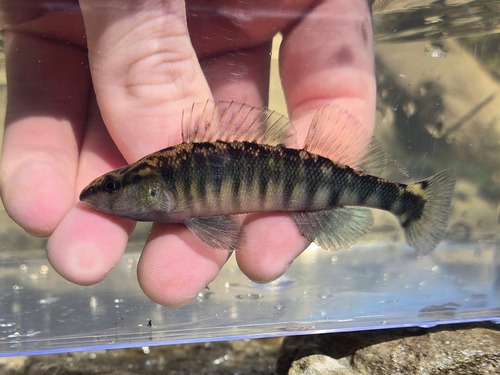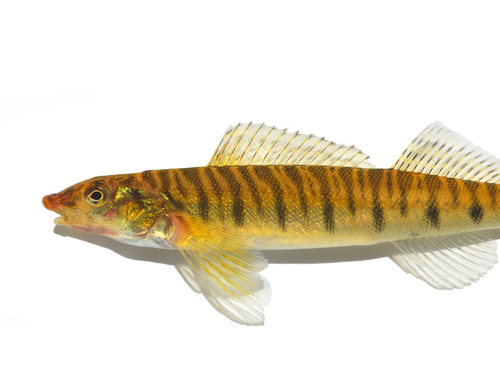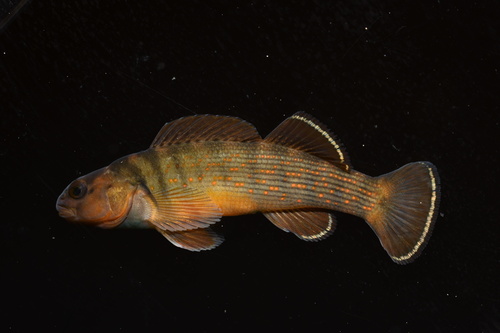
About Etheostoma camurum (Cope, 1870)
Scientific Classification
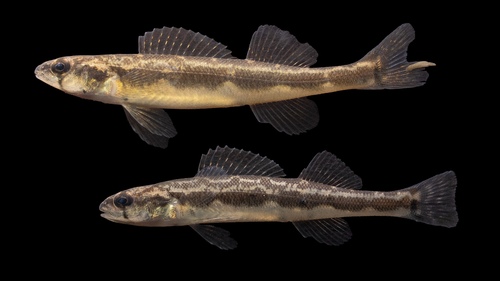
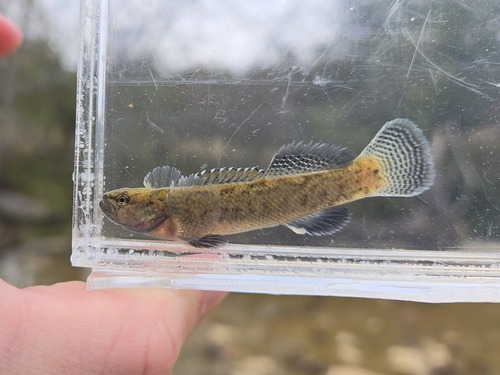
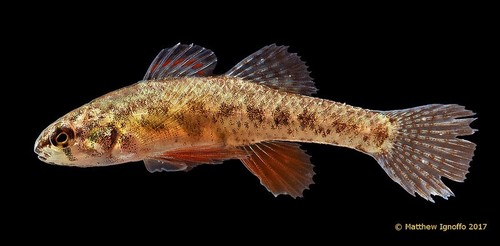
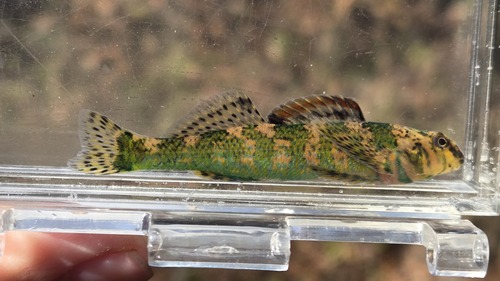
The bluebreast darter, scientifically named Etheostoma camurum (Cope, 1870), and also referred to as Nothonotus camurus, is a small species of freshwater ray-finned fish. It is a darter classified either in the genus Nothonotus, within the family Percidae — a family that also includes perches, ruffes, and pikeperches.
Overall Distribution Range
This species is endemic to the eastern United States, where its range extends from New York and Illinois in the north and west to Tennessee and North Carolina in the south and east. Its range covers most of the Eastern Highlands of the United States, stretching latitudinally from Tennessee to New York, and longitudinally from West Virginia to Illinois.
Historical Drainage Habitats
Historically, bluebreast darter populations have inhabited streams in the Ohio River drainage, the Alleghany River basin (New York and Pennsylvania), the Wabash River basin (Indiana and Illinois), and the Tennessee River basin (Tennessee and North Carolina). In these regions, the species has a patchy distribution.
Causes of Patchy Distribution
This patchiness is a result of habitat degradation and fragmentation that occurred after post-Pleistocene dispersal. In New York, severe population decline means the species' conservation status will likely be raised to 'endangered'.
Threats to Populations
Declines are likely linked to both physical impacts, such as impoundments, and chemical impacts from agricultural drainage runoff, that alter the darter's natural habitat. Additionally, the bluebreast darter's highly specialized habitat makes it very vulnerable to environmental and human-caused pressures.
Current Habitat Restrictions
Because of these pressures, populations have become increasingly isolated, and are now restricted to moderate to large streams with turbid flow and high water quality. The bluebreast darter has a highly specialized habitat that depends on water quality and stream velocity.
Microhabitat Preferences
It occupies eddies and riffles behind boulders in large to moderately sized, gravel-bottomed streams. Populations are most often found in benthopelagic areas of the water column, at depths ranging from 10 to 30 cm.
Diet
Morphological restraints, including an average gape size of around 8 mm, mean the bluebreast darter's diet typically consists of insect larvae, most commonly dipteran larvae.
Spawning Temperature
Year-round temperature ranges for the species are unknown, but spawning occurs in water temperatures between 10 and 24 °C.
Potential Predators
Specific predators of the bluebreast darter have not been clearly identified, but data from its sister species, the rainbow darter E. caeruleum, indicates that larger freshwater fish including burbots (Lota lota), stonecats (Noturus flavus), and smallmouth bass (Micropterus dolomieu) prey on darters. While specific data on bluebreast darter predation is largely lacking, predation is thought to have relatively low effects on the species.
Predation Avoidance
This is because the bluebreast darter lives in small, localized habitats in riffles and eddies behind boulders, which prevent larger pelagic fish from accessing them.
Anthropogenic Threats
Common anthropogenic impacts that harm this species include strip mining, mica shale siltation, impoundments (dams), and agricultural drainage runoff.