About Gastrophryne olivacea (Hallowell, 1856)
Taxonomy and Morphometrics
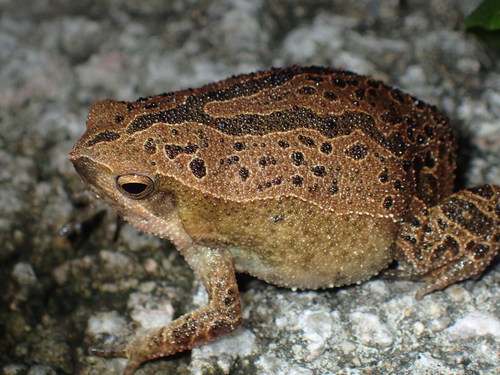
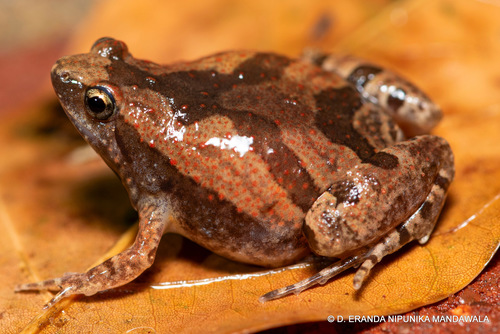
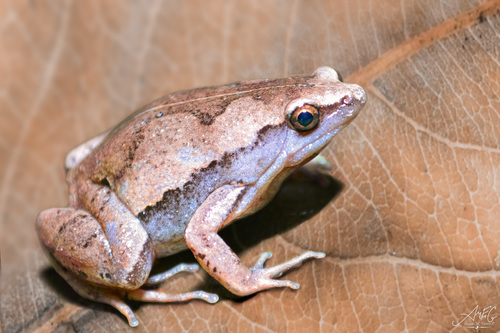
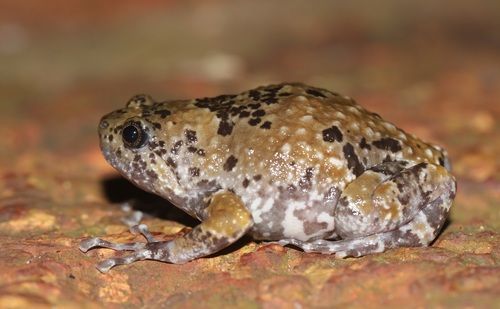
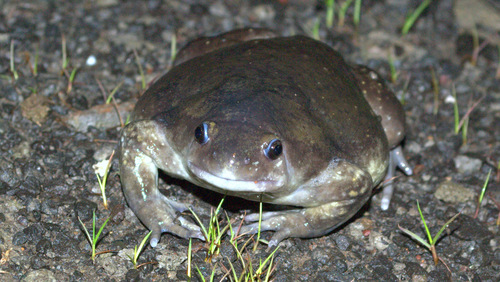
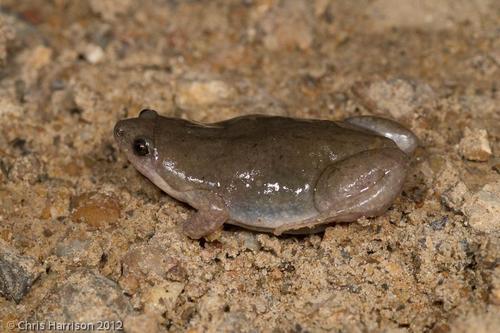
Great Plains narrow-mouthed toads (scientific name Gastrophryne olivacea, originally described by Hallowell in 1856) are a small, fossorial, flat-bodied species, measuring 19 to 42 mm from snout to vent. They have a sharply pointed snout.
Coloration
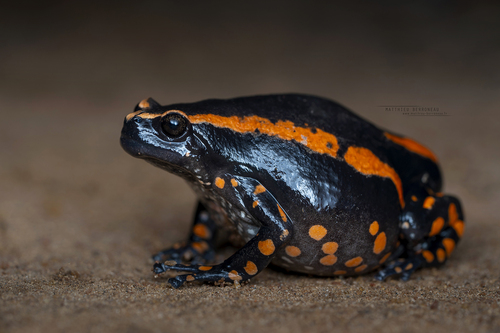
Their dorsal color is typically olive green to grey-brown, sometimes marked with black blotches, and their undersides are lighter in color.
Skin Secretion Effects
Skin secretions from this species can cause severe burning pain if they come into contact with the eyes.
Habitat
This toad occurs across a wide range of habitats, but is found most often on moist ground, in leaf litter, or under rocks and fallen logs.
Breeding Period
It breeds throughout spring and summer in rain pools.
Hybridization and Diet
It has been recorded hybridizing with Gastrophryne carolinensis, and its primary diet consists of ants.
Mutualism with Tarantulas
Western narrow-mouthed toads share a mutualistic relationship with tarantulas: the two species live together, and the toads eat ants that attempt to invade the tarantula's burrow.
Anti-Predator Adaptation
Skin chemicals make the toads unpalatable to the tarantulas.
Cross-Species Behavior Parallels
Similar mutualistic behavior has been observed in other microhylid frogs.