About Garrulax ruficollis (Jardine & Selby, 1838)
Taxonomy and Naming
The rufous-necked laughingthrush, Garrulax ruficollis, is a species of babbler, not a true thrush.
Size Measurements
It measures roughly 22–27 centimetres (8.7–10.6 in) in length and weighs between 51–73 grams (1.8–2.6 oz).
Plumage Markings
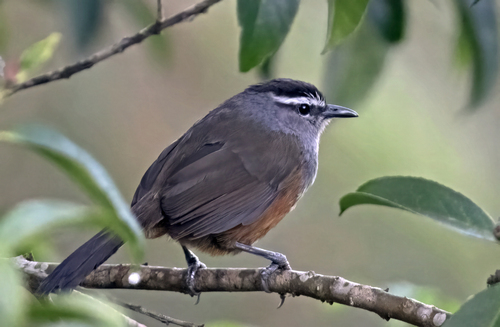
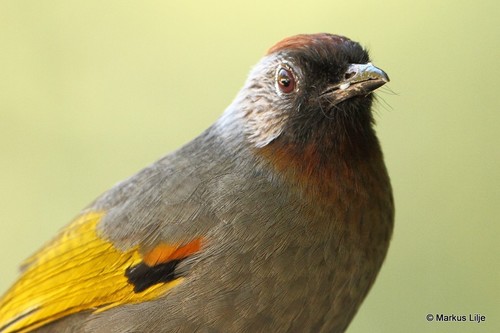
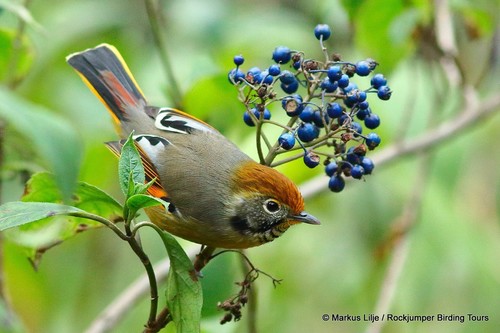
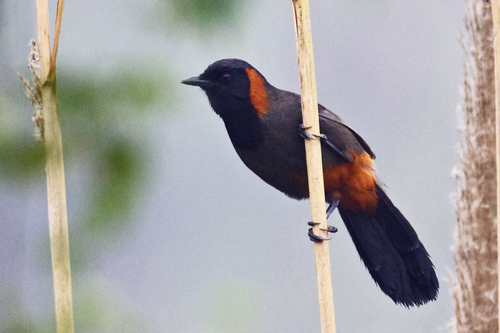
As its name suggests, it has a rufous (rust-colored) patch around its neck. Overall, the bird is grey with a black face in addition to its rufous neck marking.
Molting Pattern
Because this species is non-migratory, it molts very slowly. As a result, adult and juvenile rufous-necked laughingthrushes have very similar appearance.
Similar Species Distinction
The rufous-necked laughingthrush closely resembles the rufous-cheeked laughingthrush, but the two species occupy entirely separate geographic ranges.
Habitat and Distribution
This species inhabits subtropical or tropical moist forests, with a distribution ranging from Nepal through China and extending south into Myanmar.
Residential Status
It is a non-migratory songbird that remains in the same habitat year-round, for both breeding and non-breeding periods.
Isolated Population Origin
Some populations live in isolated areas of Nepal, a separation that likely formed during the region’s mountain range formation.
Conservation Status
The species is common across its entire native range, and the IUCN Red List classifies it as a species of least concern.
Reproductive Habit Assumptions
The reproduction of rufous-necked laughingthrushes has not been well studied, so it is assumed their reproductive habits are similar to those of other laughingthrushes.
Brood Parasite Defense
Because of their cognitive abilities, brood parasites such as cuckoos rarely successfully exploit this species. Rufous-necked laughingthrushes have excellent egg recognition, so they can easily remove parasitic eggs that do not resemble their own.
Sexual Dimorphism
Males and females are sexually dimorphic in size; this size difference is thought to be linked to female choice favoring individuals that provide better territorial defense, leading to selection for larger size over time.
Breeding and Nesting
Rufous-necked laughingthrushes breed from March to August, building small, compact cup-shaped nests out of leaves and grasses.